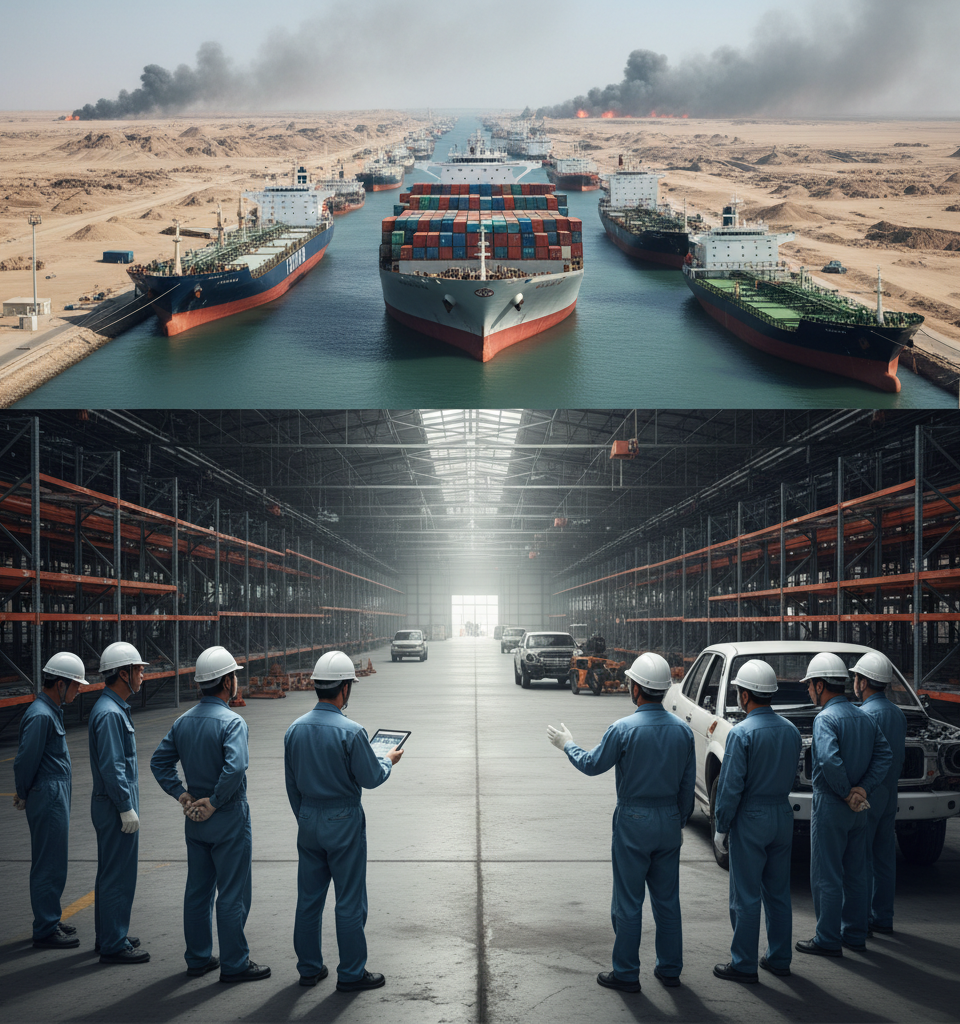
Japan's intricate manufacturing ecosystem, particularly the finely tuned supply chains supporting automotive giants like Toyota, is facing unprecedented strain as geopolitical tensions in the Middle East disrupt global trade routes. Suppliers within Toyota's extensive network are reporting significant delays and outright shortages of crucial components, signaling a potential ripple effect that could impact production lines and, consequently, vehicle availability globally. The disruptions, attributed directly to the ongoing conflict in Iran, are manifesting as bottlenecks across various sectors of Japanese industry, highlighting the fragility of tightly integrated international supply chains in the face of widespread instability.
The Geopolitical Undercurrents
The current supply chain woes are rooted deeply in the escalating conflict in Iran, which has significantly impacted shipping lanes and energy markets. The Strait of Hormuz, a critical chokepoint for global oil and gas shipments, has seen increased volatility, forcing shipping companies to reroute vessels, endure higher insurance premiums, and face extended transit times. This instability directly affects the timely delivery of raw materials and intermediate goods destined for Japan's manufacturing hubs. Historically, regional conflicts in the Middle East have often led to energy price spikes, but the current situation extends beyond crude oil, now threatening the passage of diverse cargo essential for complex manufacturing processes.
Specific Impacts on Toyota's Network Inside
Toyota's sprawling supply chain, the immediate impact is visible in the reduced availability of specialized electronic components, rare earth minerals, and certain chemical compounds vital for modern vehicle production. "We're seeing lead times for some critical parts extend from a typical few weeks to several months," stated a senior procurement manager at a key Toyota supplier, who requested anonymity due to the sensitive nature of the information. "This isn't just about higher shipping costs; in some instances, entire shipments are being delayed indefinitely or rerouted through far longer, less efficient channels." Reports indicate that some smaller, highly specialized component manufacturers are already operating at reduced capacity due to material shortfalls, a scenario that could quickly propagate through the larger automotive assembly lines if not mitigated. The automotive sector, known for its just-in-time inventory systems, is particularly vulnerable to even minor disruptions.
Broader Industry and Economic Repercussions
The implications extend far beyond Toyota, potentially affecting Japan's broader industrial landscape. Other major Japanese manufacturers in electronics, machinery, and precision instruments are also expressing concerns over similar supply chain vulnerabilities. For Japan, a nation highly dependent on imports for raw materials and energy, any significant global trade disruption poses a substantial economic threat. Analysts are warning of potential inflationary pressures as higher shipping costs and material scarcity drive up production expenses, which could ultimately be passed on to consumers. Financial market reactions have already shown minor tremors, with some analysts predicting a downward revision of Japan's Q3 industrial output forecasts if the crisis persists.
Expert Commentary and Analysis Economists and supply chain experts are closely monitoring the situation.
"This is a textbook example of how geopolitical risk translates almost immediately to economic instability," explained Dr. Kenji Tanaka, a professor of international trade at Kyoto University. "Companies like Toyota have done an excellent job of diversifying their supplier base over the years, but certain specialized materials often originate from or transit through high-risk zones. The current conflict underscores the need for even greater regional resilience and, perhaps, a degree of 'friendly shoring' to reduce dependence on extremely volatile routes." He added that while major corporations possess contingency plans, the scale and persistence of the current Middle East crisis are testing even the most robust strategies.
Navigating the Path Forward
Looking ahead, the immediate future hinges heavily on the de-escalation of tensions in the Middle East. In the interim, Japanese manufacturers are exploring short-term mitigation strategies, including increased inventory holdings where feasible, accelerated diversification of shipping routes, and even a renewed push for localized production of critical components. Toyota, known for its meticulous operational planning, is reportedly in daily communication with its Tier 1 and Tier 2 suppliers to assess the situation and implement tactical adjustments. However, without a resolution to the geopolitical instability, the risk of sustained production bottlenecks and potential impacts on new vehicle launches remains a significant concern, likely influencing global automotive market dynamics well into the next fiscal year.