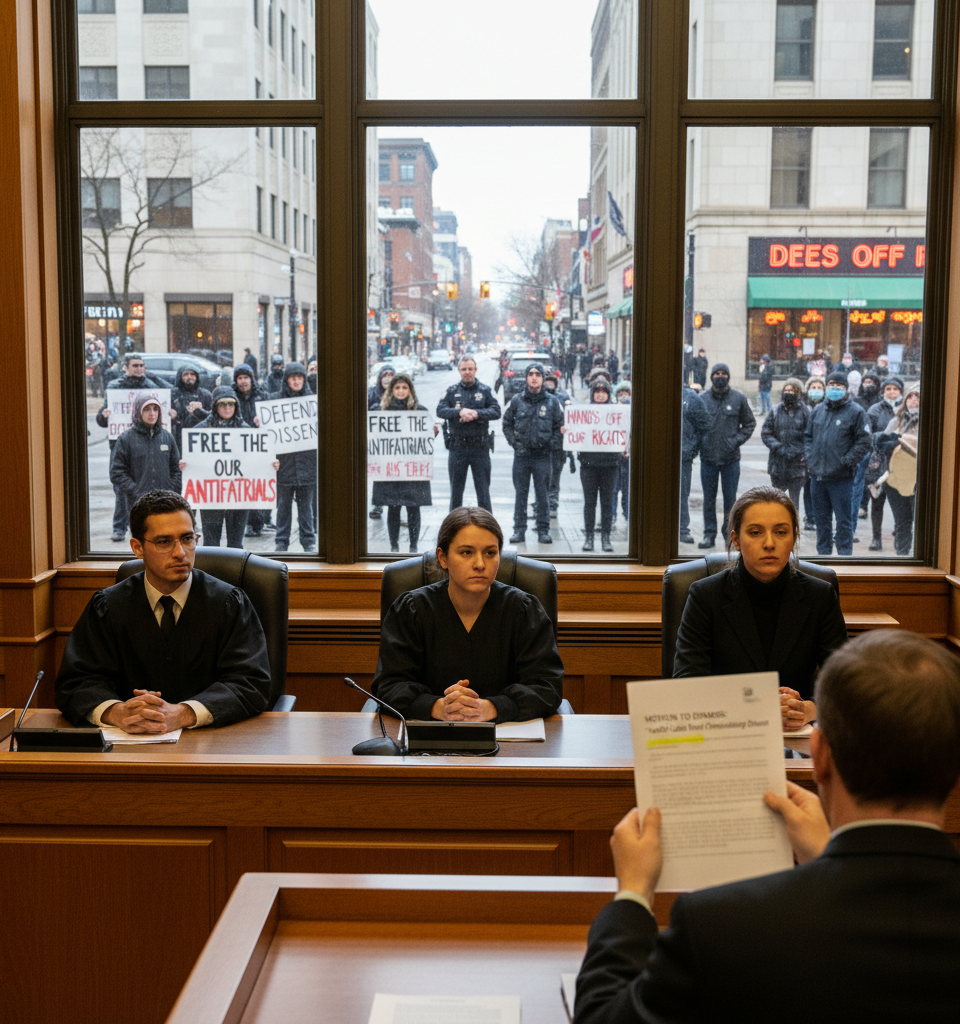
In a developing legal saga that intertwines political activism with federal charges, defendants in Minneapolis contend that their alleged tracking of U.S. Immigration and Customs Enforcement (ICE) movements has been intentionally mischaracterized by the Trump administration. They argue that the administration weaponized the term "antifa" to reframe their activities as part of a broader, more sinister plot, thereby criminalizing what they view as legitimate acts of dissent and oversight.
The allegations emerge amidst heightened scrutiny of federal responses to protest movements and activist groups, particularly during the Trump presidency. The use of the "antifa" label has been a recurring theme in governmental rhetoric concerning various protests, often drawing criticism from civil liberties advocates who argue it is used to broadly discredit and criminalize opposition. This case specifically highlights concerns about how governmental agencies define and respond to activist surveillance of their own operations.
Key to the defendants' argument is the assertion that their actions amounted to observation and documentation, not a conspiracy. They believe the "antifa" designation is a calculated political maneuver designed to prejudice public opinion and legal proceedings against them. While specific details of the alleged tracking methods remain under judicial review, the defense emphasizes that their intent was to monitor government activities, an act they maintain is protected under rights to free speech and assembly.
This situation has broader implications for organizations and individuals engaged in watchdog activities. If successful, the prosecution's framing could set a precedent that reclassifies politically motivated surveillance of government entities as criminal, potentially chilling future efforts at oversight. Conversely, a victory for the defense would reinforce the boundaries of protected speech and protest, even when those actions involve monitoring government operations that some deem sensitive.
Legal experts are closely watching developments, noting the potential for this case to redefine the lines between activism, surveillance, and criminal activity. Civil rights attorneys express concerns that a broad application of the "antifa" label, particularly when coupled with charges implying conspiracy, could be a tool to suppress dissenting voices beyond this specific case. The outcome could significantly influence how future administrations approach activist movements and their methods of organization.
The case is expected to proceed with significant debate over the intent behind the defendants' actions versus the prosecution's interpretation. Future court dates will likely feature intense arguments regarding motive, the definition of "dissent" in a legal context, and the extent to which the government can label and prosecute individuals based on their perceived affiliation with groups like "antifa." The legal community anticipates that rulings in this case could resonate widely, influencing similar prosecutions and the broader rights of activists across the nation.