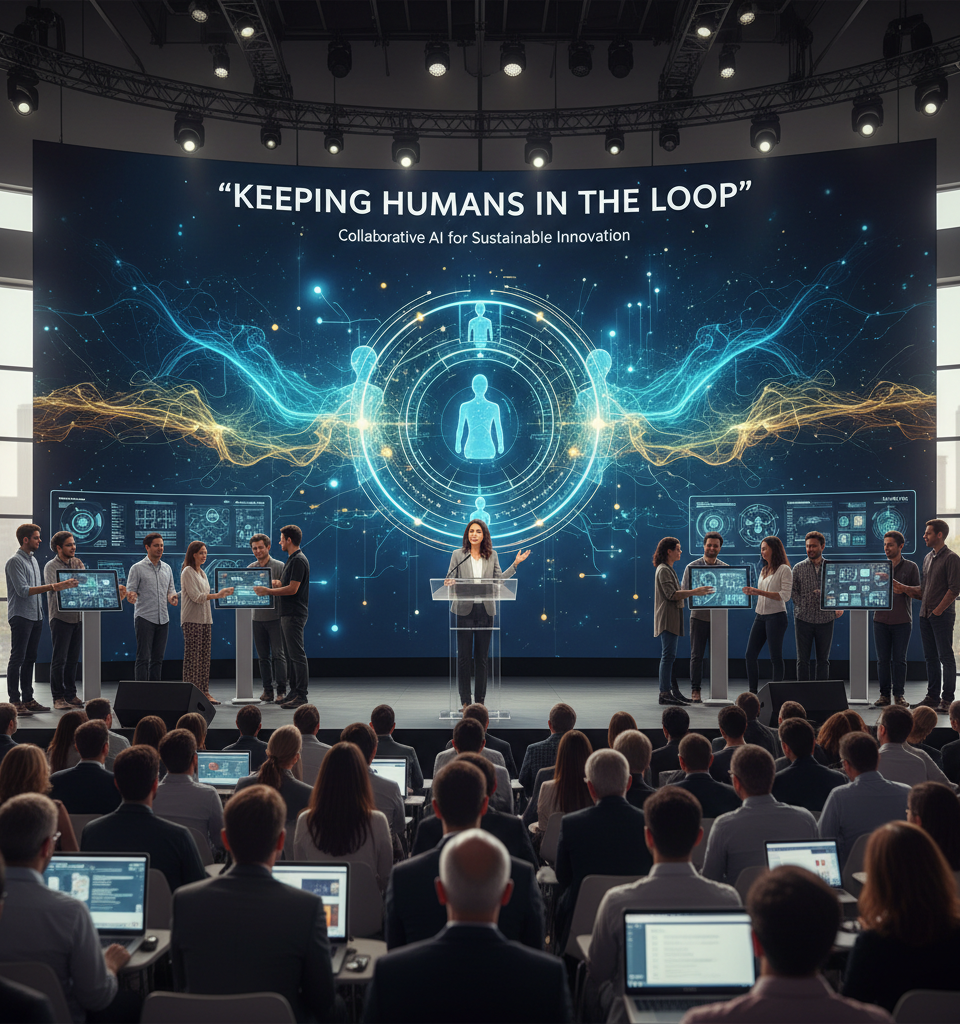
Mira Murati, the influential figure behind Thinking Machines Lab and former Chief Technology Officer of OpenAI, has articulated a clear strategic direction for the future of artificial intelligence: one rooted firmly in human-AI collaboration. In recent statements, Murati emphasized her commitment to developing AI systems that integrate seamlessly with human workflows, aiming to enhance productivity and creativity rather than automate jobs out of existence. This perspective marks a significant departure from prevailing anxieties about AI-driven job displacement, positioning Murati as a leading advocate for a more human-centric approach to technological advancement.
Shifting the AI Narrative
This move by Murati comes at a critical juncture for the AI industry. As generative AI models like ChatGPT gain widespread adoption and demonstrate increasingly sophisticated capabilities, concerns about their societal impact, particularly on employment, have escalated. Researchers at institutions like Goldman Sachs have projected that generative AI could expose the equivalent of 300 million full-time jobs to automation across major economies. Murati's stance directly addresses this apprehension, reframing AI not as a competitor to human labor but as an indispensable partner. Her focus on 'keeping humans in the loop' is designed to foster a more symbiotic relationship between artificial intelligence and human intellect, ensuring that technological progress serves to empower rather than diminish human roles.
The Collaborative AI Imperative
Murati's vision for AI involves designing systems that are inherently collaborative. This means developing interfaces and functionalities that facilitate easy interaction, knowledge transfer, and shared decision-making between humans and machines. For instance, Murati envisions AI assisting in complex problem-solving, providing data-driven insights, or automating mundane tasks, thereby freeing up human capital for more creative and strategic endeavors.
This approach contrasts sharply with the purely autonomous AI systems often depicted in science fiction and some industry discourse. Instead, Murati advocates for human-directed control points and interpretability within AI systems, ensuring accountability and ethical oversight remain firmly in human hands. This perspective is expected to influence not only the design principles of new AI products but also the broader ethical frameworks governing AI deployment.
Industry Repercussions and Ethical Considerations
The emphasis on collaborative AI could profoundly impact the technology sector. Companies may need to re-evaluate their AI development strategies, prioritizing human-in-the-loop (HITL) methodologies over fully autonomous solutions. This shift could lead to new market opportunities for tools and platforms that facilitate human-AI collaboration, as well as specialized training programs to equip workforces with the skills needed to interact effectively with advanced AI. From an ethical standpoint, Murati's approach offers a powerful counter-narrative to fears of disempowerment. By consciously designing AI to augment human capabilities, developers can proactively address concerns about bias, accountability, and the erosion of human agency, fostering greater public trust and acceptance of AI technologies.
Expert Commentary on Human-Centric AI
Industry analysts and ethicists have largely lauded Murati's perspective. Dr. Eleanor Vance, a leading researcher in AI ethics at the Institute for Future Technologies, commented recently, "Murati's advocacy for 'humans in the loop' is not just a philosophical stance; it's a pragmatic recognition of AI's current limitations and its greatest potential. Purely autonomous systems often struggle with nuanced decision-making, ethical dilemmas, and adaptability to unforeseen circumstances. Human oversight provides the essential layer of common sense, creativity, and moral judgment that AI currently lacks." She further added, "This isn't about slowing down AI; it's about building smarter, more resilient AI that truly serves humanity's best interests in the long term, avoiding the pitfalls of blindly optimizing for efficiency alone."
The Road Ahead for Thinking Machines Lab
Looking forward, Thinking Machines Lab, under Murati’s leadership, is likely to prioritize research and development into explainable AI (XAI), robust human-AI interfaces, and methodologies for seamless integration of AI tools into diverse professional environments. This will involve significant investment in user experience design as well as foundational AI research that focuses on adaptability and learning from human feedback. Expect to see new tools emerging from her lab that exemplify this collaborative philosophy, potentially setting new industry standards for how AI is developed and deployed.
The objective is not merely to build powerful AI, but to build useful, trustworthy, and ethically sound AI that genuinely empowers people across various sectors, from healthcare to creative industries. The successful implementation of this vision could pave the way for a more harmonious integration of artificial intelligence into daily life and work over the next five to ten years.
Murati's steadfast commitment to an AI future that uplifts human potential rather than diminishes it serves as a critical beacon for the technology industry. Her leadership sets a precedent for thoughtful, ethical, and collaborative innovation that acknowledges both the immense power and the inherent responsibilities of developing advanced artificial intelligence.