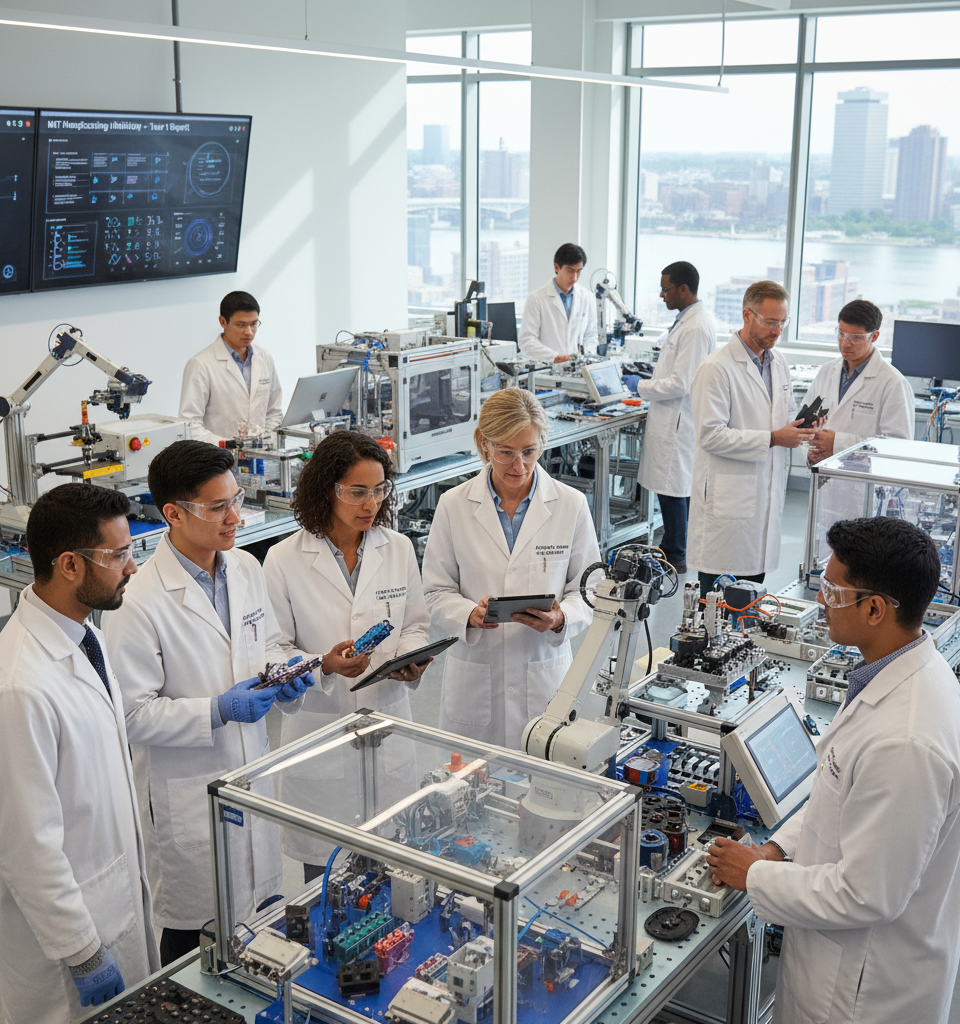
The Massachusetts Institute of Technology's (MIT) Initiative for New Manufacturing has marked its first anniversary with strong indications of progress, as its leadership recently showcased key achievements in Boston and Cambridge. The initiative, established to revitalize and advance the manufacturing sector through innovation, research, and workforce development, has completed a year of focused activity, laying groundwork they believe will yield long-term benefits for American industry.
Background and Strategic Imperative
The initiative was launched with a clear mandate: to confront challenges facing modern manufacturing, including global competition, technological disruption, and a pressing need for skilled labor. The program aims to bridge the gap between academic research and industrial application, fostering an ecosystem where new manufacturing processes and technologies can be developed, tested, and scaled. This strategic focus is particularly pertinent as nations increasingly recognize the importance of robust domestic manufacturing capabilities for economic resilience and national security.
Key Pillars of Progress
Over the past year, the Initiative for New Manufacturing has concentrated its efforts across three core pillars. Firstly, it has actively funded a diverse portfolio of research projects. These projects span various disciplines, from advanced robotics and artificial intelligence in production to novel materials science and sustainable manufacturing practices.
While specific project details were not disclosed, the emphasis has been on areas with high potential for transformative impact on efficiency, cost-reduction, and adaptability within manufacturing. Secondly, the initiative has engaged in extensive tours of manufacturing facilities. These site visits serve a dual purpose: to understand real-world operational challenges directly from industry practitioners and to identify opportunities where MIT's research capabilities can offer practical solutions.
This direct engagement ensures that academic efforts remain grounded in industrial reality. Finally, the program has begun piloting workforce development programs. Recognizing that technological advancements are only as effective as the skilled personnel who operate them, these programs are designed to equip the current and future manufacturing workforce with the necessary expertise for an evolving industrial landscape.
Early indications suggest strong industry interest and participation in these pilot schemes.
Leadership Insights and Future Trajectories
During recent events held in Boston and Cambridge, the initiative's three co-directors offered a detailed overview of the year's accomplishments. While specific names were not revealed, the co-directors conveyed a collective optimism regarding the initiative's trajectory. They highlighted the enthusiastic reception from both academic researchers and industry partners, underscoring a shared commitment to strengthening the manufacturing sector. The discussions emphasized the collaborative nature of the initiative, stressing that its success hinges on sustained partnerships between academia, government, and private industry. The early momentum suggests that the initiative is on track to become a significant force in shaping the future of manufacturing.
Broader Industry Impact and Outlook
The activities of MIT's Initiative for New Manufacturing are expected to have a cascading effect on the broader industrial landscape. By fostering innovation in manufacturing processes and developing a highly skilled workforce, the initiative could contribute to increased productivity, enhanced competitiveness, and the creation of high-value jobs. This could, in turn, help to reverse trends of manufacturing decline in certain sectors and attract further investment into domestic production capabilities. The focus on cutting-edge research also positions the U.S. to maintain a leadership role in emerging manufacturing technologies.
Looking ahead, the next phase for the Initiative for New Manufacturing will likely involve scaling up successful research projects, expanding the reach of its workforce development programs, and deepening its engagement with industrial partners. The co-directors alluded to plans for broader dissemination of research findings and increased collaboration with other academic institutions and government agencies. The initial year has established a strong foundation, and the coming years are anticipated to see the initiative translate its early successes into more widespread industrial application and economic impact.