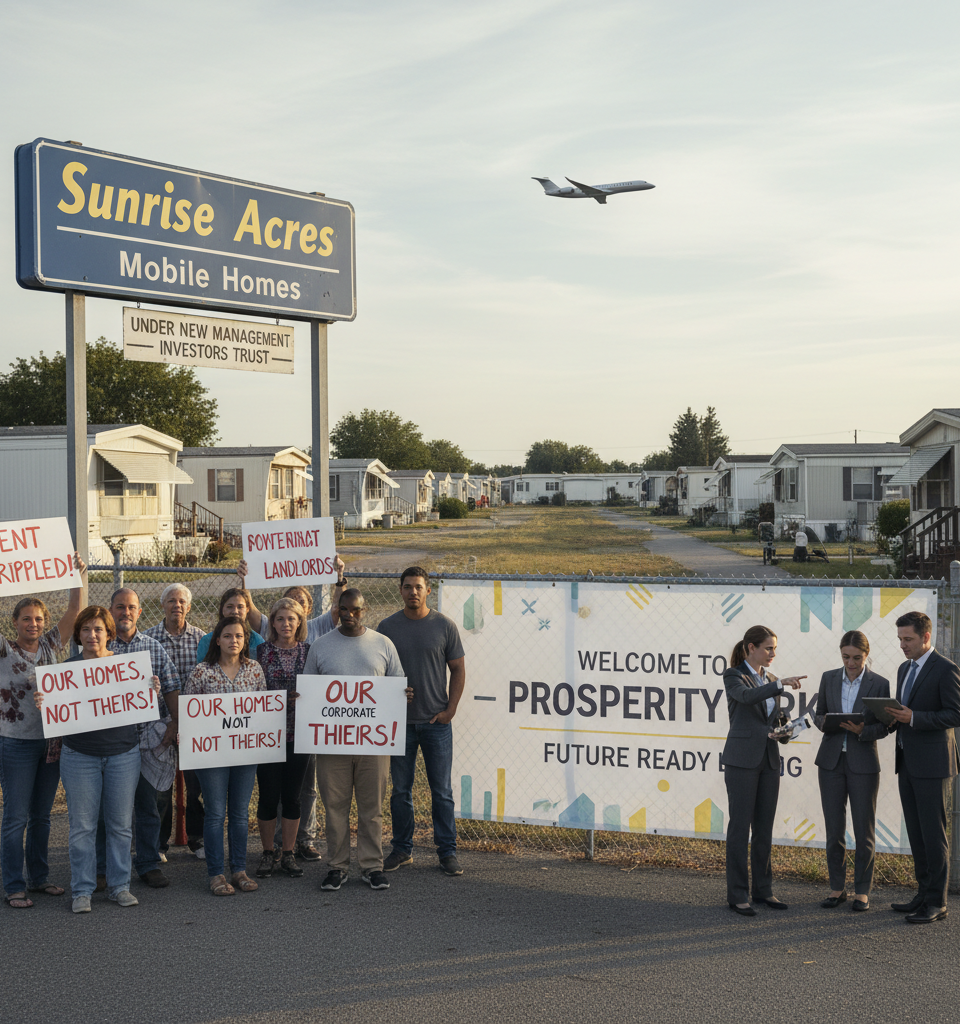
Residents in manufactured home communities across the U.S. are facing unprecedented financial strain as their monthly rents skyrocket, often by double-digit percentages, following acquisitions by corporate investors. This significant shift in ownership, which has accelerated over the past five to seven years, is pushing a vulnerable population – typically low-income individuals, seniors, and families – to the brink, threatening their stability and access to affordable housing.
The Erosion of Affordable Housing
Manufactured home communities have historically represented one of the last bastions of truly affordable housing in America. Unlike traditional homeownership, residents typically own their homes but lease the land beneath them. This model offered a lower entry point into homeownership and a more stable living situation than renting apartments. However, the entry of private equity firms, real estate investment trusts (REITs), and other large institutional investors into this market has fundamentally altered its landscape. These investors are attracted by the stable, predictable cash flows and the ability to significantly raise rents due to the inherent lack of mobility for manufactured home owners, who face exorbitant costs – often tens of thousands of dollars – to relocate their homes.
Financial Strains and Deteriorating Conditions
Specific examples abound, painting a grim picture. In one community in Arizona, residents reported rent hikes of 25% to 40% over just two years, pushing many fixed-income seniors into impossible financial choices. Similar increases, often between $100 and $300 per month, have been documented in Florida, Texas, and Midwest states like Iowa and Michigan. Concurrently, residents frequently report a decline in maintenance, with unaddressed issues ranging from poorly maintained roads to non-functional amenities like swimming pools and clubhouses, despite the increased charges. This combination of escalating costs and reduced services creates a predatory environment, effectively extracting maximum profit from captive residents.
A Broader Market Trend
The acquisition of manufactured home communities by large corporate entities is part of a broader trend of financialization within the housing sector. Investors, driven by the search for yield in a low-interest-rate environment, have identified manufactured housing as an undervalued asset class with significant upside potential. These firms often purchase communities at discounted rates, then implement aggressive rent increases and operational efficiencies to boost profitability for their shareholders. This strategy is distinct from traditional mom-and-pop ownership, where relationships with residents and community well-being often played a larger role. Estimates suggest that institutional investors now own at least 5% to 10% of the nation's 43,000 manufactured home communities, a percentage that is steadily growing.
Expert Analysis and Policy Debates
Housing policy experts and academics are increasingly vocal about the detrimental impact of this trend. "We're seeing a fundamental transformation of a crucial affordable housing resource into a speculative asset," states Dr. Sarah Jenkins, an urban studies professor at the University of California. "Without robust tenant protections and regulations, these communities will cease to be affordable, displacing hundreds of thousands of vulnerable households." Advocacy groups are pushing for stronger rent control measures, 'opportunity to purchase' laws that give residents or non-profits first refusal when a community is for sale, and increased federal oversight. However, industry representatives argue that their investments bring necessary capital improvements and professional management, though evidence from residents often contradicts these claims.
The Call for Regulation and Resident Empowerment
The future of manufactured home communities hinges on the response from policymakers and the organized efforts of residents. Several states are considering or have already implemented legislation aimed at curbing excessive rent increases and enhancing tenant protections. For instance, Oregon recently capped annual rent increases in manufactured home communities at 9.9%, while some municipalities are exploring even stricter controls. The push for resident cooperatives, where residents collectively purchase and manage their communities, also offers a potential lifeline, though this requires significant financial and organizational support. Without effective intervention, the affordability crisis in manufactured housing is set to deepen, exacerbating homelessness and housing insecurity for a significant segment of the American population.