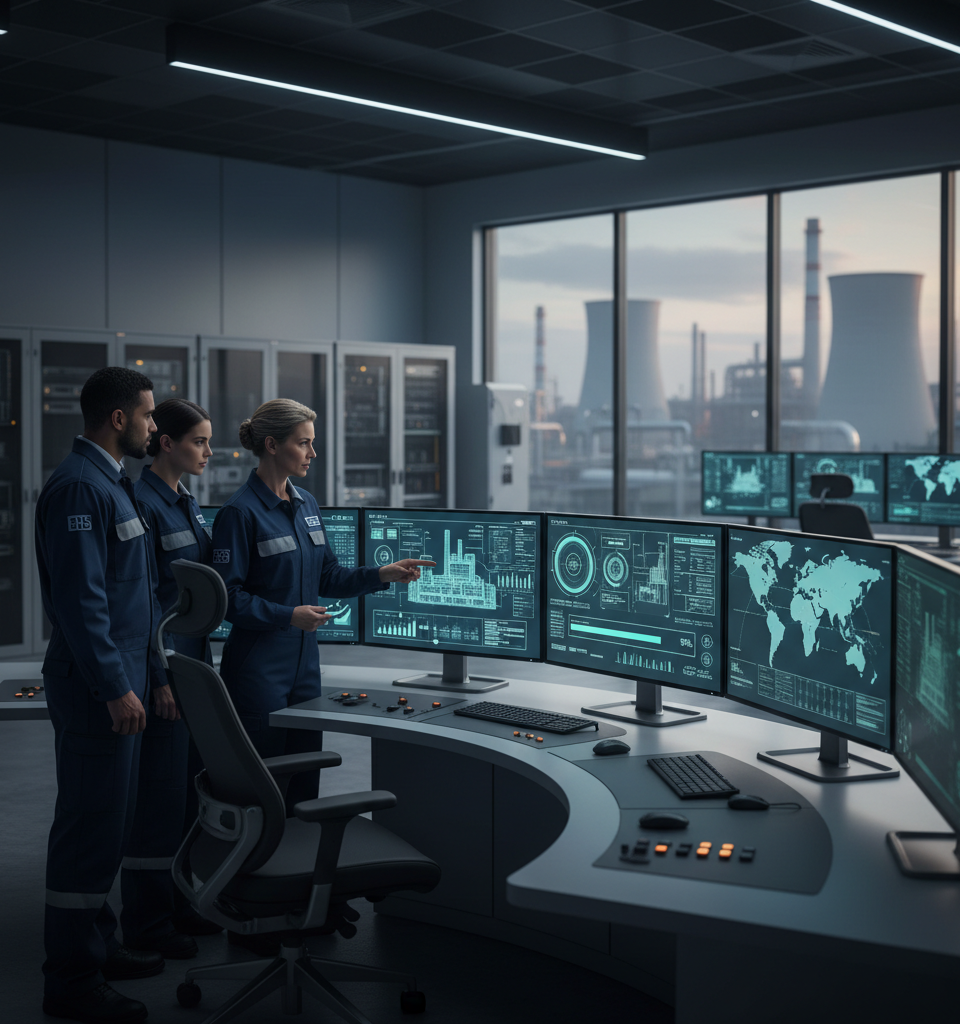
In today's rapidly evolving industrial environment, the prevailing question for plant operators and engineers centers on whether their facilities possess the technological sophistication to adequately address current and future environmental, health, and safety (EHS) demands. The consensus emerging from industry analysis suggests that reliance solely on conventional EHS compliance reporting mechanisms is proving insufficient. Instead, a paradigm shift is underway, emphasizing the critical need for interconnected, real-time data visibility across an organization's entire operational spectrum.
The Evolving Landscape of EHS
The drive for operational modernization in manufacturing and processing plants is a direct response to a confluence of factors, including stricter regulatory frameworks, increased public scrutiny, and a growing emphasis on corporate social responsibility. Historically, EHS efforts often focused on reactive reporting and post-incident analysis. However, this approach is increasingly seen as inadequate in anticipating and mitigating potential risks effectively. The fragmentation of data across various systems—from asset management to field operations and environmental monitoring—creates significant blind spots that can hinder proactive EHS management.
Beyond Basic Compliance
Modernizing safety operations, therefore, transcends the basic requirements of EHS compliance reporting. It mandates a comprehensive integration of data streams, allowing for a holistic view of plant operations. This includes, but is not limited to, real-time monitoring of equipment performance (assets), direct insights from on-the-ground activities (field operations), continuous collection and analysis of environmental metrics (environmental data), and streamlined protocols for managing unforeseen events (incident response workflows). The absence of such integration can lead to delayed responses, inefficient resource allocation, and a higher risk of non-compliance or, more critically, safety incidents.
Industry Implications and Technological Imperatives
The implications for the broader industrial landscape are profound. Plants that fail to adopt these modern approaches risk not only regulatory penalties but also reputational damage, operational inefficiencies, and potential liabilities from environmental or safety breaches. The shift necessitates investment in advanced technological solutions, including sensor-based monitoring systems, integrated data analytics platforms, and digital workflow management tools. These technologies are foundational to creating the 'connected plant' envisioned by industry leaders, where data flows seamlessly, providing actionable insights for EHS professionals.
The Role of Real-time Visibility
The core tenet of this modernization push is real-time visibility. Imagine a scenario where a critical piece of machinery exhibits anomalous behavior. Without real-time data, this anomaly might go unnoticed until it escalates into a breakdown or an environmental release. With connected systems, however, sensors can detect subtle changes, predict potential failures, and trigger automated alerts, allowing EHS teams to intervene pre-emptively. Similarly, real-time environmental data can help facilities quickly identify and rectify deviations from permitted discharge levels, preventing potential regulatory infractions.
Future Outlook for Plant Modernization
Looking ahead, the trajectory for plant modernization is clearly towards greater automation, predictive analytics, and enterprise-wide data integration. The goal is to move from a reactive to a proactive EHS posture, where risks are identified and mitigated before they materialize. This will not only enhance safety and environmental stewardship but also lead to significant operational efficiencies and cost savings through optimized resource utilization and reduced downtime. Facilities that embrace these principles are poised to lead the industry, setting new benchmarks for operational excellence and EHS performance in the years to come.