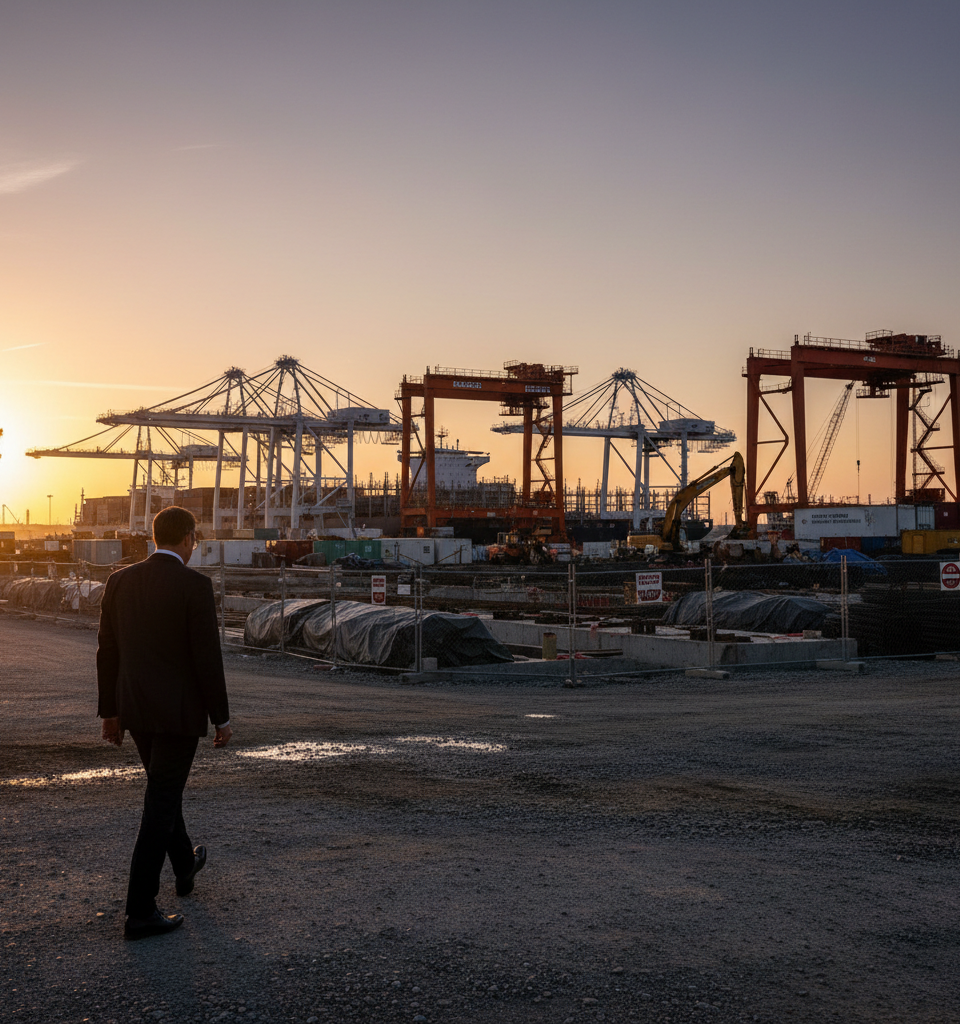
MONTREAL, QC – The executive leadership at the Port of Montreal has experienced a significant upheaval, with its chief executive departing after a brief two-year tenure. This sudden exit transpires against a backdrop of escalating cost projections for a crucial, multi-million dollar new container terminal project, raising questions about financial oversight, strategic planning, and the future trajectory of one of Canada's most vital maritime gateways.
The departure of the CEO, whose identity was not immediately disclosed in the initial reports but has been a subject of considerable speculation within maritime circles, marks a pivotal moment for the Montreal Port Authority (MPA). This leadership vacuum is particularly impactful given the port's ambitious growth agenda, designed to solidify its position as a key intermodal hub for North American trade. The timing of the exit, coinciding with ballooning budgets for the Contrecoeur container terminal, suggests a direct linkage between the executive's departure and the financial viability and strategic direction of this cornerstone development.
The Contrecoeur container terminal project, envisioned as a transformative expansion, aims to increase the port's annual handling capacity by 1.15 million TEUs (Twenty-foot Equivalent Units). Initial cost estimates, which were already substantial, have reportedly surged, creating significant financial pressure and potentially necessitating a re-evaluation of its scope or funding model. While specific revised figures have not been publicly detailed, industry whispers indicate that the increase could be in the tens of millions of dollars, a considerable sum for any infrastructure project. These cost overruns are particularly sensitive given the project's reliance on public funding and its national economic importance.
The broader implications of this executive change extend beyond the immediate financial concerns of the Contrecoeur project. The Port of Montreal is a critical artery for international trade, connecting the Great Lakes region to global markets. Leadership stability is paramount for navigating complex geopolitical waters, supply chain disruptions, and intense competition from other North American ports. Any perceived instability at the top could deter potential investors, disrupt ongoing negotiations, and impact the port's long-term competitive advantage in the highly dynamic global shipping industry.
Industry analysts and maritime experts are closely monitoring the situation. "A change at the helm, especially under these circumstances, can create uncertainty and delay critical decisions," commented Dr. Eleanor Vance, a senior logistics consultant at Global Trade Insights. "The challenge for the Port of Montreal will be to quickly install stable leadership that can re-evaluate the Contrecoeur project, restore confidence among stakeholders, and communicate a clear path forward. The reputation of the port as a reliable and well-managed entity is at stake." Vance suggested that the cost increases could be attributed to a confluence of factors, including inflation, labor shortages, and supply chain bottlenecks, but emphasized that robust project management is essential to mitigate these risks.
Looking ahead, the immediate priority for the Montreal Port Authority will be to appoint an interim CEO, followed by a comprehensive search for a permanent successor. This individual will face the daunting task of re-assessing the Contrecoeur project's budget and timeline, managing stakeholder expectations, and ensuring the port's operational continuity. Furthermore, the incident may spark a deeper audit into the project's initial planning and risk assessment processes. The success of the Contrecoeur terminal is vital for Canada's trade infrastructure, and any delays or significant changes could have ripple effects throughout the national supply chain.
The MPPA must now demonstrate strong governance and transparency to regain market confidence. The upcoming months will undoubtedly be critical in shaping the port's future, as it navigates both a leadership transition and the substantial financial challenges posed by its most ambitious expansion project in decades. The global shipping community will be watching closely to see how this pivotal Canadian port addresses these intertwined issues and reasserts its strategic importance.