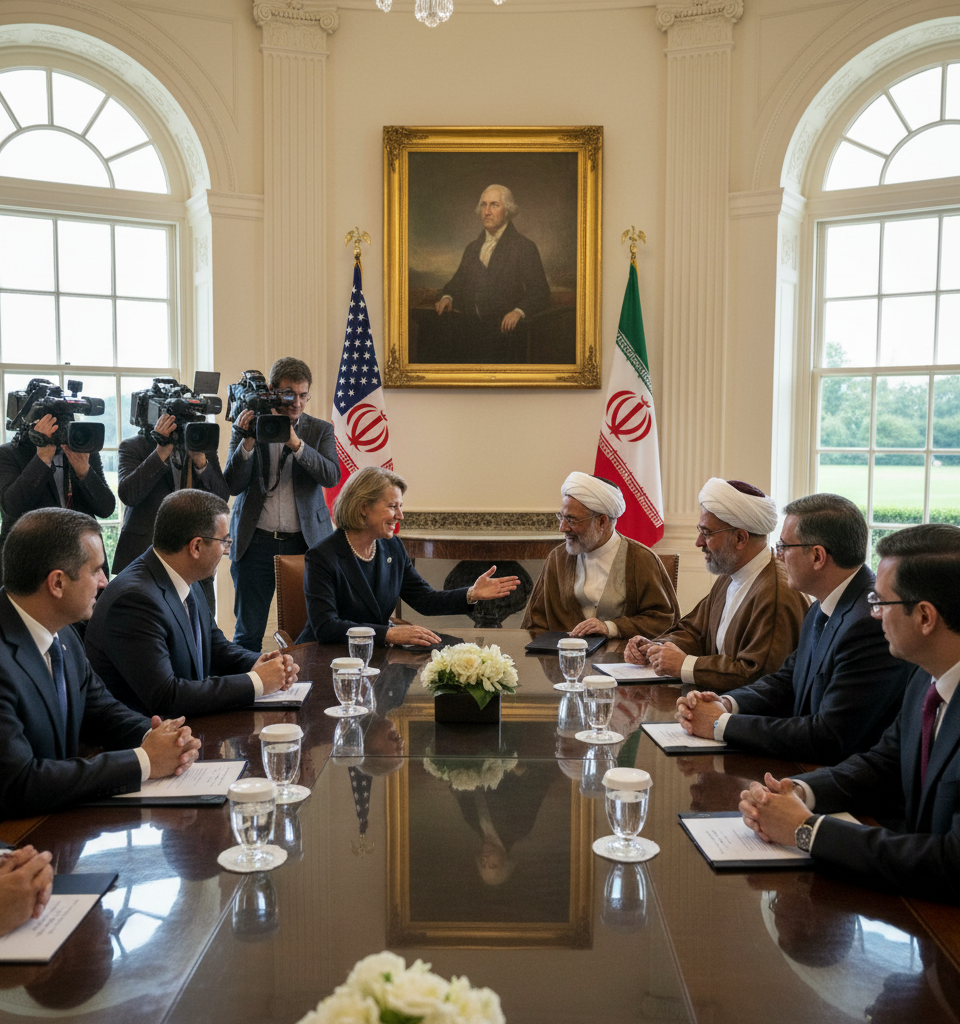
WASHINGTON D.C. – The Biden administration is actively engaged in discussions regarding a potential peace deal with Iran, the White House confirmed today, 2026-05-19. These diplomatic efforts are proceeding against a backdrop of continued disruption in the Strait of Hormuz, a vital chokepoint for global oil shipments, which remains at a mere trickle. This situation persists even though former President Donald Trump had previously asserted that the reopening of the strait was a prerequisite for any ceasefire with Tehran.
The ongoing negotiations highlight a complex geopolitical landscape, where the easing of tensions between Washington and Tehran could have profound implications for regional stability, energy markets, and international trade. The Strait of Hormuz, through which approximately one-fifth of the world's oil supply passes, has been a flashpoint for years, with its closure or constriction directly impacting global crude prices and maritime security. The current low volume of traffic underscores the deep-seated mistrust and unresolved issues that continue to plague US-Iran relations, despite calls for de-escalation.
Geopolitical Stakes and Energy Market Implications
The persistence of limited traffic through the Strait of Hormuz is a critical indicator of the unresolved security concerns in the Persian Gulf. For global energy markets, this bottleneck presents a continuous risk premium. Oil tankers, facing potential threats or higher insurance costs, are likely rerouting or delaying passage, contributing to supply chain inefficiencies and potentially influencing energy prices worldwide. While specific details of the peace deal discussions remain undisclosed, their very existence suggests a concerted diplomatic push to navigate these complex challenges.
The initial premise set by former President Trump—that a ceasefire hinged on the Strait's full reopening—appears to be undergoing re-evaluation or perhaps being addressed through alternative diplomatic channels. The current administration's willingness to engage in separate discussions, even as the Strait remains restricted, could indicate a shift in strategy or an attempt to build trust incrementally. The economic ramifications of a prolonged or exacerbated closure would be severe, affecting not only crude oil prices but also the broader global economy dependent on stable energy supplies.
Unpacking the Diplomatic Overtures
The White House's announcement, while brief, signifies a significant development in one of the world's most enduring geopolitical standoffs. The exact nature of the topics under discussion during these peace talks remains unconfirmed, but they are widely expected to encompass nuclear proliferation, regional proxy conflicts, and maritime security in the Persian Gulf. A resolution to these long-standing issues could unlock substantial economic benefits for Iran, potentially leading to the lifting of sanctions and a reintegration into the global economy.
However, the lack of immediate change in the Strait of Hormuz suggests that significant hurdles remain. The historical animosity and deep-seated grievances between the two nations are formidable. Observers will be keenly watching for any signs of tangible movement on either the diplomatic front or the physical flow of goods through the vital waterway. The success of these discussions will likely depend on the willingness of both parties to make meaningful concessions and establish robust mechanisms for verification and trust-building.
The Road Ahead: Potential Outcomes and Challenges
The near-term implications of these ongoing discussions are multifaceted. Should a breakthrough occur, it could lead to a substantial de-escalation of tensions in the Middle East, potentially stabilizing oil prices and fostering greater economic cooperation in the region. Conversely, a breakdown in talks could further entrench the current stalemate, prolonging the restricted access through the Strait of Hormuz and exacerbating existing geopolitical risks.
For businesses and international trade, the uncertainty surrounding the Strait's future remains a significant concern. Shipping companies and insurers continue to weigh the risks of transit, directly impacting global supply chains. The international community will be closely monitoring the progress of these peace deal discussions, understanding that their outcome could redefine the geopolitical dynamics of the Middle East for years to come. The delicate balance between diplomatic progress and on-the-ground realities, particularly in critical locations like the Strait of Hormuz, will be a defining feature of foreign policy in the coming months.