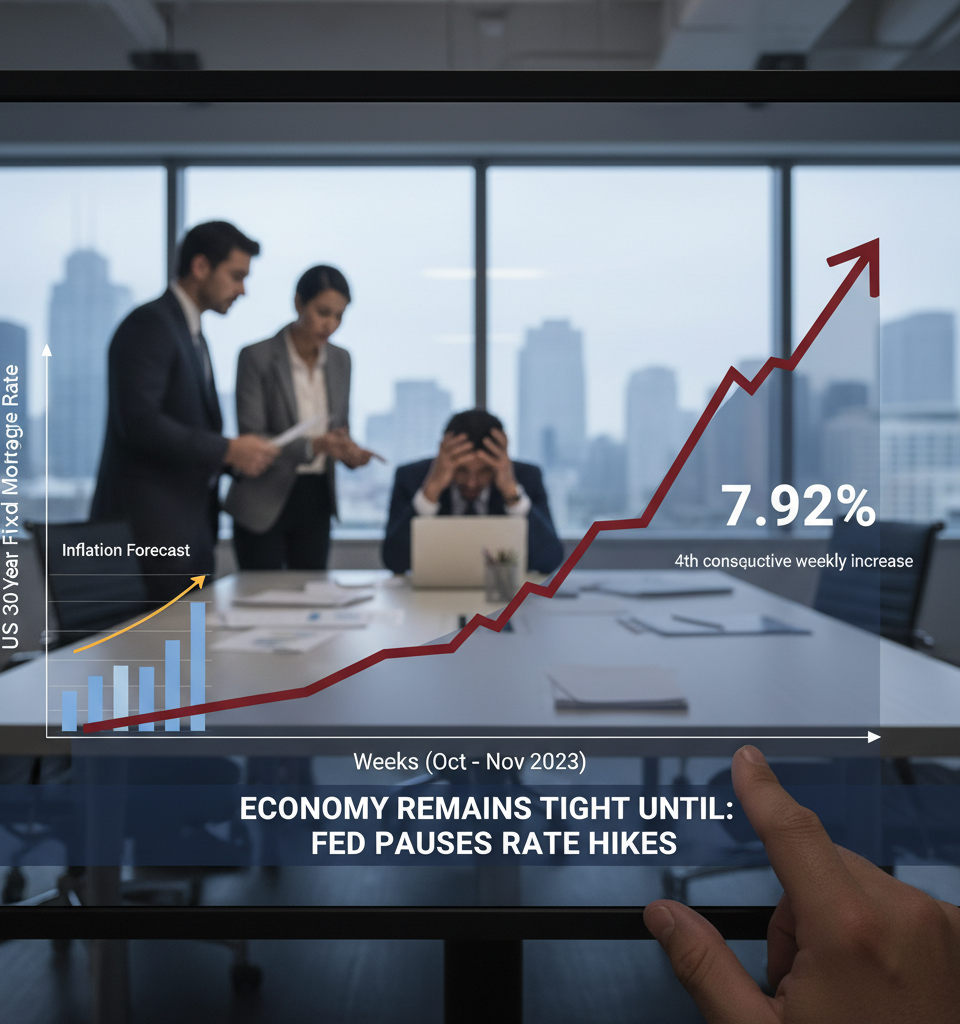
Mortgage interest rates have recorded a fourth consecutive weekly increase, a development that continues to reshape the landscape for prospective homebuyers and the broader housing market. This latest surge pushes rates further away from the sub-6% levels briefly observed just days before the initiation of 'Operation Epic Fury' – a benchmark last seen in 2022. The swift reversal highlights the profound and immediate impact of geopolitical instability on financial markets, particularly those as sensitive as housing.
Geopolitical Headwinds to Lending Rates
The current upward trend in mortgage rates stands in stark contrast to the optimistic outlook just a few weeks prior. Analysts had widely anticipated a period of greater stability, if not a gradual decline, in borrowing costs following the significant dip below the 6% threshold. That brief reprieve, however, was decisively curtailed by the onset of Operation Epic Fury. The subsequent uncertainty and flight to safety in global bond markets have translated directly into higher borrowing costs for consumers, interrupting what many hoped would be a more favorable environment for homeownership.
The volatility in mortgage rates is a direct reflection of broader economic anxieties exacerbated by ongoing geopolitical tensions. When global stability is perceived to be under threat, investors typically seek the safety of government bonds, particularly U.S. Treasuries. While this flight to safety often drives down Treasury yields, the concurrent demand for liquidity and potential inflationary pressures stemming from conflict can exert upward pressure on longer-term interest rates, which directly influence mortgage pricing. The current situation appears to be dominated by the latter, as lenders adjust their offerings to account for heightened risk and an uncertain economic future.
Impact on Housing Affordability and Market Dynamics
The sustained increase in mortgage rates is poised to further strain housing affordability, a challenge that has plagued the market for several years. Higher interest rates translate into larger monthly mortgage payments, effectively reducing the purchasing power of homebuyers even if home prices remain stable. For those on the cusp of qualifying for a loan or those with tight budgets, this continued ascent could push homeownership further out of reach, potentially leading to a cooling of transaction volumes in the coming months.
Real estate agents and mortgage brokers are already reporting increased caution among potential buyers. Many who had been ready to enter the market when rates were below 6% are now reassessing their financial situations. This reticence could lead to a slowdown in new purchase agreements and a potential increase in withdrawn offers, particularly in regions where home prices have remained elevated. The current environment also creates a disincentive for existing homeowners to sell, as refinancing into a lower rate becomes less appealing and potential new purchases would be financed at a significantly higher cost.
The Path to Rate Stabilization
Industry experts and economists are largely in agreement that a significant and sustained drop in mortgage rates — a return to the levels seen just before Operation Epic Fury — is unlikely until a clearer resolution or de-escalation of the geopolitical situation emerges. The underlying premise is that market stability is fundamentally linked to global stability.
Until there is a discernible shift in the geopolitical landscape, the current upward pressure on rates is expected to persist, or at best, rates may plateau at these elevated levels. Financial markets abhor uncertainty, and the current environment provides little in the way of clear forward guidance. Lenders are pricing in the current global climate, and without a substantial positive development on the geopolitical front, a reversal to more favorable borrowing conditions for homeowners appears distant. The ongoing situation thus serves as a critical determinant for the future trajectory of mortgage rates and, by extension, the health of the entire housing market.