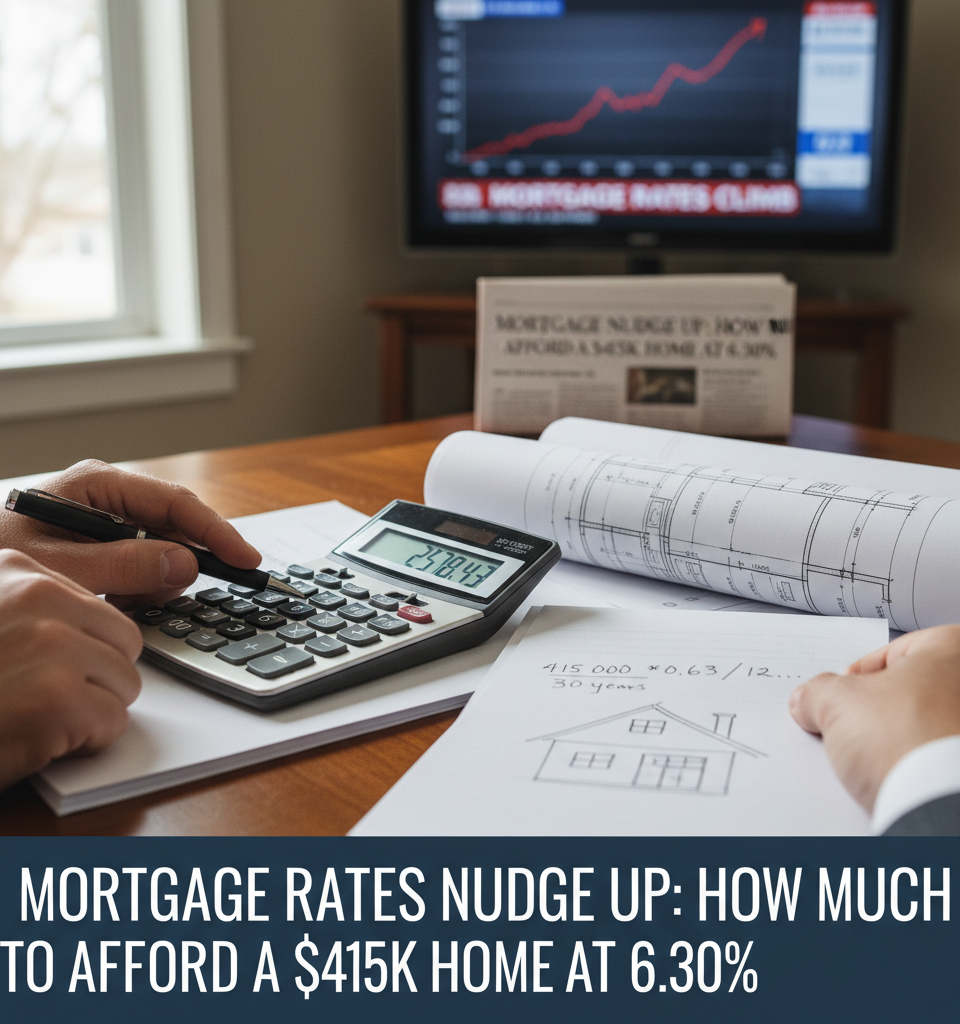
Prospective homebuyers across the nation are facing renewed affordability challenges as conventional 30-year fixed mortgage rates edged higher, finishing April near 6.30%. This latest rise, while keeping rates within the low 6% range, moves them further away from the more desirable levels many buyers had hoped for earlier in the year. The increase has a direct and significant impact on purchasing power, especially for homes in the mid-tier price range, such as a $415,000 property, necessitating substantial upfront capital and considerable monthly financial commitments.
The persistent upward trend in mortgage rates underscores a challenging environment for the housing market. Historically, rates above 6% are considered elevated, especially when contrasted with the sub-3% rates observed during the pandemic-fueled boom. This shift represents a return to a more normalized, albeit less favorable, borrowing cost structure, reflecting broader economic pressures and the Federal Reserve's ongoing efforts to combat inflation. The current rate environment has significantly reshaped buyer eligibility and market dynamics, forcing many to re-evaluate their homeownership aspirations or adjust their budget expectations.
To purchase a $415,000 home with a 6.30% interest rate, buyers face a considerable financial outlay. A typical 20% down payment on such a property would amount to $83,000, reducing the principal loan amount to $332,000. For a 30-year fixed-rate mortgage at 6.30%, the principal and interest payment alone would be approximately $2,050 per month. This figure does not include essential additional costs such as property taxes, homeowner's insurance, and private mortgage insurance (PMI) if the down payment is less than 20%, which can easily add several hundred dollars more to the monthly burden. For instance, assuming an estimated $400 for property taxes and $150 for insurance, the total monthly housing payment could easily exceed $2,600.
This uptick in mortgage rates ripples throughout the broader housing and financial markets. Higher borrowing costs tend to cool demand, potentially leading to fewer transactions and perhaps a moderation in home price appreciation, though outright price declines are not universally predicted given persistent supply shortages. For sellers, fewer qualified buyers mean properties may sit on the market longer or require price adjustments. The construction industry also feels the pinch, as slower sales can deter new building projects, further exacerbating the existing inventory challenges in the long run.
Industry experts and financial analysts are closely monitoring these trends. Dr. Jessica Miller, chief economist at Apex Financial, noted, "The stickiness of inflation continues to put upward pressure on long-term interest rates, and mortgage rates are no exception. Buyers are now forced to make tough decisions, either by compromising on location and size or waiting on the sidelines for a more favorable environment. We expect this elevated rate environment to persist for the foreseeable future, absent any significant economic downturn or unexpected dovish pivot from the Fed." Many predict that affordability will remain a primary hurdle for the remainder of the year.
The immediate future of mortgage rates remains intertwined with inflation data, Federal Reserve policy, and broader economic indicators. While some analysts foresee a plateauing of rates in the coming months, a significant decline back to pandemic-era lows is largely considered improbable without a substantial shift in economic fundamentals. Prospective buyers are advised to secure pre-approvals, explore adjustable-rate mortgage (ARM) options if suitable for their financial strategy, and remain agile in their search. Lenders are also beginning to offer more creative financing solutions, including buydowns and temporary rate reductions, to attract and assist qualified buyers in this demanding market.
Ultimately, the current landscape demands careful financial planning and realistic expectations from homebuyers. The dream of homeownership, while still attainable, now requires a greater financial commitment and resilience in navigating a volatile interest rate environment. Understanding the full scope of monthly payments, including taxes and insurance, is paramount to making an informed and sustainable home purchase decision in today's market.