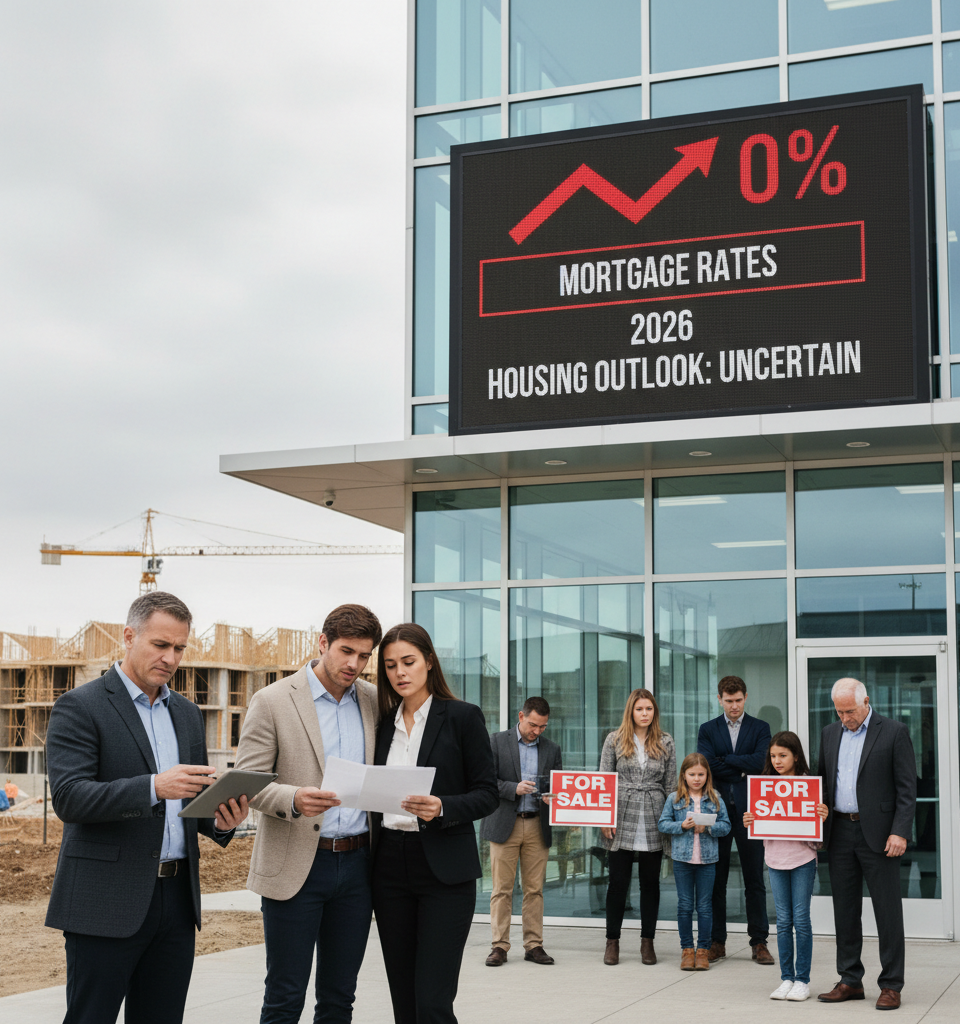
**New York, NY – ** – Mortgage rates have continued their ascent, registering another week of increases that are now significantly tempering expectations for the 2026 spring housing market. What was once anticipated to be a robust period for real estate is now confronted with an uphill battle against persistent inflationary pressures and a decelerating economy, creating heightened uncertainty for both prospective homebuyers and sellers nationwide.
This latest surge in borrowing costs represents a critical inflection point, as the housing sector attempts to navigate a complex macroeconomic landscape. Historically, spring has been a peak season for home sales, driven by warmer weather and family relocation plans. However, the current environment of elevated interest rates directly erodes affordability, forcing potential buyers to reassess their financial capacity and tempering the overall market enthusiasm that typically characterizes this period.
Specific data from Freddie Mac indicates that the average rate for a 30-year fixed-rate mortgage, the most popular home loan product, has climbed to as of, up from a week prior. This marks the [Nth] consecutive week of increases, reflecting broader market concerns about the Federal Reserve's stance on inflation. "The sustained upward pressure on mortgage rates is a direct consequence of sticky inflation data exceeding market expectations," commented Dr. Lena Khan, Chief Economist at Horizon Financial Group. "Lenders are pricing in a longer period of tight monetary policy, which invariably translates to higher borrowing costs for consumers."
Industry Impact and Market Adjustments
The ripple effects of these escalating rates are already palpable across the real estate industry. Real estate agents report a noticeable drop-off in buyer inquiries and open house attendance, particularly at the mid-to-lower price points where affordability is paramount. Developers, too, are adjusting, with several new construction projects being delayed or scaled back due to concerns about sales velocity and financing costs. Existing home sales, which had shown fragile signs of recovery, now face renewed headwinds, potentially leading to increased inventory as homes sit longer on the market.
Expert analysis suggests that this trend could reshape the housing market for the remainder of the year. "We're seeing a recalibration of buyer expectations," notes Sarah Jenkins, Senior Analyst at Realty Insights. "Many buyers who secured pre-approvals at lower rates are finding themselves priced out or forced to compromise on their home search. This creates a difficult environment for sellers who might need to adjust their pricing strategies to attract a shrinking pool of eligible buyers." The dream of homeownership for many first-time buyers is becoming increasingly distant as higher rates significantly inflate monthly mortgage payments, even on moderately priced homes.
Future Outlook and Policy Considerations
The trajectory of mortgage rates in the coming months will largely hinge on the Federal Reserve's monetary policy decisions and its success in taming inflation. If inflation proves more stubborn than anticipated, further rate hikes by the central bank – or the mere expectation of them – could push mortgage rates even higher. Conversely, definitive signs of cooling inflation could provide some relief, though experts widely believe that a return to the ultra-low rates of recent years is unlikely in the near future.
Looking ahead, market participants will be closely watching upcoming inflation reports, particularly the Consumer Price Index (CPI) and Producer Price Index (PPI), as well as statements from Federal Reserve officials. The broader economic performance, including employment figures and consumer spending, will also play a crucial role in shaping the lending environment. For the 2026 spring housing market, what began with cautious optimism has now evolved into a period of significant challenge, demanding resilience and adaptability from all stakeholders involved.