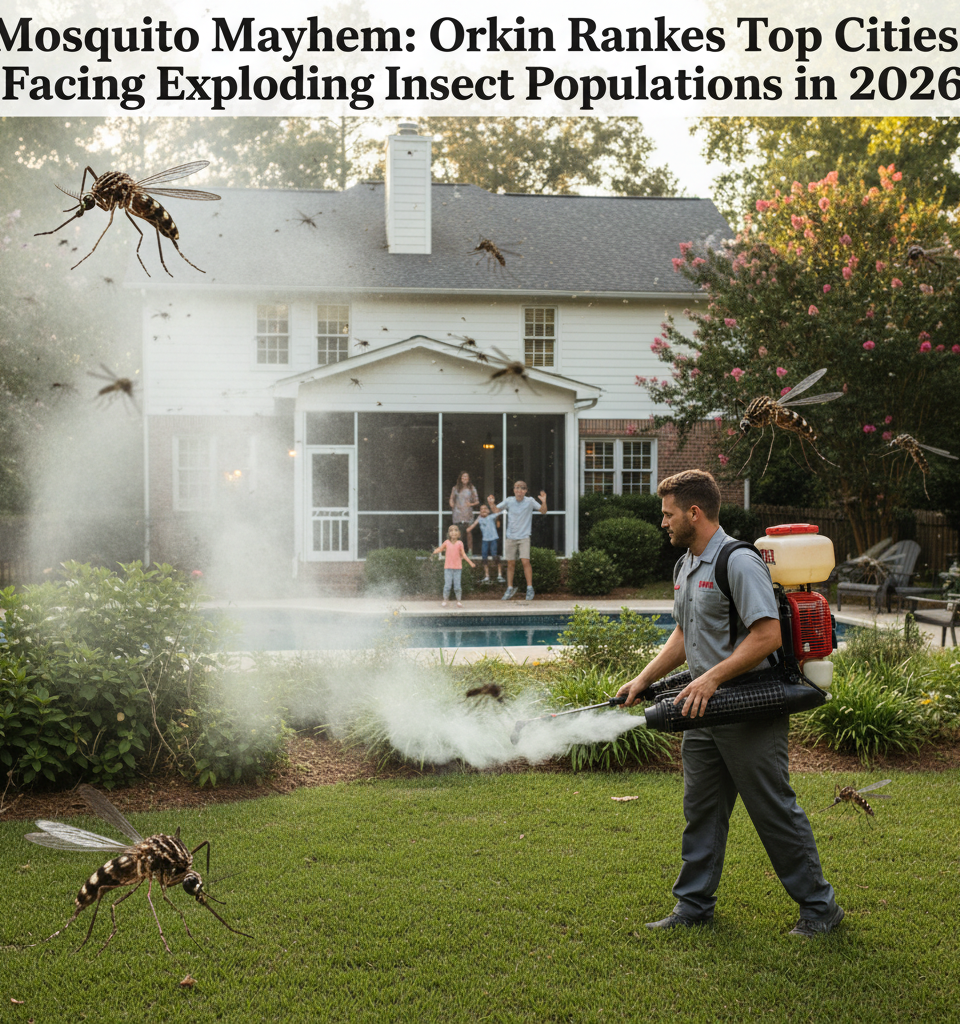
As the warmth of spring gives way to summer, millions of Americans face an increasingly pressing, albeit tiny, foe: the mosquito. Orkin, the pest control giant, recently released its anticipated 2026 Mosquito Cities List, painting a concerning picture of shifting insect populations and heightened risk across major metropolitan areas. This year's report pinpoints specific urban centers where homeowners and public health officials alike are preparing for a potential explosion in mosquito activity, raising alarms for both comfort and disease prevention.
The Shifting Landscape of Pest Hotbeds
The annual Orkin list, a bellwether for seasonal pest threats, aggregates data from customer call metrics and service requests spanning March 1, 2025, to February 29, 2026. This comprehensive analysis highlights not just the persistent mosquito strongholds but also the surprising emergence of new hotspots and the dramatic ascent of others. The underlying factors contributing to these shifts are complex, ranging from evolving climate patterns to urbanization, which creates ideal breeding grounds. Historically, mosquito activity has been correlated with warmer temperatures and increased precipitation, but the 2026 data suggests more nuanced influences, including long-term environmental changes that are altering the ecological balance previously observed.
Key Findings and Vulnerable Regions
While Orkin did not disclose the full ranking at the time of this report, preliminary insights indicate several cities, particularly those in the Southeast and parts of the Midwest, are experiencing a notable surge in mosquito activity. For instance, Atlanta, Georgia, and Dallas-Fort Worth, Texas, which frequently feature prominently on such lists, are expected to maintain their high-risk status, with projected increases in call volumes of 10-15% over the previous year. New entrants or significantly climbing cities on the list include Kansas City, Missouri, and Raleigh, North Carolina, indicating a broader geographic spread of intense mosquito pressure.
These areas are characterized by abundant green spaces, expanding suburbs, and often, less robust public health infrastructure for widespread pest control initiatives compared to their established counterparts. The report further details an overall national increase in mosquito-related service requests, up 7% year-over-year, signifying a nationwide trend rather than isolated incidents.
Economic and Public Health Ramifications
The economic implications of a heightened mosquito season are substantial. Homeowners face increased expenditure on repellents, professional pest control services, and potential property damage from conditions conducive to mosquito breeding. For municipalities, the cost of public health campaigns, larvicide treatments, and disease surveillance programs can run into millions of dollars. Beyond direct costs, industries reliant on outdoor activities, such as tourism and leisure, could see reduced patronage. From a public health perspective, the rise in mosquito populations escalates the risk of vector-borne diseases like West Nile Virus, Zika, and Eastern Equine Encephalitis. Each year, hundreds of cases of West Nile Virus are reported in the U.S., with varying degrees of severity, making mosquito control a critical public health priority.
Expert Insights on Mitigation Strategies
Pest control experts emphasize proactive and integrated pest management strategies. Dr. Rebecca Green, an entomologist specializing in urban pests, states, "The key to managing these exploding populations lies in community-wide efforts.
Source reduction – eliminating standing water where mosquitoes breed – is paramount. " She also highlights the importance of educating the public on personal protection measures, such as using EPA-registered repellents and wearing protective clothing during peak mosquito activity, typically at dawn and dusk. Green also points to the growing use of biological controls and targeted larvicides as effective tools for municipal vector control programs, noting that reliance solely on adulticides is often insufficient and environmentally problematic in the long term.
Looking Ahead: Innovation and Adaptation
The findings from the 2026 Orkin list underscore a critical need for continuous innovation in pest management and adaptable public health responses. Researchers are exploring novel technologies, including genetically modified mosquitoes to reduce wild populations and advanced forecasting models that predict mosquito outbreaks with greater accuracy. Cities are also investing in smart monitoring systems and community engagement programs to empower residents in the fight against these pervasive pests. As climate patterns continue to evolve, the challenge of mosquito control will likely intensify, necessitating robust, collaborative efforts between government agencies, private industry, and individual citizens to mitigate the impacts of the summer swarm in years to come.