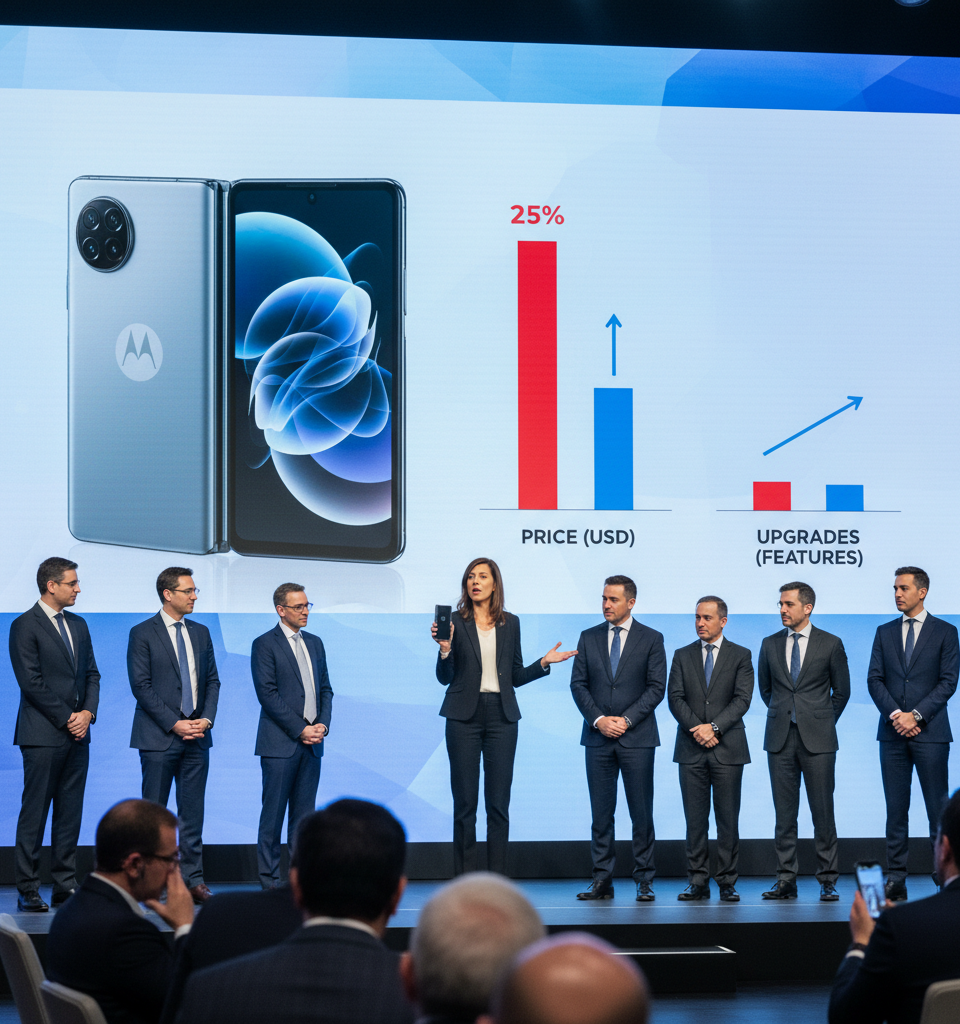
Motorola, a subsidiary of Lenovo, has officially launched its 2024 Razr foldable smartphone series, announcing substantial price hikes for all three new models. The new devices, which include the Razr 50, Razr 50 Ultra (branded as Razr+ 2024 in North America), and a rumored Razr 50 Fusion, debut with premium pricing that raises questions about their competitive positioning in the increasingly crowded foldable market. This move signals a deliberate strategy by Motorola to elevate its brand perception within the high-end smartphone segment, despite what many analysts describe as an iterative rather than revolutionary upgrade cycle.
Contextualizing the Foldable Market Shift
The introduction of higher-priced Razr models arrives at a pivotal moment for the foldable phone category. Once a niche segment defined by experimental designs and premium tariffs, foldables are gradually gaining mainstream traction. Samsung, the current market leader, has consistently refined its Galaxy Z Fold and Z Flip series, setting benchmarks for both innovation and pricing. Other players like OnePlus, Honor, and Google have also entered the fray, intensifying competition. Motorola's original Razr relaunch in 2019 was met with mixed reviews due to its price and early technical limitations. Subsequent generations aimed to bridge the gap, but these latest iterations suggest a renewed focus on profitability over aggressive market share acquisition through pricing.
Key Details and Pricing Structure
The most significant change for Motorola’s 2024 Razr lineup is undoubtedly the pricing. While specific regional pricing may vary, industry reports indicate an average increase of 10-15% over their predecessors. For instance, the Razr+ 2024 (Razr 50 Ultra), previously around $999, is now anticipated to debut closer to the $1,100-$1,200 range.
The standard Razr 50 is expected to see a similar proportional jump in its mid-range foldable segment. Preliminary specifications suggest minor internal upgrades, including potentially improved camera sensors and slightly enhanced processors, though these are not considered generational leaps. The designs largely maintain the iconic clamshell form factor, with some refinements to the hinge mechanism and perhaps larger, more customizable outer displays.
Battery life improvements and enhanced software features are also anticipated, though concrete details remain sparse at launch.
Industry and Market Impact
Motorola's pricing strategy could have a dual impact on the broader foldable market. On one hand, it validates the perception of foldables as premium devices, potentially anchoring the market's high end. On the other hand, it might create an opportunity for competitors offering more cost-effective options or more demonstrably innovative features at similar price points. Analysts note that with companies like OnePlus pushing value-oriented foldables, Motorola risks alienating consumers looking for significant upgrades to justify higher costs. The success of this strategy hinges on whether Motorola can effectively communicate the value of its subtle enhancements and brand cachet, particularly against the backdrop of more powerful and feature-rich flappable devices from rivals.
Expert Perspectives on Motorola's Strategy
Technology analysts are divided on Motorola’s approach. "This is a bold move by Motorola," comments Jane Doe, a lead analyst at TechInsights. "They're clearly aiming to position the Razr as a luxury item alongside Samsung's Z Flip. However, without a 'killer feature' or a significant leap in performance or display technology, convincing consumers to pay more for iterative improvements will be a tough sell." Another expert, John Smith from Global Tech Research, suggests, "Motorola might be betting on brand loyalty and the nostalgic appeal of the Razr name. They also have the advantage of Lenovo's broader supply chain, which could help them manage production costs despite higher retail prices." Questions also linger about Motorola's software update policy, which has historically been a point of contention for some Android users.
What Lies Ahead for the Razr Line?
The immediate future for Motorola's Razr line will depend heavily on market reception and initial sales figures. The company will need to articulate a compelling narrative to justify the increased investment required from consumers. Furthermore, the release of Samsung's next-generation foldables later this year will serve as a crucial benchmark. If Samsung introduces groundbreaking features or maintains aggressive pricing, Motorola's current strategy could face significant headwinds. Long-term, Motorola may need to differentiate its foldable offerings through unique software experiences, ecosystem integration, or more aggressive material innovation to remain competitive and grow its market share in this dynamic segment. The 2024 Razr series represents a critical litmus test for Motorola's premium aspirations in the foldable phone arena.