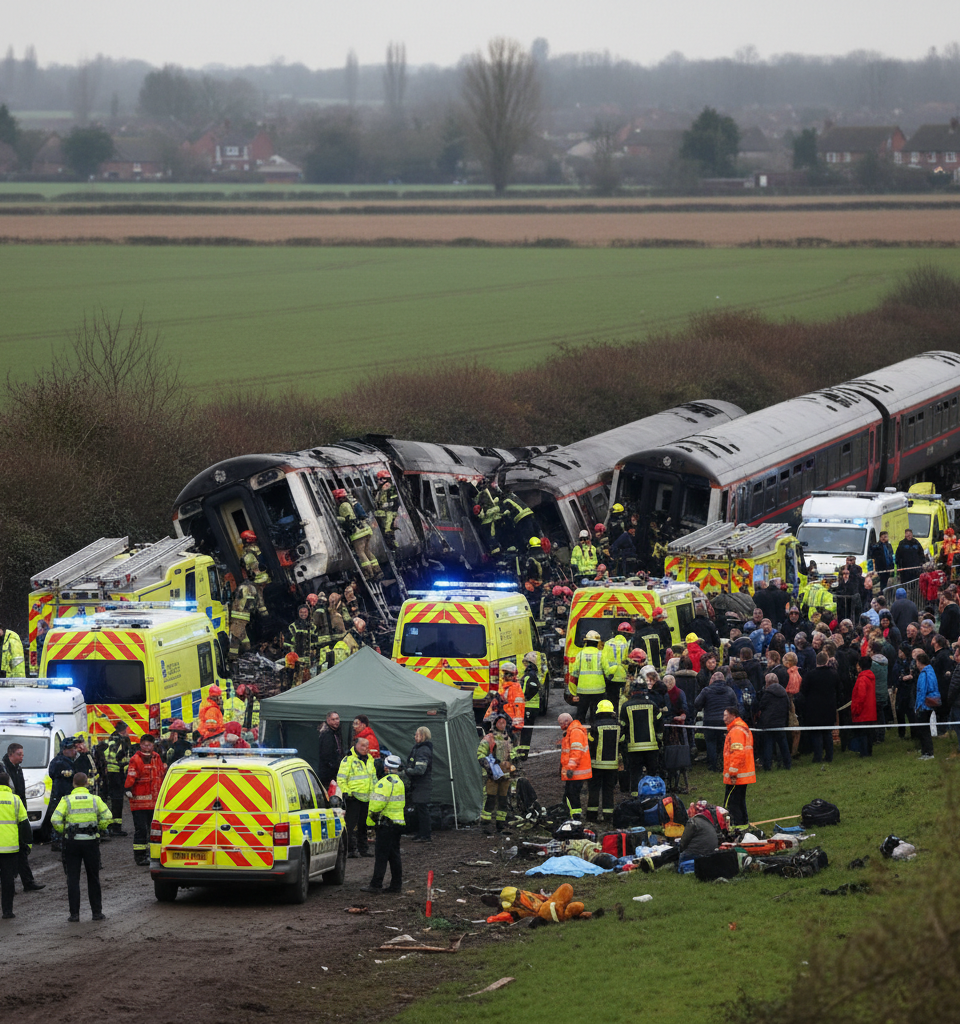
Two trains have reportedly collided in an incident taking place north of London, in the vicinity of Bedford. Media outlets are conveying initial reports of multiple injuries sustained as a result of the crash, though as of the latest updates, emergency services have refrained from providing comprehensive details regarding the nature or number of those affected, or the circumstances leading to the collision.
The incident, which occurred today, June 19, 2026, has prompted a significant response from emergency personnel, including police, ambulance services, and fire brigades, all converging on the scene. While the exact location along the rail line near Bedford remains unspecified in early reports, the focus is currently on managing the immediate aftermath and attending to those reported injured. The lack of detailed information from official sources at this early stage is standard procedure as authorities prioritize response and assessment.
Immediate Response and Lack of Official Details
Emergency crews were dispatched promptly following notification of the collision. Media sources on the ground and those monitoring official channels have consistently highlighted the presence of numerous emergency vehicles and personnel. However, spokespersons for the emergency services have maintained a cautious stance, declining to elaborate on the number of injuries or specific details of the incident. This reticence is typical in the immediate hours following such an event, as efforts are concentrated on rescue, securing the site, and accurate casualty assessment before public statements are made. The focus appears to be on patient care and scene management.
Potential Impact on Rail Services and Investigations
While details are scarce, any incident involving a train collision, particularly one reporting multiple injuries, is likely to have significant ramifications for rail services in the affected region. Passengers traveling on routes that typically pass through or near Bedford could experience considerable delays, cancellations, and disruptions. Authorities will undoubtedly initiate a thorough investigation into the cause of the collision once the immediate emergency response concludes. Such investigations typically involve examining track conditions, signaling systems, operational procedures, and the conduct of train operators. The Rail Accident Investigation Branch (RAIB) would ordinarily lead such a probe, aiming to determine the precise sequence of events and any contributing factors to prevent future occurrences.
Broader Context of Rail Safety
Train collisions, especially those involving significant injury, are rare occurrences in the UK, a testament to the stringent safety protocols and continuous investment in rail infrastructure. However, when such incidents do occur, they invariably prompt public concern and renewed scrutiny of rail safety standards. The last major incident of this nature would have led to a comprehensive review of operations and safety measures. This latest event, once fully understood, will likely feed into ongoing discussions about rail modernization, signaling technology, and human factor considerations in train operations.
What Comes Next
In the coming hours and days, it is expected that official statements will be released as more concrete information becomes available. This will likely include updates on the condition of the injured, potentially details on the types of trains involved, and initial findings from the ongoing investigation. The public will be keen to understand the cause of the collision and the measures that will be taken to ensure the safety and reliability of the rail network. For now, the focus remains on the immediate response and the well-being of those affected by this serious incident near Bedford.