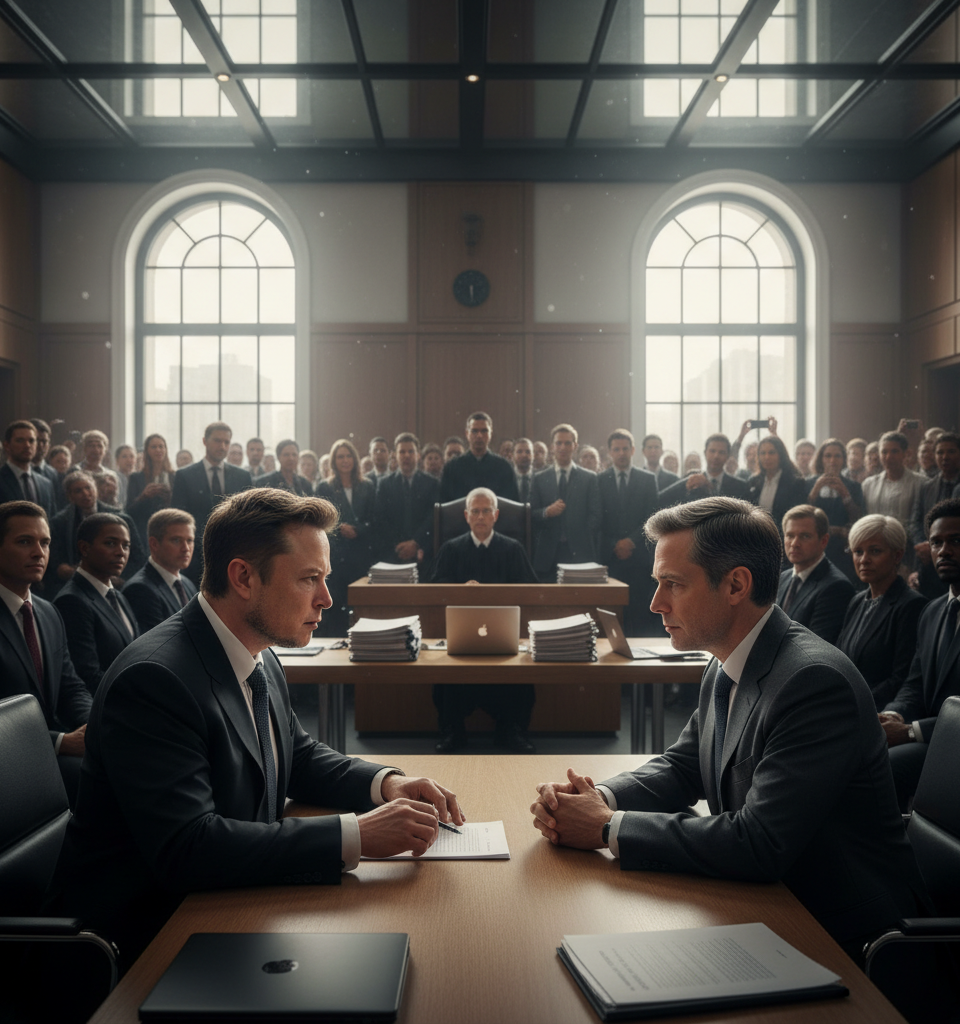
The simmering tensions between tech titans Elon Musk and Sam Altman have erupted into a full-blown legal battle, with Musk filing a lawsuit against OpenAI and its CEO, alleging a betrayal of the company's founding principles. The lawsuit, filed in late February, claims that OpenAI has strayed from its original mission as a non-profit entity dedicated to developing AI for the benefit of humanity, instead prioritizing profit-driven ventures, particularly through its lucrative partnership with Microsoft. This legal challenge, unfolding amidst a period of rapid AI advancement, promises to be a pivotal moment for OpenAI and the broader artificial intelligence industry.
The Genesis of a Rivalry: From Collaboration to Confrontation
Musk was a co-founder of OpenAI in 2015, contributing significantly to its initial funding with a reported $100 million investment. The company was established with a clear mandate: to pursue artificial general intelligence (AGI) as a public good, free from corporate influence. However, Musk's involvement became increasingly strained, leading to his departure from the board in 2018. His lawsuit now contends that OpenAI, under Altman's leadership, has effectively been repurposed as a profit-maximising subsidiary of Microsoft, which has invested over $13 billion in the AI powerhouse. This shift, Musk argues, directly contravenes the founding agreement and risks centralizing potent AI capabilities in the hands of a few dominant corporations, undermining the altruistic aims he initially championed.
Key Allegations and Their Potential Ramifications
Musk's legal filing specifically targets Altman, OpenAI President Greg Brockman, and other entities associated with the company, alleging breach of contract and fiduciary duty. The lawsuit reportedly seeks a court order compelling OpenAI to adhere to its original non-profit charter and to make its AI technology, particularly its advanced GPT models, open source. If successful, such an outcome could dramatically alter OpenAI's business model, potentially dismantling its exclusive agreements with Microsoft and democratizing access to some of the world's most powerful AI systems. This would also force a re-evaluation of the financial structures and corporate governance prevalent across the rapidly expanding AI landscape.
Industry Reactions and Broader Market Impact
The legal tussle sends ripples across the tech industry, already grappling with the rapid evolution of AI. Shares of major tech companies, particularly those with significant AI investments like Microsoft (NASDAQ:MSFT), have shown some volatility as investors assess the potential ramifications. Competitors and startups are keenly observing the proceedings, recognizing that the outcome could set precedents for how AI intellectual property is owned, developed, and commercialized. The debate highlights a fundamental schism within the AI community: between those advocating for open-source, collaborative development and those pursuing proprietary, monetized approaches. This legal challenge could either reinforce the current trend of corporate dominance or pave the way for a more decentralized and transparent AI ecosystem.
Expert Opinions on the Future of AI Governance
Legal and AI ethics experts are weighing in, emphasizing the profound implications for AI governance. Dr. Anya Sharma, a professor of computational law at Stanford University, noted, "This case isn't just about two tech billionaires; it's about defining the ethical and legal guardrails for the most transformative technology of our time. The court's decision could significantly influence future regulatory frameworks and investor confidence in AI ventures." Analysts from Gartner suggest that increased legal scrutiny and potential regulatory intervention could slow down the breakneck pace of AI consolidation, potentially fostering a more diverse competitive landscape but also introducing greater uncertainty for existing players.
The DOJ's Role and the AI Job Apocalypse Debate
Adding to the complexity are concurrent developments, such as the Department of Justice's reported dismantling of its Voting Rights Unit. While seemingly unrelated, this highlights a broader trend of shifting governmental priorities and resource allocation, potentially leaving certain sectors vulnerable to unchecked corporate power. Meanwhile, the "AI job apocalypse" remains a hotly debated topic. While some economists predict significant job displacement, others, including a recent report from McKinsey & Company, foresee AI driving job creation and requiring workforce upskilling. The legal battle over OpenAI's direction could, in the long term, influence how AI development impacts labor markets, depending on whether the technology remains largely proprietary or becomes more widely accessible for innovation across various industries.
What Lies Ahead: A Defining Moment for AI
As the legal proceedings unfold, the tech world watches with bated breath. The initial stages will involve discovery and pre-trial motions, which could take several months. A court-mandated mediation is also a strong possibility, but given the strong personalities involved, a protracted legal battle is not out of the question. The ultimate resolution – whether through settlement or trial verdict – will not only determine the future trajectory of OpenAI but also establish a critical precedent for the entire AI industry, shaping its ethical foundations, commercial structures, and the very concept of responsible AI development for decades to come. The stakes are immense, promising a defining chapter in the history of artificial intelligence.