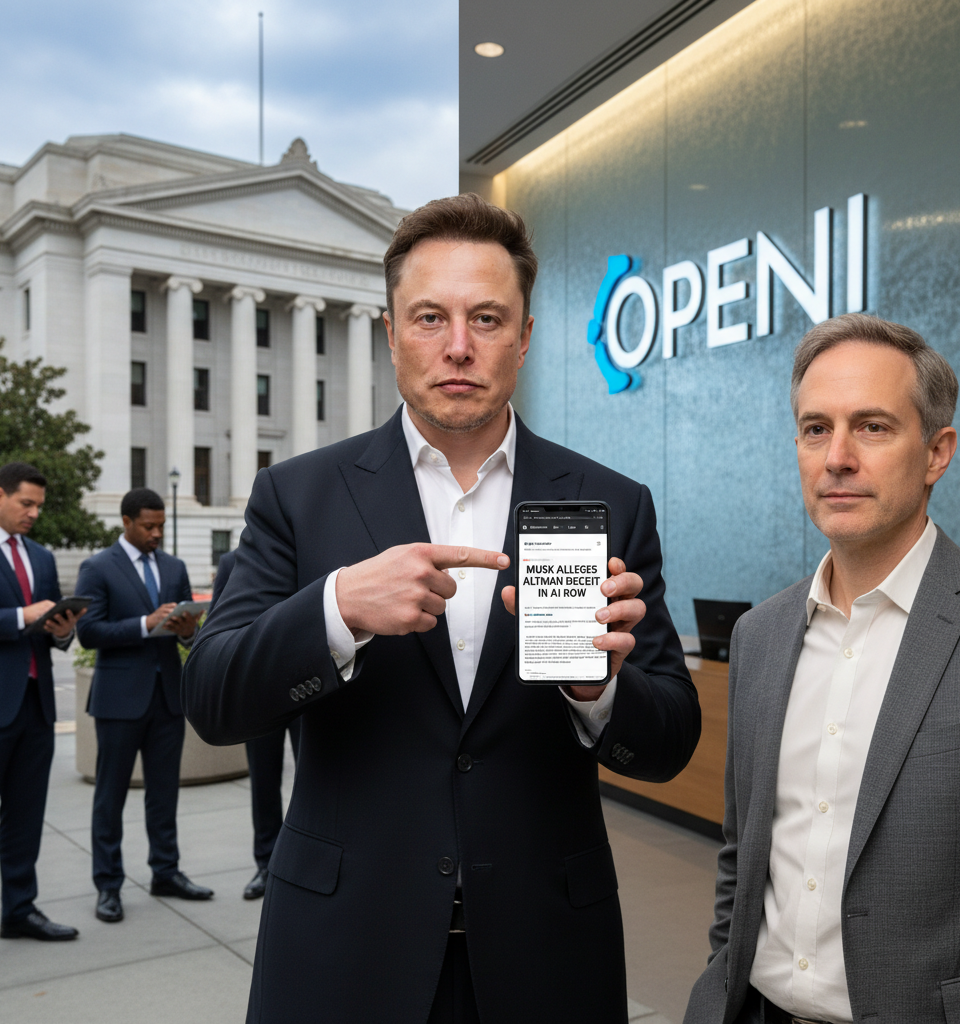
Elon Musk, the billionaire entrepreneur and vocal critic of OpenAI, actively promoted a New Yorker article scrutinizing OpenAI CEO Sam Altman on his social media platform X (formerly Twitter) today. This strategic endorsement arrived precisely as the legal proceedings for Musk's lawsuit against OpenAI officially commenced in federal court in Oakland, California. The lawsuit, filed in March, alleges that OpenAI has deviated from its original non-profit, open-source mission in pursuit of profit, betraying its founding principles.
This development is significant because it intertwines a highly personal narrative with a broader legal and ethical contest over the direction of artificial intelligence. Musk, a co-founder of OpenAI, has increasingly voiced concerns about the company's trajectory, particularly its commercialization and perceived lack of commitment to open-source development. By leveraging his immense online influence to highlight critical reporting on Altman, Musk appears to be actively shaping public perception amidst the nascent stages of the legal battle, adding a unique, media-driven layer to the courtroom drama.
The New Yorker Exposé and its Implications The *New
Yorker* article in question, penned by reporter Tad Friend and published in mid-May, details various aspects of Sam Altman's leadership and the internal dynamics of OpenAI. While Musk's specific endorsement referred to the piece in general, the article delves into leadership styles, strategic shifts, and the high-pressure environment within the company. For example, it touched upon the dramatic ousting and subsequent reinstatement of Altman in late 2023, a period that shook investor confidence and raised questions about governance. Musk's decision to specifically amplify this piece signals a deliberate effort to bolster his narrative that OpenAI has veered from its mission, potentially aiming to sway public opinion and indirectly influence the legal proceedings or media coverage surrounding the trial.
Industry Repercussions and Ethical Debates
The ongoing legal dispute and Musk's public actions have considerable ramifications for the burgeoning artificial intelligence industry. OpenAI, valued at over $80 billion, is a central player, and any significant legal or reputational damage could send ripples across the sector. The core debate—whether advanced AI development should prioritize profit and proprietary control or open-source availability and ethical safety—is at the heart of this conflict. Many smaller AI startups and research institutions are watching closely, as the outcome could set precedents for governance, intellectual property, and collaboration paradigms. Furthermore, the spectacle underscores the immense power individuals like Musk wield in shaping narratives around critical technological advancements through social media.
Expert Analysis on PR and Legal Strategy Legal and
PR experts suggest that Musk’s move is a calculated tactic. "This isn't merely a coincidence; it's a strategic synchronization," commented Dr. Eleanor Vance, a media law professor at Stanford University. "Musk is effectively using his platform to parallel-process his legal arguments in the court of public opinion, a common but often effective maneuver for high-profile individuals." She added that while the legal merits will be decided in court, the public narrative can heavily influence investor sentiment, regulatory scrutiny, and long-term brand perception. Industry analysts also note that this tactic could pressure OpenAI to become more transparent, or, conversely, entrench them further in their current defensive stance.
The Path Ahead: A High-Stakes Battle
The lawsuit, which seeks to compel OpenAI to adhere to its original charter and potentially return any profits generated in deviation from its non-profit mission, is expected to be a protracted and complex affair. Depositions are anticipated to begin in late summer, with a potential trial lasting into 2025. Beyond the courtroom, the ethical debate about AI’s future will continue to intensify. Upcoming developments could include expert testimonies, the release of internal OpenAI documents, and further public statements from both Musk and Altman. This trial is not just about a single company; it's a defining moment for the future trajectory of AI development and its societal integration, with billions of dollars and the very ethos of technological progress at stake.
The Broader AI Governance Debate
The dispute also reignites the broader conversation about AI governance and the role of powerful individuals and corporations in shaping this transformative technology. Regulatory bodies globally, from the European Union with its AI Act to ongoing legislative efforts in the United States, are grappling with how to oversee AI development responsibly. This lawsuit could provide valuable insights into the internal workings of leading AI labs, potentially exposing industry practices that may inform future regulations. The public nature of this conflict ensures that the ethical and practical challenges of AI will remain at the forefront of global discourse, far beyond the confines of the Oakland courtroom.