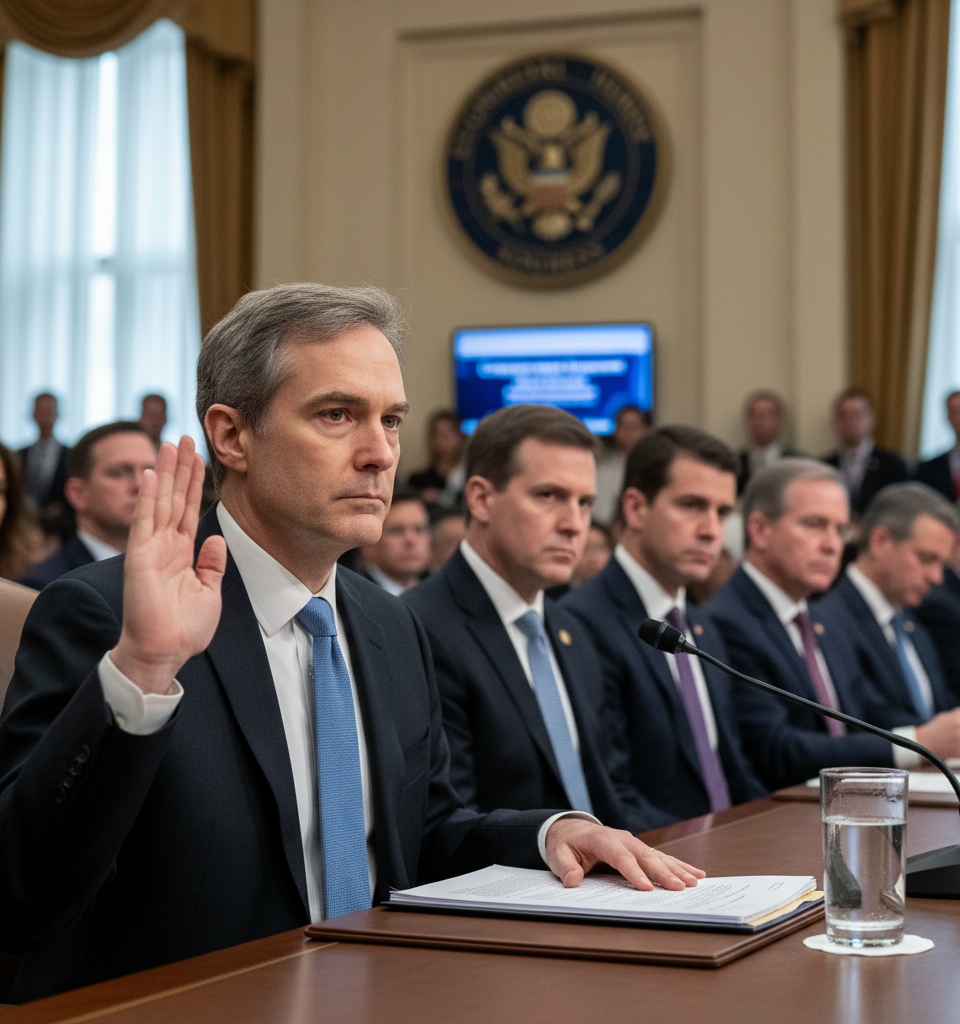
Sam Altman, CEO of artificial intelligence powerhouse OpenAI, delivered a stunning testimony recently, revealing that co-founder Elon Musk had once considered ceding control of the then-nascent organization to his children. The disclosure, described by Altman as a "particularly hair-raising" conversation, occurred during a period of intense financial strain and strategic uncertainty for the non-profit AI research venture. This historical detail underscores the volatile origins of one of the world's most influential technology companies and the deep-seated philosophical differences among its founders.
The Genesis of Conflict
The revelation resurfaces against a backdrop of increasing scrutiny over OpenAI's governance and its relationship with for-profit entities, particularly Microsoft, which has invested over $13 billion in the company. Musk, who co-founded OpenAI in late 2015 with a stated mission to ensure AI benefits all of humanity, departed from its board in 2018. His departure was followed by a period of increasingly public criticism of OpenAI's direction, particularly its move towards a "capped-profit" model and its perceived closeness to large corporations. The conversation recounted by Altman predates these public disagreements, highlighting a struggle for defining ownership and purpose in OpenAI's critical early years.
A Hair-Raising Proposition
According to Altman, the discussion with Musk took place when OpenAI was grappling with severe financial challenges and struggling to recruit top AI talent due to the higher salaries offered by tech giants like Google and Facebook. Musk, a primary early benefactor, had reportedly pledged $100 million but faced constraints on his personal time and resources, particularly with his commitments to SpaceX and Tesla. It was during this period, Altman testified, that Musk proposed an unconventional solution: transferring control of OpenAI to his children. This suggestion, deemed extraordinary by many, reflects the high-stakes and often unconventional thinking that characterized OpenAI's formative era, as founders grappled with how to sustain a mission-driven organization in a hyper-competitive technological landscape.
Industry and Market Implications
This piece of corporate history carries significant implications for the AI industry. It underscores the ongoing tension between profit motives and ethical AI development, a debate central to OpenAI's own evolution. For investors and competitors, the internal struggles over ownership and direction illustrate the inherent fragility even of highly successful tech ventures. It also provides further context to Musk's later decision to launch xAI, his own AI company, positioning it as a direct competitor to OpenAI and emphasizing an explicitly truth-seeking, anti-censorship AI. The episode reinforces the idea that the AI landscape is not just a battle of algorithms but also of ideologies and personal ambitions.
Expert Perspectives
Industry analysts view Altman's testimony as potentially strategic, further distinguishing OpenAI's current leadership from its tumultuous past under Musk's influence. Dr. Anya Sharma, a technology ethicist at the University of California, Berkeley, commented, "This revelation paints a vivid picture of the sheer unpredictability during the early days of AI development. It highlights the deeply personal stakes involved for founders, and how initial visions can dramatically diverge. For OpenAI, it solidifies Altman's narrative as the steady hand that navigated the company through choppy waters, ultimately leading it to its current dominant position." Others suggest it contextualizes Musk's often-critical public statements about OpenAI, framing them as a continuation of early disagreements rather than purely recent grievances.
What's Next for OpenAI and the AI Landscape
The ongoing legal and public relations battles surrounding OpenAI, including discussions about its non-profit roots versus its capped-profit structure, are far from over. This testimony adds another layer to the complex narrative as regulatory bodies worldwide scrutinize AI's power and potential. Expect continued debate about AI governance, company structures, and the ethical responsibilities of those at the helm. OpenAI's trajectory, from a financially struggling startup contemplating unusual ownership arrangements to a global AI leader, serves as a powerful case study for the future of technological innovation and its inherent human drama. The foundational tensions revealed by Altman's statements are likely to continue shaping not just OpenAI, but the broader future of artificial intelligence development.
The Larger Battle for AI Ideology
The conflict between Musk and OpenAI has always been more than just a corporate dispute; it represents a fundamental ideological clash about the future of artificial intelligence. Musk has consistently advocated for an open-source, universally accessible AI, often expressing concerns about the concentration of AI power in the hands of a few corporations. OpenAI's move to a capped-profit model, partly to secure the massive funding required for advanced AI research, directly challenged Musk's initial vision for a purely non-profit, open organization.
Altman's anecdote subtly reinforces the narrative that these philosophical divergences were present from the very beginning, highlighting the profound and often personal struggles that underpin the creation of transformative technologies. As AI continues to evolve, these foundational debates about control, access, and ethics will only intensify, impacting policy, investment, and public trust globally.