The Unfolding FSD Saga: A History of Ambition and Delays
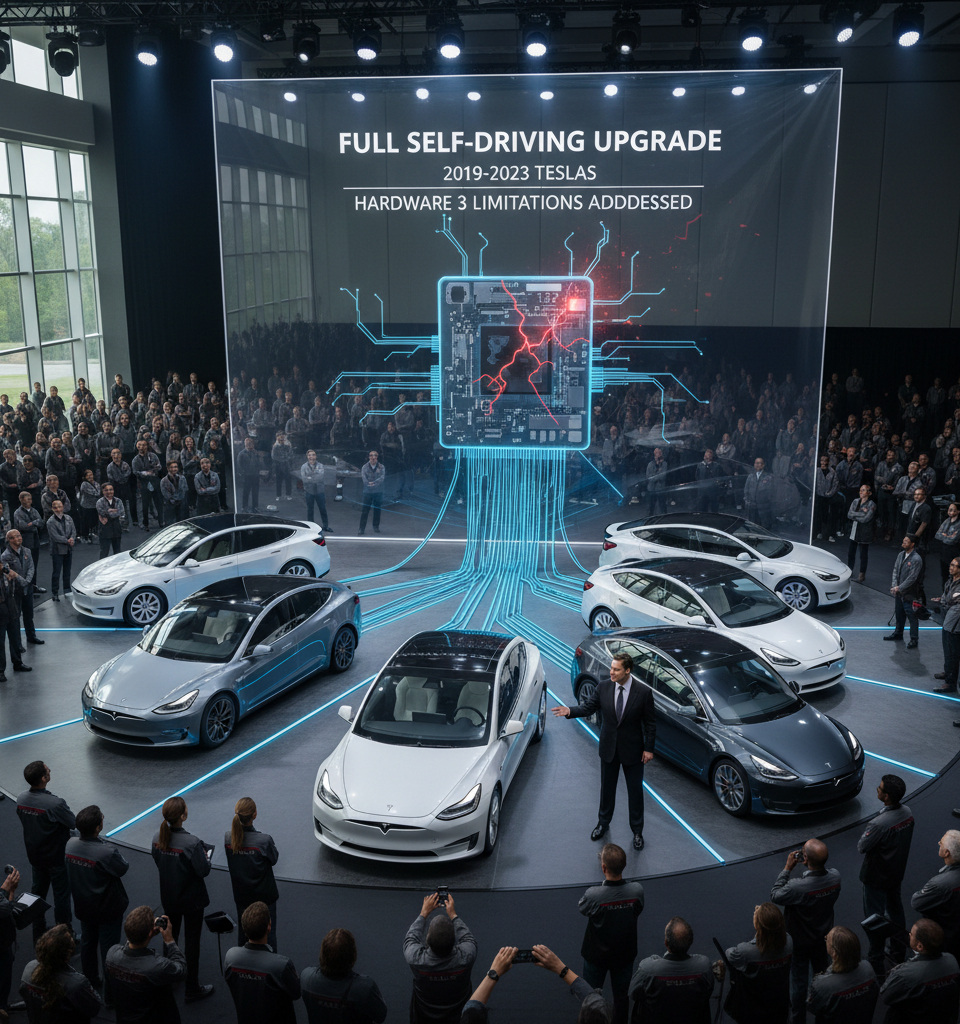
Tesla's journey towards FSD has been marked by bold declarations and equally significant delays. The company introduced its Hardware 3 computer in 2019, touting it as the foundation for complete self-driving functionality. However, despite years of development and incremental software updates, Hardware 3-equipped vehicles (produced until early 2023, when Hardware 4 began shipping) have not achieved the advertised level of autonomy. This has led to mounting frustration among customers who paid thousands of dollars for the FSD package, expecting a capability that has yet to materialize fully. The core issue lies in the processing power and redundancy of Hardware 3, which, according to internal assessments and Musk's recent admissions, may not fully support the sophisticated neural networks required for truly unsupervised FSD.
Technical Challenges and the Path Forward During the earnings call,
Musk acknowledged the engineering challenge, stating that Tesla still lacks a "solid pathway" to endow Hardware 3 cars with full FSD capabilities without a hardware upgrade. He reiterated his personal commitment to addressing this, emphasizing that affected customers will receive the necessary upgrade to enable FSD functionality. While specific details on the nature of this upgrade – whether it involves a partial component swap, a complete computer replacement, or a software-centric workaround – remain scarce, the commitment signals a significant undertaking for the automaker. This upgrade will likely involve a substantial logistical and financial investment, potentially impacting Tesla’s profit margins in the coming quarters.
Market Implications and Investor Scrutiny The
FSD narrative is critical for Tesla’s valuation, which heavily relies on its perceived technological lead and future revenue streams from autonomous driving. Delays in FSD deployment and the need for hardware retrofits can erode consumer confidence and complicate regulatory approvals. Investors are closely watching how Tesla will manage this mass upgrade program, as its cost and execution could significantly affect profitability and cash flow. The company’s stock often reacts to FSD news, and a smooth, timely resolution could bolster investor sentiment, while further delays could lead to increased skepticism regarding Tesla's ambitious technological promises.
Expert Perspectives on Tesla's Autonomy Strategy
Industry analysts have long debated the feasibility and timeline of Tesla's FSD ambitions. Many autonomous driving experts suggest that achieving Level 5 autonomy (full self-driving in all conditions) is a far more complex undertaking than initially presented by visionaries like Musk. "Tesla's approach, while innovative in its data-driven method, has often downplayed the immense engineering challenges and regulatory hurdles," comments Dr. Evelyn Reed, a leading AI and robotics researcher. "The need for a hardware upgrade for millions of vehicles underscores the iterative nature of this technology and the inherent difficulty in predicting future computational demands for true autonomy." Others point to the ethical and liability considerations that become increasingly complex with higher levels of automation, adding layers of complexity beyond mere technical capability.
The Road Ahead: Software, Hardware, and Regulatory Landscape
The immediate future will likely involve Tesla outlining a concrete plan for the Hardware 3 upgrade program, including timelines, service logistics, and cost implications. Simultaneously, the company will continue to refine its FSD software stack, benefiting from the ongoing data collection from its vast fleet. The eventual success of FSD hinges not only on technical prowess but also on navigating a patchwork of evolving global regulations concerning autonomous vehicles. As other automakers and tech giants like Waymo and Cruise make strides in localized autonomous deployments, Tesla's ability to deliver a truly robust, scalable, and legally compliant FSD solution across diverse operating environments will be the ultimate test of its technological supremacy and long-term vision. This commitment to upgrading older vehicles, while costly, is a crucial step for Tesla to maintain credibility in the fiercely competitive autonomous driving sector and honor its long-standing commitments to its extensive customer base. The coming months will reveal the true scope and feasibility of this ambitious undertaking.