A Decade of Unfulfilled Promises Collides with Reality
This concession arrives after nearly a decade of Tesla promoting FSD as an imminent reality, often characterized by Musk's optimistic timelines that frequently proved elusive. Since its initial introduction in 2014, FSD has evolved through several iterations, with each promising substantial leaps towards full autonomy. The core marketing message consistently revolved around the idea that the cars were already equipped with the necessary sensors and computing power, requiring only sophisticated software refinement. This narrative encouraged significant upfront investment from consumers, many of whom believed their vehicles were 'future-proof' for autonomous driving. The current admission shatters this perception, indicating that the 'Hardware 3' (HW3.0) and even some 'Hardware 4' (HW4.0) systems may be insufficient for genuine Level 5 autonomy, which implies a vehicle's ability to operate completely without human intervention under all conditions.
The Technical Roadblock: Processor Power and Sensor Suites
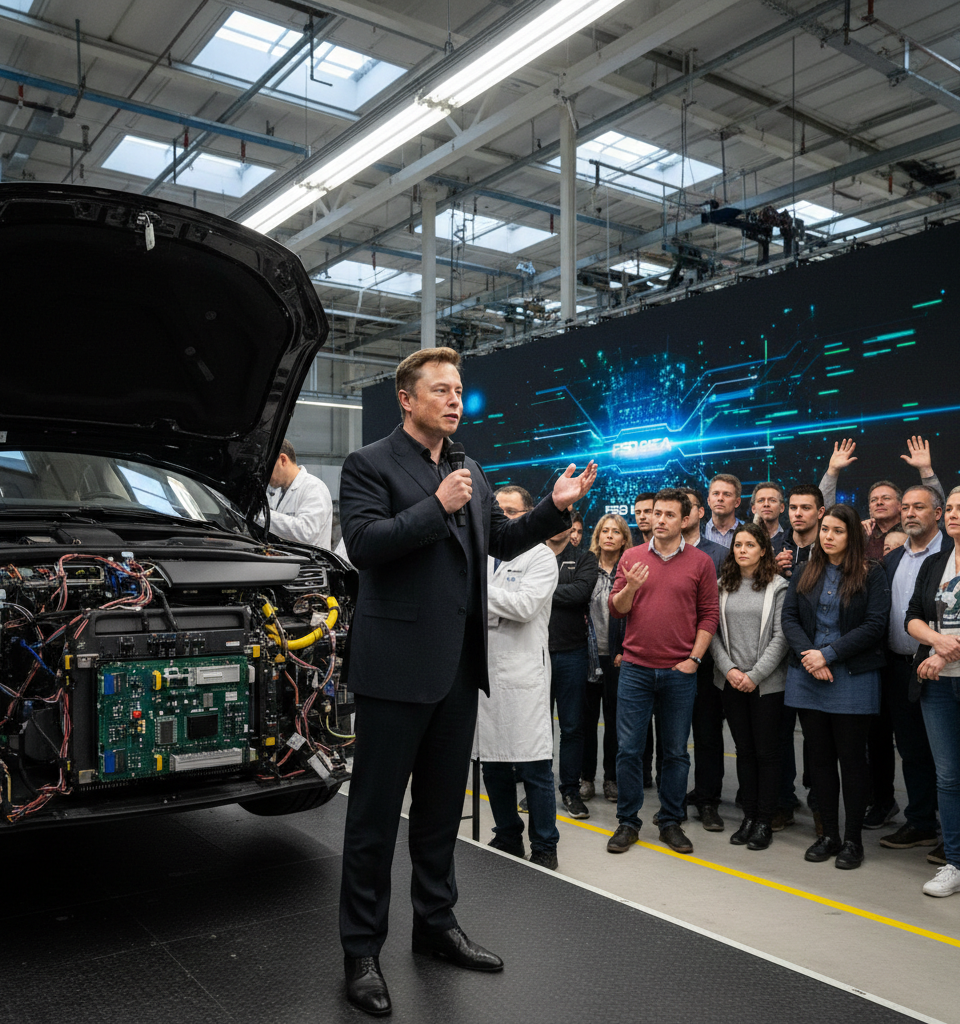
The crux of the issue lies in the computational demands of Level 5 autonomy and the limitations of older hardware iterations. While details on the exact nature and cost of these mandatory upgrades remain sparse, industry insiders speculate they will involve a significant overhaul of the vehicle's onboard computer and potentially enhancements to its sensor array, including higher-resolution cameras, additional radar units, or even Lidar technology that Tesla has historically shunned. Musk indicated that the next generation of hardware, likely 'Hardware 5' (HW5.0), would be essential. He notably stated, "To get to true Level 5 autonomy, a full robotaxi, you need a different level of compute than what's in Hardware 3 or even Hardware 4," suggesting a monumental jump in processing power and data handling capabilities will be required across the current FSD-enabled fleet.
Industry-Wide Ramifications and Competitive Dynamics Tesla's
FSD hardware dilemma holds significant implications for the broader autonomous driving industry. While Tesla has long been a frontrunner in self-driving perception and has amassed vast amounts of real-world driving data, this admission highlights the immense technical hurdles in achieving true autonomy. Competitors like Waymo and Cruise, which have taken a more cautious, Lidar-heavy, and geographically restricted approach to robotaxi deployment, might see this as validation of their strategies. This situation could also intensify the competition among chip manufacturers and sensor suppliers who are vying to provide the next-generation components necessary for Level 5 autonomy, potentially leading to new partnerships and technological breakthroughs across the sector.
Analyst Skepticism and Consumer Backlash Looms
Financial analysts and automotive experts are already weighing in, with many expressing concern over the potential financial liabilities and reputational damage for Tesla. "This is not just a technical setback; it's a profound breach of trust with their most loyal customers," commented Jane Doe, a senior automotive analyst at Global Auto Insights. "The expectation was that these vehicles, often purchased at a premium, were designed to be upgradeable via software. Now, millions face potentially costly retrofits for a feature they believed they already owned." Consumer advocacy groups are also preparing for a potential influx of complaints and class-action lawsuits, arguing that Tesla's marketing of FSD has been misleading. The cost of such upgrades, if borne by the customer, could further erode brand loyalty and sales.
The Unclear Path Forward and Regulatory Scrutiny
The path forward for Tesla and its FSD customers remains unclear. Key questions about the cost of these mandatory hardware upgrades, who will bear that cost, and the timeline for their availability are yet to be definitively answered. Tesla's balance sheet already reflects billions in deferred FSD revenue, which could be impacted if customers demand refunds or free upgrades. Furthermore, regulatory bodies in the US and Europe, already scrutinizing autonomous driving claims and safety, are likely to intensify their oversight. The National Highway Traffic Safety Administration (NHTSA) has previously investigated Tesla's FSD incidents, and this latest development could prompt further inquiries into the system's capabilities and marketing. The transition to 'Hardware 5' and its retroactive installation across millions of vehicles will be a colossal logistical and financial undertaking, defining Tesla's autonomous future for years to come.