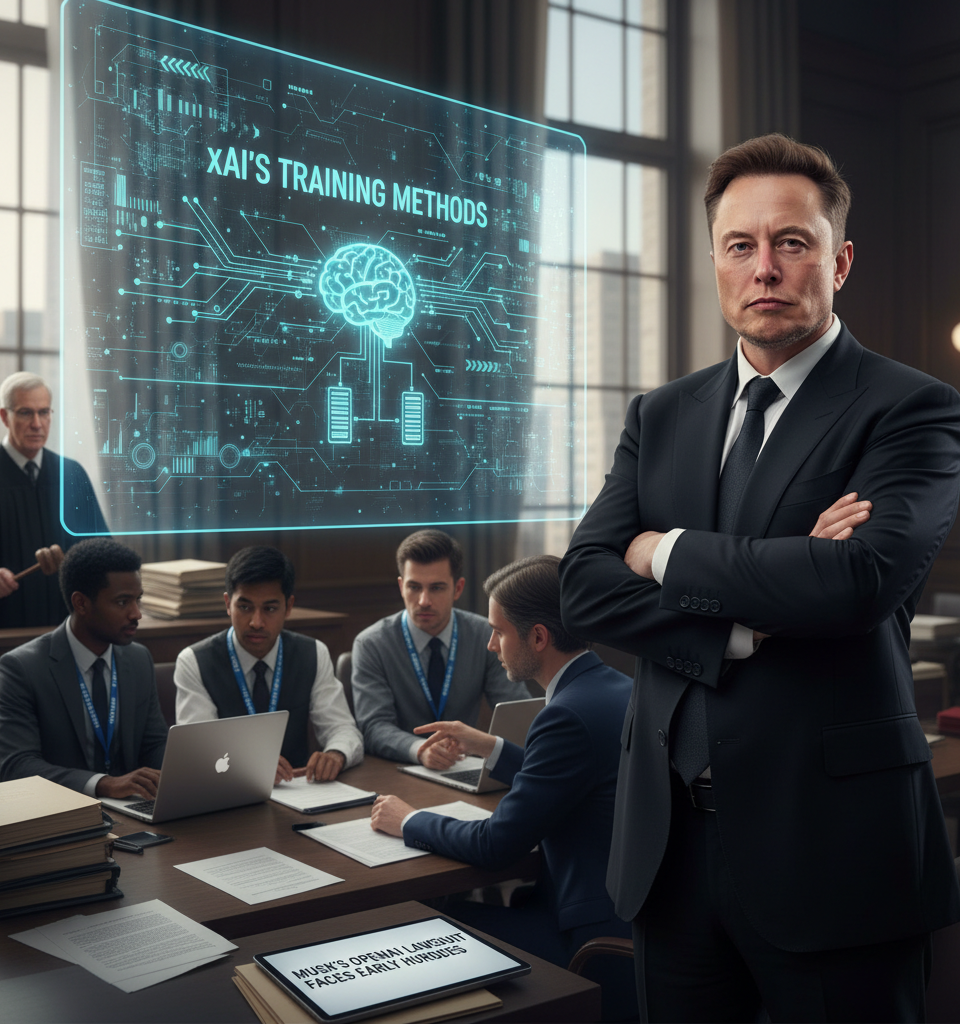
Elon Musk's high-stakes legal battle against OpenAI, alleging a departure from its original non-profit mission, hit several roadblocks this week during initial court proceedings in Oakland. The plaintiff, who co-founded OpenAI in 2015, presented his long-standing narrative that the AI powerhouse had strayed from its founding principles. However, three days of intense cross-examination uncovered unexpected revelations, including the significant admission that xAI, Musk's competing artificial intelligence company, has been training its models using OpenAI's proprietary technology. This development pivots the trajectory of the $130 billion lawsuit, placing the ultimate decision squarely in the hands of a judge rather than a jury.
Context and Background
Musk's grievance with OpenAI stems from his assertion that the company, initially conceived as a non-profit entity dedicated to open-source Artificial General Intelligence (AGI) for the benefit of humanity, has instead prioritized commercial interests and aligned with Microsoft. His initial investment and advocacy were predicated on different foundational values, leading him to describe its current trajectory as a betrayal of its charter. The lawsuit, filed earlier this year, details claims regarding breach of contract, fiduciary duty, and unfair business practices. This legal challenge underscores the escalating tensions and philosophical divides within the rapidly evolving AI landscape, particularly concerning the commercialization and control of powerful AI technologies.
Key Details and Admissions
During the cross-examination, attorneys for OpenAI meticulously probed Musk's claims and the operational aspects of his own AI endeavors. A pivotal moment arrived with the disclosure that xAI, founded by Musk in 2023, has actively utilized OpenAI's models in its own development processes. This admission complicates Musk's argument that OpenAI's commercialization is inherently detrimental, as it suggests a practical interoperability or reliance on the very systems he is suing.
Furthermore, sources close to the proceedings indicated that testimony touched upon the nuances of OpenAI's transition from a purely non-profit structure to its current "capped-profit" model, aimed at attracting the substantial capital required for advanced AI research and development. The Oakland court heard detailed accounts of the company's financial evolution and strategic partnerships, particularly with Microsoft, which has invested billions into OpenAI.
Industry and Market Impact
The unfolding legal drama has significant ramifications across the tech and AI industries. A potential legal victory for Musk could force a re-evaluation of OpenAI's structure, its partnerships, and potentially its intellectual property rights, sending ripples through the investor community. Conversely, a defeat for Musk could solidify the current model of heavily capitalized AI research, potentially legitimizing the transition of once-non-profit tech ventures into profit-seeking enterprises to fund cutting-edge innovation.
The outcome might also influence how other AI startups are structured and funded, especially those attempting to balance ethical guidelines with the immense costs of developing advanced AI systems. Companies like Google DeepMind and Anthropic are closely watching the proceedings, understanding that precedents set here could shape future competitive landscapes and regulatory frameworks.
Expert Perspectives
Legal and industry analysts offer varied opinions on the lawsuit's prospects. "This admission regarding xAI's use of OpenAI models introduces a significant challenge to Mr. Musk's claims of breach of contract or fiduciary duty," noted legal scholar Dr.
Evelyn Reed from Stanford Law School. " Financial analysts suggest that the lawsuit, regardless of its outcome, highlights the immense value and strategic importance of AI intellectual property, as evidenced by the estimated $130 billion valuation at stake. "The sheer audacity of the lawsuit reflects the enormous economic potential and competitive fervor within the AI sector," commented tech analyst Mark Thompson of Gartner.
What's Next
The immediate future of the lawsuit rests with the presiding judge, who will now evaluate the presented evidence, including the recent admissions, to determine the validity of Musk's claims. While a specific timeline for a judicial decision has not been disclosed, legal experts anticipate a lengthy process given the complexity and financial implications involved. Further hearings or requests for additional documentation are possible. The case could still be subjected to appeals regardless of the initial ruling. Beyond the courtroom, industry observers will be keen to see how this legal battle might influence the development strategies and public perception of both OpenAI and xAI, particularly as the race for AGI intensifies and the ethical debates surrounding AI governance continue to evolve globally.