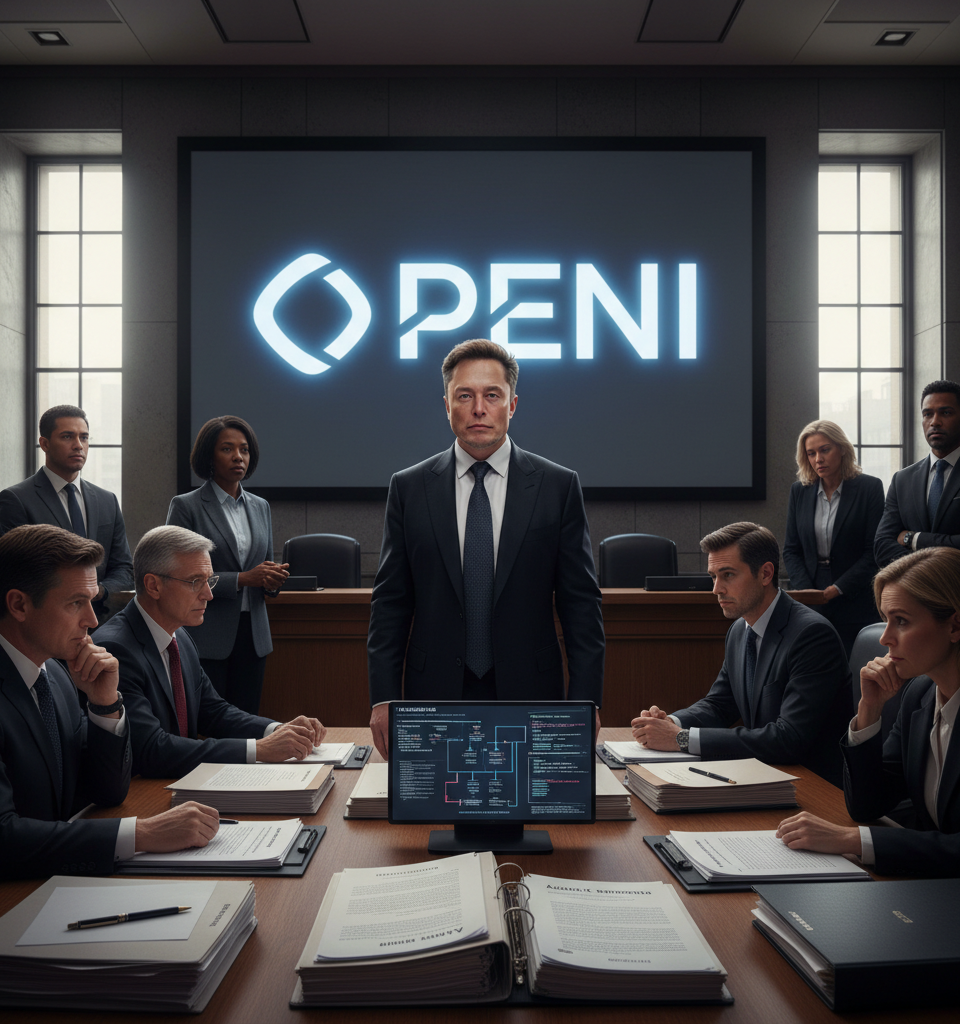
Elon Musk has initiated a high-stakes legal battle against OpenAI, the artificial intelligence research company he co-founded, alleging that its pursuit of profit has superseded its original non-profit mission to develop artificial general intelligence (AGI) for the benefit of humanity. Filed in San Francisco’s Superior Court, the lawsuit claims breach of contract and fiduciary duty, arguing that OpenAI, particularly through its lucrative partnership with Microsoft, has deviated from its founding charter. This legal action casts a harsh spotlight on OpenAI's safety protocols and its governance structure, as the tech world grapples with the ethical implications of rapidly advancing AI technologies.
The Genesis of a Conflict
The origins of this dispute trace back to OpenAI's establishment in 2015 as a non-profit entity dedicated to careful AGI development. Musk was a significant early donor, contributing tens of millions of dollars to the nascent organization. The lawsuit contends that a foundational agreement stipulated that OpenAI would remain a non-profit, open-source endeavor focused on safe AGI development, rather than a commercial enterprise.
However, in 2019, OpenAI restructured, creating a "capped-profit" subsidiary to attract billions in investment, notably from Microsoft, which has invested over $13 billion to date. This pivot, according to Musk, fundamentally altered OpenAI's trajectory, transforming it into a closed-source, profit-driven entity primarily serving Microsoft's commercial interests, rather than humanity at large. The core claim is that OpenAI's commercialization has inevitably compromised its commitment to safety and its original charter.
Allegations and Financial Stakes
Musk's legal complaint specifically alleges that OpenAI, under the leadership of CEO Sam Altman and President Greg Brockman, has prioritized the commercialization of its technologies, such as the widely popular ChatGPT and the underlying GPT models, over the cautious development of AGI. The lawsuit points to the alleged suppression of the Q* project, a potentially groundbreaking AI development that some inside OpenAI feared could represent a significant step towards AGI, as evidence of a rush to market without sufficient safety considerations. The financial implications are immense; OpenAI's valuation has soared, with reports suggesting it could reach $80 billion-$90 billion in secondary market transactions. Microsoft, holding a significant stake, benefits directly from OpenAI's commercial successes, further entangling the for-profit subsidiary with its corporate objectives.
Broader Industry Repercussions
This lawsuit reverberates throughout the entire AI industry, forcing a re-evaluation of ethical guidelines, governance models, and the balance between innovation and safety. Critics of current AI development practices worry that the commercial imperative to achieve AGI first could lead to a disregard for potential risks. If Musk's allegations prove true, it could set a precedent for increased scrutiny on how AI companies, many of which started with idealistic missions, manage the transition to commercial viability. The outcome could influence regulatory frameworks globally, potentially leading to stricter oversight on AI development and deployment, particularly for systems with AGI potential.
Expert Perspectives
Legal and AI ethics experts are closely watching the developments. "This case isn't just about a broken promise; it's about the soul of AI development," remarked Dr. Anya Sharma, a professor of AI ethics at Stanford University. "If the foundational agreement explicitly outlined a non-profit, open-source path, then OpenAI's current structure presents a clear conflict. The challenge for Musk will be proving that the for-profit entity directly undermines the safety mission, rather than funding it." Others suggest that the suit could highlight the inherent tension between rapid technological advancement and responsible innovation. "The lines between beneficial and profitable are often blurred in tech," stated tech analyst Mark Cuban. "This lawsuit might force clarity on what 'for the benefit of humanity' truly means when billions of dollars are on the line."
The Path Forward
The legal process is expected to be protracted, potentially spanning years, and will likely involve extensive discovery into OpenAI's internal communications and operational decisions. The central question for the court will be whether OpenAI's pivot to a capped-profit model and its partnership with Microsoft constitute a fundamental breach of its original non-profit charter and the spirit of its AGI safety mission. Beyond the courtroom, the lawsuit will undeniably fuel ongoing debates about AI governance, transparency, and the role of powerful corporations in shaping the future of artificial intelligence. It serves as a stark reminder that as AI capabilities accelerate, so must the commitment to ethical development and robust safety protocols, irrespective of commercial pressures.