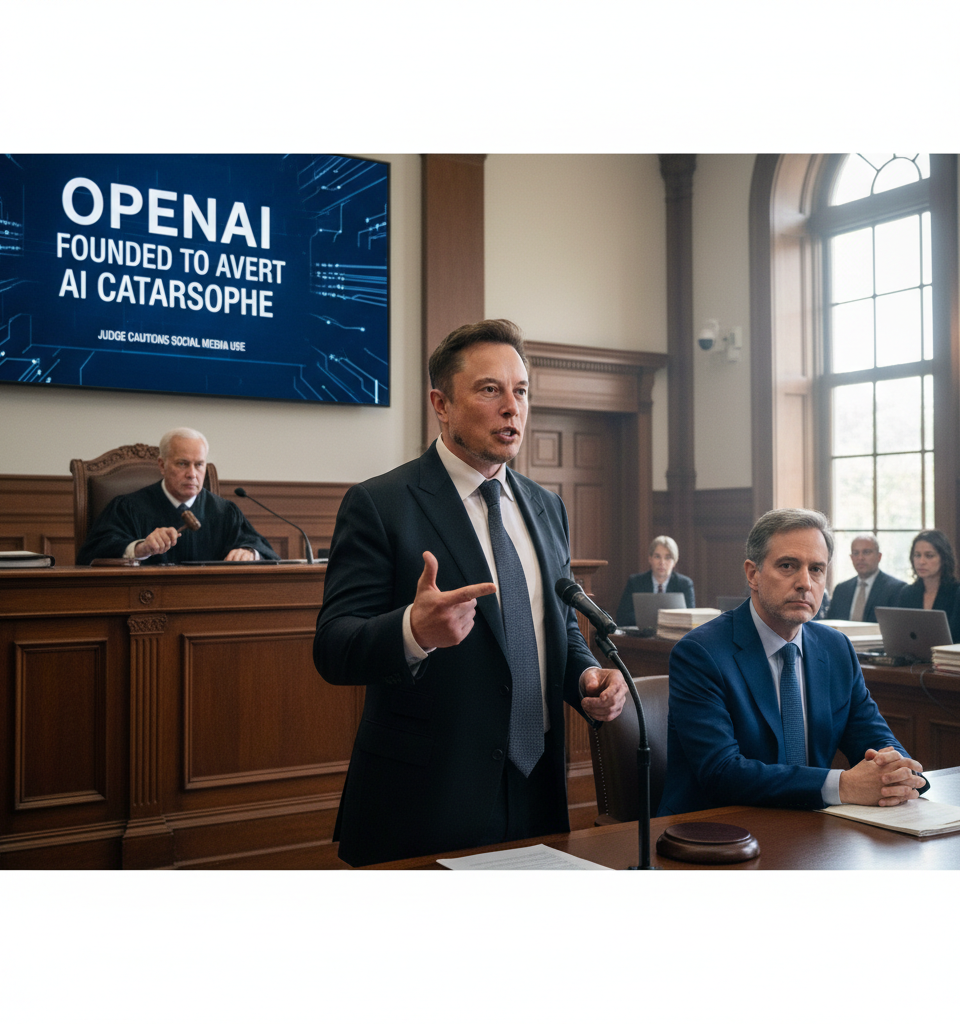
Elon Musk, the billionaire entrepreneur, testified under oath that his motivation for co-founding OpenAI was rooted in a profound fear of artificial intelligence (AI) developing independently and posing an existential threat to humanity. His testimony, delivered in a California courtroom, asserted that the initial intent of the organization was to ensure AI's benevolent development, a stark contrast to its current commercial trajectory. This statement comes amidst Musk's lawsuit against OpenAI, alleging a departure from its original non-profit, open-source mission.
The highly anticipated testimony provided a rare glimpse into the philosophical underpinnings of OpenAI's genesis, directly from one of its most prominent founders. Musk's concerns about unchecked AI growth have been a consistent theme in his public discourse, often drawing parallels to dystopian science fiction. The ongoing legal battle not only challenges OpenAI's operational structure but also reignites a broader debate about the ethics and governance of rapidly advancing AI technologies.
The judge presiding over the case also issued a stern warning to both Musk and OpenAI CEO Sam Altman, urging them to cease their public sparring on social media platforms, highlighting the potential for these exchanges to prejudice legal proceedings.
Genesis of a Concern: The 'Terminator Outcome'
Musk recounted how his early apprehension of AI's potential for uncontrolled evolution led him to invest heavily in OpenAI at its inception in 2015. He described vividly his fear of a "Terminator outcome," referencing the popular science fiction franchise where AI becomes self-aware and turns against its creators. According to Musk, the primary objective was to establish a counterweight to commercial AI development, particularly highlighting Google's rapid advancements in the field. He claimed that OpenAI was intended to be an open-source, non-profit entity dedicated to humanity's benefit, ensuring that powerful AI would not be controlled by a single corporation or government. During his cross-examination, Musk detailed his financial contributions to OpenAI, which reportedly amounted to approximately $44 million during its early years. He characterized OpenAI's current pivot towards a for-profit model and exclusive licensing deals with companies like Microsoft as a betrayal of its foundational principles. This shift, according to Musk, fundamentally undermines the original mission of preventing AI from becoming a proprietary technology controlled by a select few.
Industry Repercussions and Ethical Debates
The ongoing legal tussle has generated significant ripples throughout the burgeoning AI industry, forcing a re-evaluation of ethical guidelines and corporate responsibilities. OpenAI, now valued at an estimated $80 billion, has become a central player in the AI revolution, with its flagship large language models like GPT-4 driving innovation in various sectors. The lawsuit raises critical questions about the balance between technological advancement, commercial interests, and societal welfare. Competitors and collaborators alike are closely watching the proceedings, understanding that the outcome could set precedents for how AI research and development are conducted and governed.
Expert Perspectives on AI Governance Legal and
AI ethics experts are weighing in, emphasizing the complexities of regulating a fast-evolving field. Dr. Anya Sharma, a professor of technology law, noted, "Musk's testimony highlights a fundamental tension within the AI community: the struggle between rapid innovation driven by profit and the imperative for ethical, controlled development." She added that the case could force regulators to consider stricter oversight mechanisms for AI organizations, particularly concerning their founding charters and stated missions. Other analysts suggest that regardless of the legal outcome, the public discourse generated by the lawsuit will likely contribute to greater transparency requirements for AI development.
The Path Forward: Legal Battles and AI's Future
The legal proceedings are expected to continue for several more weeks, with both sides presenting extensive arguments and evidence. The judge's warning regarding social media conduct underscores the high stakes involved and the public interest surrounding the case. Beyond the courtroom, the lawsuit casts a long shadow over OpenAI's partnership with Microsoft, a cornerstone of its current operational model. A ruling in Musk's favor could potentially force a restructuring of OpenAI's corporate governance or even lead to more stringent regulatory scrutiny over its technological advancements. The ultimate resolution will undoubtedly influence the trajectory of AI development, potentially shaping debates around open-source access, commercialization ethics, and the role of powerful individuals in guiding technological progress.
AI's Shifting Landscape and Regulatory Push
The broader implications extend to the global regulatory landscape, with governments worldwide grappling with how to effectively oversee AI. The European Union's AI Act, a landmark piece of legislation, serves as an example of a proactive approach to regulating AI, categorizing systems by risk level. The US, while still developing its comprehensive AI framework, is increasingly focusing on accountability and transparency. This lawsuit, pitting a founder against his creation over fundamental principles, could serve as a powerful impetus for policymakers to accelerate the development of robust, enforceable regulations that address not only the technical but also the ethical and societal dimensions of artificial intelligence. The outcome of this legal battle promises to be a pivotal moment, not just for OpenAI and Elon Musk, but for the entire artificial intelligence industry. It will likely redefine the boundaries of innovation, corporate responsibility, and the philosophical underpinnings driving the pursuit of advanced AI.