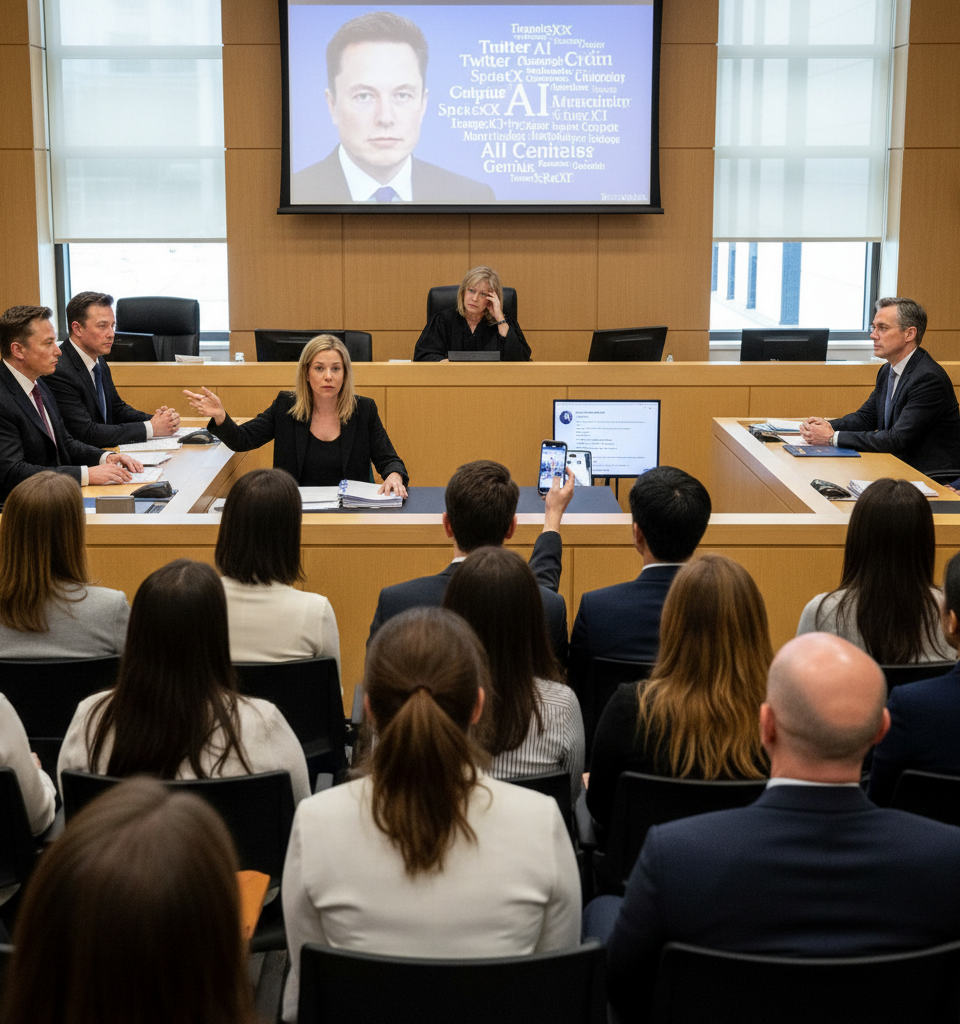
The legal dispute between Tesla CEO Elon Musk and OpenAI co-founder Sam Altman has taken an intriguing turn in the preliminary stages of jury selection. Court proceedings revealed that a notable number of prospective jurors expressed unfavorable opinions regarding Musk himself, potentially complicating the formation of an impartial jury for a case that scrutinizes the foundational principles and strategic direction of one of the world's leading artificial intelligence companies.
Challenging OpenAI's Evolution
Musk's lawsuit, filed in early March, alleges that OpenAI, under Altman's leadership, has deviated from its original founding mission as a non-profit entity dedicated to developing AI for the benefit of humanity. He contends that the company has transformed into a profit-driven enterprise, compromising its core ethical obligations. This legal challenge is not merely a corporate squabble; it taps into broader societal anxieties about the control and commercialization of powerful AI technologies and the ethical frameworks governing their development. The outcome could significantly influence the governance models and operational strategies for future AI ventures, potentially setting precedents for how non-profit commitments are legally enforced in rapidly evolving tech sectors.
Juror Bias and Public Perception
The revelations from jury selection underscore the complex interplay between high-profile litigants and public perception. While the specifics of juror comments have been kept under wraps to preserve the integrity of the selection process, the overarching sentiment suggests a pervasive public familiarity with Musk, stemming from his leadership roles at companies like Tesla and SpaceX, as well as his controversial ownership of X (formerly Twitter). This recognition, it appears, is not uniformly positive and could pose a substantial challenge for Musk's legal team, potentially forcing extensive vetting to seat a jury that can evaluate the technical and legal merits of the case without personal bias against the plaintiff.
Broader Implications for Tech Lawsuits
This situation highlights a growing trend in high-stakes technology litigation where the public personas of prominent figures can heavily influence judicial proceedings. Unlike traditional corporate disputes that might involve less recognizable entities, cases involving figures like Musk, Jeff Bezos, or Mark Zuckerberg often contend with a jury pool already imbued with preconceived notions, both positive and negative. This necessitates more rigorous and time-consuming jury selection processes, potentially driving up legal costs and prolonging trials. It also raises questions about whether courts are adequately equipped to manage the challenges posed by celebrity plaintiffs and defendants in an era of constant media scrutiny and social media commentary.
Expert Commentary Legal analysts suggest that even if a seemingly impartial jury is ultimately selected, the initial challenges signal the difficulty in separating the individual from the institution when a defendant or plaintiff is as high-profile as Musk.
"This isn't just about the facts of OpenAI's corporate structure," commented Dr. Evelyn Reed, a professor of legal ethics at Stanford Law School. "It's about navigating the emotional and reputational landscape that Elon Musk brings into any courtroom. His public identity is inextricably linked to his ventures, and that complicates what is already a legally intricate case about AI governance and corporate mission." She further noted that defense attorneys for OpenAI would likely probe deeply into potential jurors' social media consumption and general attitudes towards tech billionaires.
The Road Ahead As the legal teams navigate the delicate process of jury selection, the upcoming weeks will involve intense scrutiny of potential jurors to ensure a panel capable of rendering an unbiased verdict. Regardless of the immediate outcome of jury selection, this development significantly impacts the dynamics of what is already a keenly watched legal battle.
The case is expected to delve into intricate details of OpenAI’s corporate restructuring, fundraising rounds that totaled billions of dollars, and the specific contractual agreements that underpinned its transition from a non-profit to a "capped-profit" entity. The court's decision will not only resolve this dispute but could also shape future paradigms for AI development, particularly concerning the balance between innovation, profit, and ethical responsibility. The trial, once a jury is seated, is anticipated to involve testimony from leading figures in the AI community and potentially shed light on the internal workings and strategic shifts within OpenAI since its inception in 2015. The stakes are immense, not just for Musk and Altman, but for the entire burgeoning AI industry, which stands at a critical juncture regarding its ethical commitments and commercial aspirations. Further court dates are expected to be announced following the completion of jury selection, with legal experts predicting a lengthy and complex trial given the technical nature of the allegations and the high-profile individuals involved.