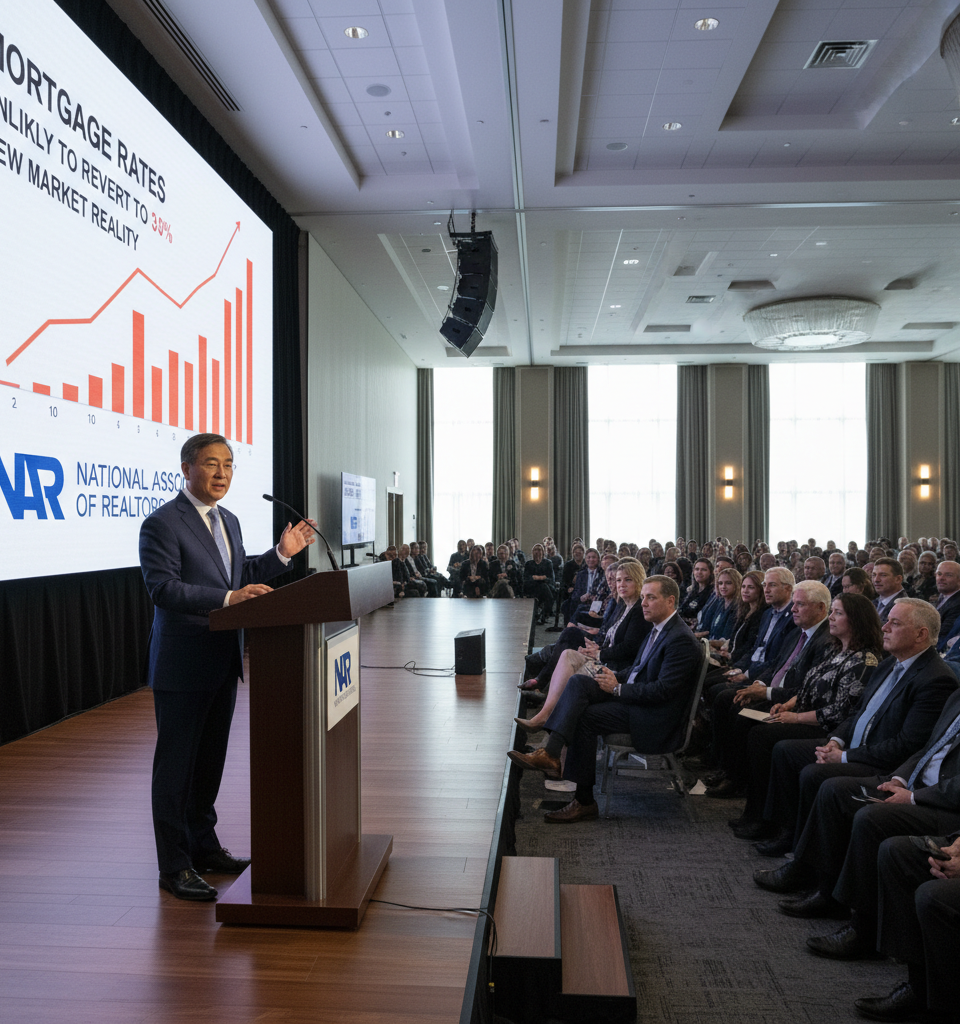
The Forces Driving Today's Housing Market Dr.
Yun pointed to several structural and cyclical factors solidifying the current interest rate environment. Primarily, he cited the Federal Reserve's sustained efforts to combat inflation, which has necessitated a series of interest rate hikes. With inflation still above the Fed's target of 2%, particularly evident in persistent services inflation and a resilient labor market, the central bank is poised to maintain a tighter monetary policy stance. This commitment translates directly to higher borrowing costs across the board, including mortgage rates, which typically track the 10-year Treasury yield. Beyond monetary policy, Yun highlighted the burgeoning national debt and the associated issuance of government bonds as another upward pressure on long-term interest rates. As the U.S. government borrows more to finance its expenditures, the increased supply of bonds can push yields higher, thereby influencing mortgage rates. Furthermore, while the pandemic saw a surge in household savings that briefly suppressed rates, that dynamic has largely dissipated, with consumer spending remaining robust, further impacting the inflationary outlook.
Industry Impact and Expert Consensus For the broader real estate industry, Dr.
Yun's outlook mandates a shift in strategy and communication. Real estate agents and lenders must now temper client expectations, moving discussions away from the possibility of a return to ultra-low rates and instead focusing on affordability within the current, higher-rate paradigm. This involves emphasizing the importance of securing competitive rates in the present market, exploring adjustable-rate mortgages (ARMs) for those comfortable with future rate volatility, or focusing on properties that align with current budget constraints. The days of passively waiting for rates to drop dramatically appear to be over. This perspective is largely echoed by other leading economists and financial analysts. Mark Zandi, Chief Economist at Moody's Analytics, has similarly expressed that while rates may fluctuate, a sustained return to 3% is improbable unless the U.S. faces a severe economic recession, which is not the baseline expectation. Fannie Mae's latest forecast, for instance, projects the 30-year fixed mortgage rate to average around 6.5% for 2024, gradually declining to perhaps 6.0% by the end of 2025, a far cry from the sub-3% levels.
Navigating the New Normal: What's Next?
The implications for homebuyers are significant. The current market demands a more disciplined approach to home searching and financing. Many potential buyers who were priced out by rapidly rising rates may find themselves in a continued holding pattern if they are still hoping for significant rate reductions. Instead, Dr. Yun suggests that future rate movements will likely be incremental, fluctuating within a range primarily determined by inflation trends, fiscal policy, and global economic stability, rather than a steep decline. Looking ahead, the housing market will likely see a continued emphasis on affordability, with a potential increase in demand for more moderately priced homes. Builders may also shift focus towards developing smaller, more attainable housing units. Furthermore, the volume of refinancing activity is expected to remain subdued compared to the pandemic era. As mortgage rates stabilize at higher levels than previously accustomed, the focus for both industry players and consumers will be on adapting to this new financial reality and finding sustainable pathways to homeownership in a structurally altered market environment.