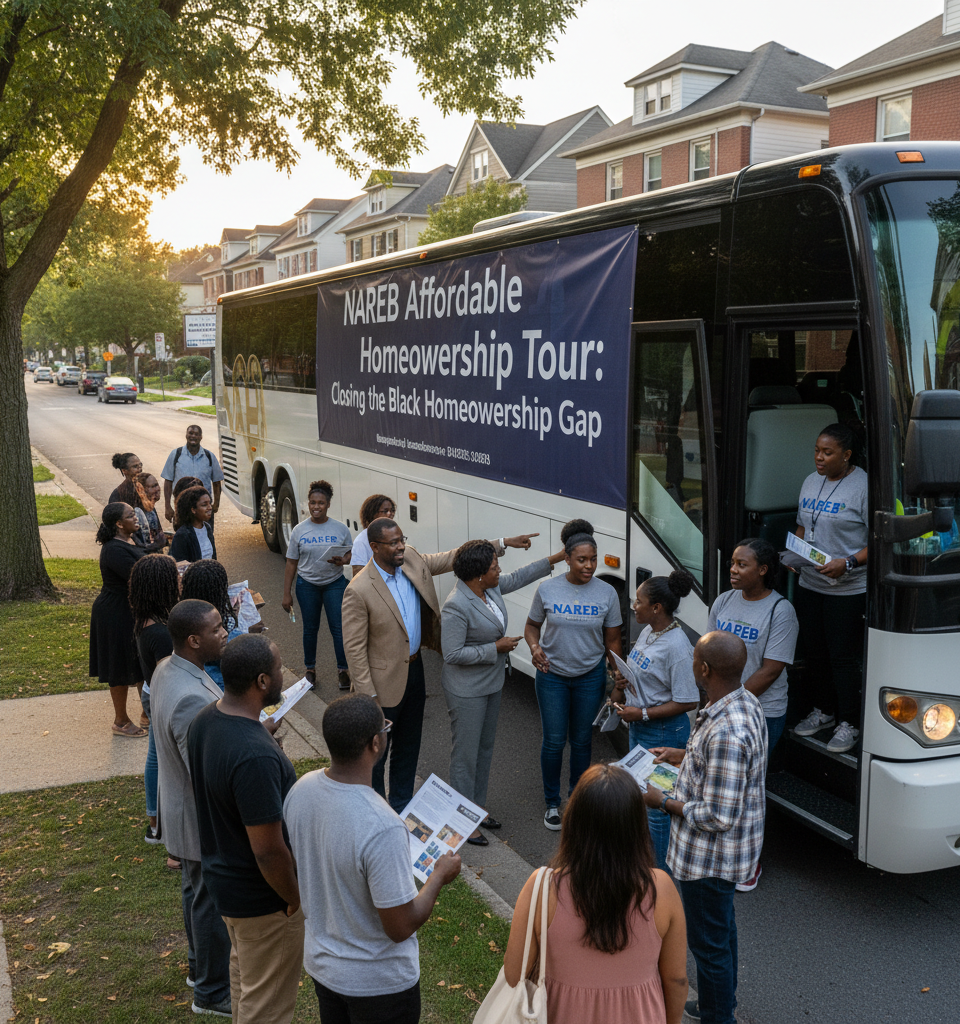
The National Association of Real Estate Brokers (NAREB) commenced an ambitious eight-city bus tour on April 25, 2026, marking a significant effort to tackle the profound homeownership disparity affecting Black communities across the United States. This strategic outreach initiative is designed to highlight and address the entrenched systemic barriers contributing to a Black homeownership rate of merely 44.2%, starkly contrasting with the 75.1% rate enjoyed by White families.
The Widening Disparity in Focus
The enduring gap in homeownership represents a critical economic and social justice issue. Homeownership has historically been a primary driver of wealth accumulation and intergenerational prosperity in America. The substantial difference between Black and White homeownership rates signifies a deep-seated economic imbalance, perpetuating wealth inequality and limiting access to vital financial security for millions of Black Americans. This initiative by NAREB underscores the urgency of creating tangible pathways to homeownership, recognizing its transformative power for individuals and communities.
NAREB's bus tour, which began last month, is meticulously structured to engage with local communities, policymakers, and real estate professionals in a series of events across the designated cities. While specific details of each stop were not further detailed, the overarching goal remains consistent: to educate, advocate, and provide resources aimed at increasing Black homeownership. The tour serves as a visible platform to draw national attention to the issue and to foster localized solutions tailored to the unique economic landscapes of each city visited.
Industry Implications and Community Impact
The initiative carries significant implications for the broader real estate industry, financial institutions, and community development organizations. It challenges stakeholders to re-evaluate existing practices, lending criteria, and down payment assistance programs that may inadvertently — or directly — contribute to the current disparities. NAREB’s advocacy is expected to push for more equitable access to credit, culturally competent financial literacy programs, and policies that combat discriminatory practices that have historically disadvantaged Black homebuyers.
The tour is also anticipated to galvanize local community efforts, empowering potential homeowners with information and connections to resources. By directly engaging with residents, NAREB aims to demystify the homebuying process, address common misconceptions, and connect individuals with lenders, real estate agents, and housing counselors who are committed to equitable outcomes. This direct engagement is crucial in building trust and bridging information gaps that often deter prospective Black homeowners.
A Call to Action for Equitable Housing
NAREB, established in 1947, has a long-standing history of advocating for democracy in housing. Its current bus tour is a continuation of this legacy, emphasizing that the economic health of the nation is intrinsically linked to equitable housing opportunities for all its citizens. The organization's focus on the 44.2% versus 75.1% figures serves as a powerful reminder of the work that remains to be done, positioning the tour not just as an awareness campaign but as a call to action for widespread structural change.
Looking ahead, the immediate implications of the bus tour include increased visibility for the Black homeownership gap, potential shifts in local and national housing policy discussions, and enhanced collaboration among housing advocates. The outcomes of the tour could pave the way for more targeted legislative efforts, innovative financial products designed to support first-time Black homebuyers, and a heightened public consciousness regarding the systemic nature of housing inequality. The success of this initiative will likely be measured not only by attendance at its events but by the tangible policies and programs that emerge in its wake, ultimately working toward a more equitable housing market for all Americans.