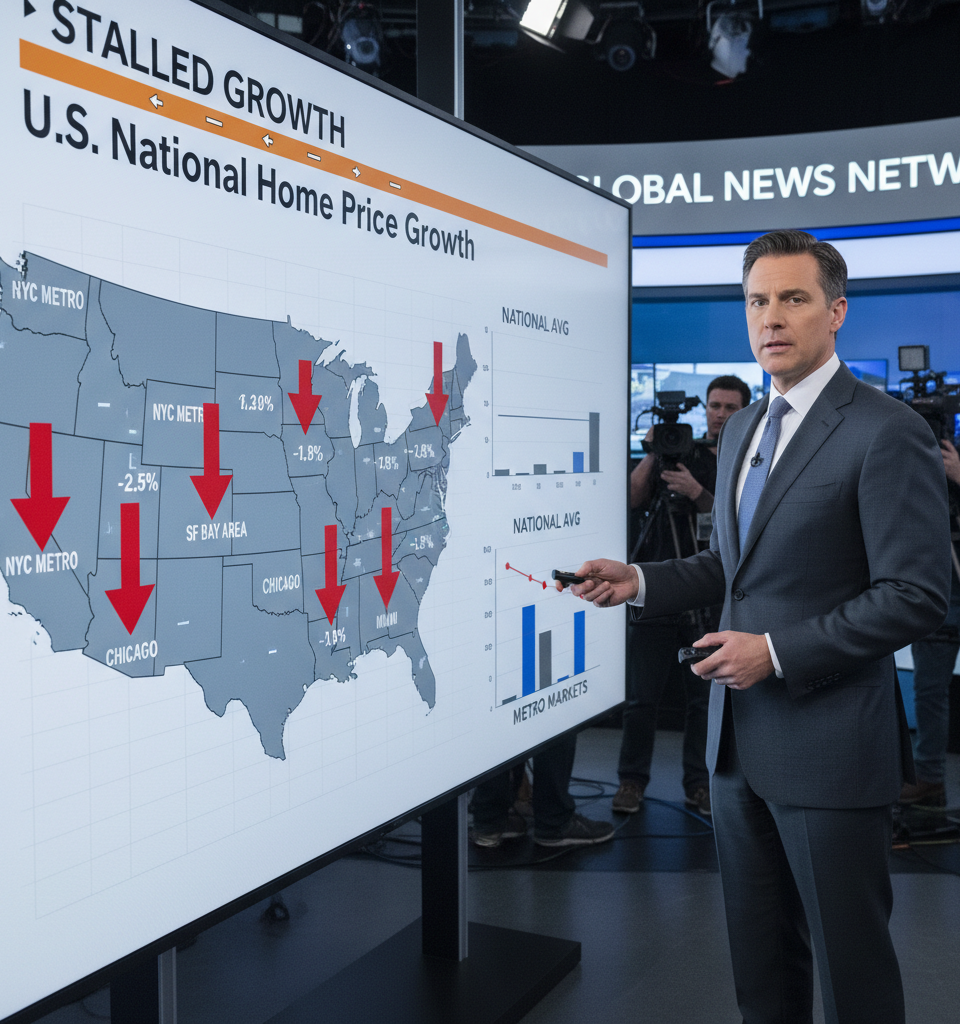
S. home prices has stalled at the national level, marking a significant inflection point for the housing market. In February, a majority of major metropolitan areas, specifically over 50%, registered month-over-month price declines. This widespread softening comes as a surprise to some, given the persistent demand in certain segments of the market.
However, pockets of the country, particularly those grappling with severe housing supply shortages, continue to see prices rise, illustrating a bifurcated market emerging across the nation. This deceleration in home price appreciation holds considerable weight for homeowners, prospective buyers, and the broader economy. For years, rapid and often double-digit annual price increases have fueled concerns about affordability and market sustainability.
The current slowdown suggests a potential rebalancing, offering a glimmer of hope for buyers who have been priced out of competitive markets. Historically, periods of rapid price growth are often followed by corrections or plateaus, and the current environment appears to be aligning with such cyclical patterns.
Key Market Dynamics and Data Points
Specific data from February paints a clear picture: 52% of major metros experienced a drop in home values. For instance, cities like Phoenix and Las Vegas, which saw massive price surges during the pandemic, are now reporting noticeable pullbacks. Experts attribute these declines to a confluence of factors, including rising mortgage rates, which have tempered buyer enthusiasm, and a slight increase in inventory in some areas. However, the national aggregate masks significant regional disparities. In contrast, markets with exceptionally tight inventory, such as parts of the Northeast and Pacific Northwest, are still recording modest price gains, albeit at a slower pace than observed in recent years. This suggests that while broader market conditions have shifted, the fundamental supply-demand imbalance in certain desirable locations continues to exert upward pressure on prices.
Broad Economic and Industry Implications
The stalling of national home price growth carries substantial implications for various sectors of the economy. For lenders, it necessitates a recalibration of risk assessments and underwriting standards. The construction industry may face altered demand patterns, potentially leading to adjustments in new housing starts and development strategies. Furthermore, the psychological impact on consumers cannot be overstated; a perception of stable or declining home values could influence consumer spending and overall economic confidence. The wealth effect, where rising home equity encourages greater spending, may also begin to diminish, contributing to a more restrained economic outlook.
Expert Analysis and Outlook Economists and housing market analysts are interpreting this trend with cautious optimism. Dr. Amelia Thompson, a leading housing economist, noted,
"The pausing of national growth is a healthy market correction, not necessarily a crash. It reflects a re-normalization after an unprecedented period of acceleration." She emphasized that while some metros are seeing declines, the overall national market is still far from a crash, given underlying demographic demand and tight inventories in many areas. Other analysts point to the Federal Reserve's monetary policy as a primary driver, with higher interest rates acting as a brake on runaway appreciation. The consensus view is that while the days of rapid, across-the-board price escalation are likely behind us for the foreseeable future, widespread, dramatic price crashes are also unlikely outside of severely overheated and speculative markets.
What Lies Ahead
Looking forward, the housing market is expected to remain dynamic and highly regionalized. Further stability in home prices will depend heavily on the trajectory of mortgage rates, the federal reserve's policies, and the pace of new construction. Buyers may find themselves in a slightly more advantageous position, with less intense competition and potentially more negotiating power in certain metros. Sellers, particularly in areas experiencing declines, may need to adjust their expectations or face longer market times. The coming months will be critical in determining whether this pause in growth evolves into a more significant correction or simply a period of market re-adjustment before a more sustainable, albeit slower, appreciation returns. Monitoring inventory levels and local economic conditions will be paramount for understanding the nuanced movements of the housing landscape.