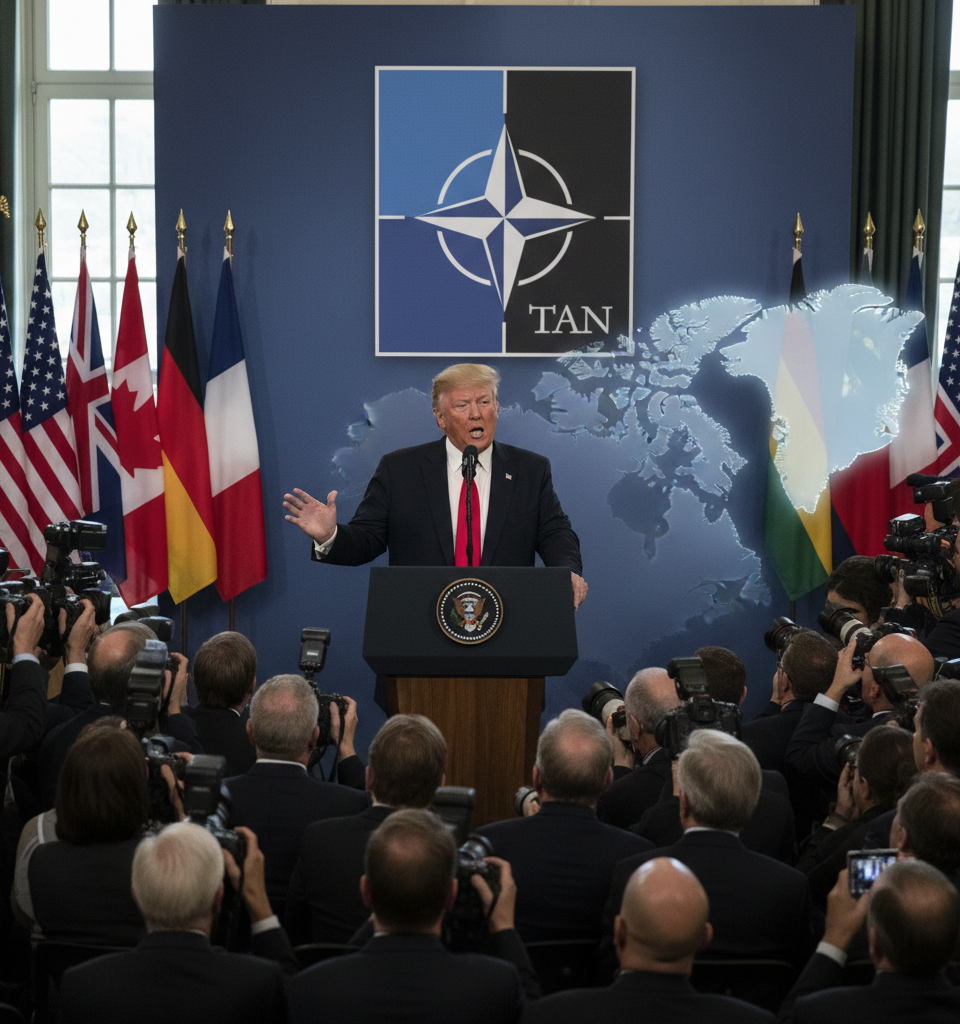
The North Atlantic Treaty Organization (NATO) finds itself at a critical juncture, navigating an unprecedented challenge as US President Donald Trump intensifies his rhetoric regarding the alliance's relevance in the face of European nations’ perceived hesitancy to align with Washington's aggressive posture towards Iran. This diplomatic maelstrom, unfolding across global capitals, threatens to unravel decades of collective security cooperation, raising serious questions about the future of the transatlantic pact.
The Brewing Storm: A Crisis of Alliance and Vision
At its core, this crisis underscores a significant divergence in foreign policy objectives and strategic priorities between the United States and its European allies. While the Trump administration has consistently advocated a 'maximum pressure' campaign against Tehran, including the unilateral withdrawal from the Joint Comprehensive Plan of Action (JCPOA) in May 2018, European powers like France, Germany, and the United Kingdom have largely maintained their commitment to the nuclear deal, albeit with strong criticisms of Iranian regional activities. This divergence has created a palpable chasm, with President Trump reportedly citing this lack of unified support as a primary justification for his long-standing threats to either significantly scale back US contributions to, or entirely abandon, the NATO alliance. This strategic discord is further exacerbated by the President's renewed, if unconventional, interest in acquiring Greenland, adding a peculiar footnote to an already strained relationship.
Trump's Persistent Grievances and Unorthodox Diplomacy
President Trump has, since his ascent to the presidency, been a vocal critic of NATO, frequently lambasting member states for failing to meet the alliance's 2% of GDP defense spending target. As of late 2023, only 11 of NATO's 31 members were projected to meet this target, a point of persistent contention for the US. His current narrative explicitly links Europe's reluctance on Iran to these long-held grievances. Sources within the White House, speaking off the record, indicate that the President views European attempts to salvage the JCPOA and engage in separate diplomatic tracks with Iran as undermining US efforts, thereby questioning the very solidarity of the alliance. This sentiment aligns with previous instances where Trump has challenged NATO's mutual defense clause (Article 5) and suggested that the US assumes an outsized financial burden for European security. The reappearance of his interest in purchasing Greenland, a strategically vital autonomous territory of Denmark, which he previously broached in August 2019, is widely perceived as an unconventional maneuver that further alienates European partners, who view such proposals as anachronistic and disrespectful to sovereign nations.
Geopolitical Tremors: Global Security Implications
Should the US significantly retract its commitment to NATO, the geopolitical reverberations would be profound. Analysts fear a destabilized European security architecture, potentially emboldening adversaries and impacting global power dynamics. The collective deterrent against Russian aggression, a cornerstone of NATO’s post-Cold War mandate, could be severely weakened. Furthermore, the economic implications are substantial. European defense industries, which rely heavily on interoperability with US systems and shared technological advancements, could face significant disruption. The loss of a unified Western front would also dilute diplomatic leverage on other critical global issues, from climate change to emerging existential threats.
Expert Dissension: A Blow to Transatlantic Unity
Security experts and foreign policy analysts are largely unified in their concern. Dr. Evelyn Farkas, a former Deputy Assistant Secretary of Defense for Russia, Ukraine, and Eurasia, recently stated, "President Trump's current stance on Iran, and his linkage of it to NATO, fundamentally misunderstands the alliance's purpose. It's not a club to rubber-stamp US foreign policy, but a collective defense pact built on shared values and mutual security." Similarly, a recent report from the Carnegie Endowment for International Peace highlighted that a US withdrawal or significant curtailment of involvement would cost European nations an estimated $350 billion over the next decade to independently re-establish equivalent defense capabilities, a financial burden many national treasuries are unprepared to bear.
The Road Ahead: Navigating a Fractured Future
The immediate future portends continued tensions and diplomatic maneuvering. European leaders are likely to redouble their efforts to engage with the US on a diplomatic path concerning Iran, while simultaneously exploring avenues to bolster their independent defense capabilities. The upcoming NATO summit in will undoubtedly be a crucial arena for these discussions, with leaders seeking to reaffirm the alliance's enduring value despite significant internal pressures. The Greenland saga, while seemingly a distraction, underscores a broader pattern of transactional diplomacy that challenges traditional alliances. The question remains whether NATO can weather this storm of unprecedented US skepticism and emerge as a cohesive and effective security guarantor in an increasingly complex and fractured international landscape, or if it will slowly erode under the weight of divergent interests and an enduring transatlantic rift.