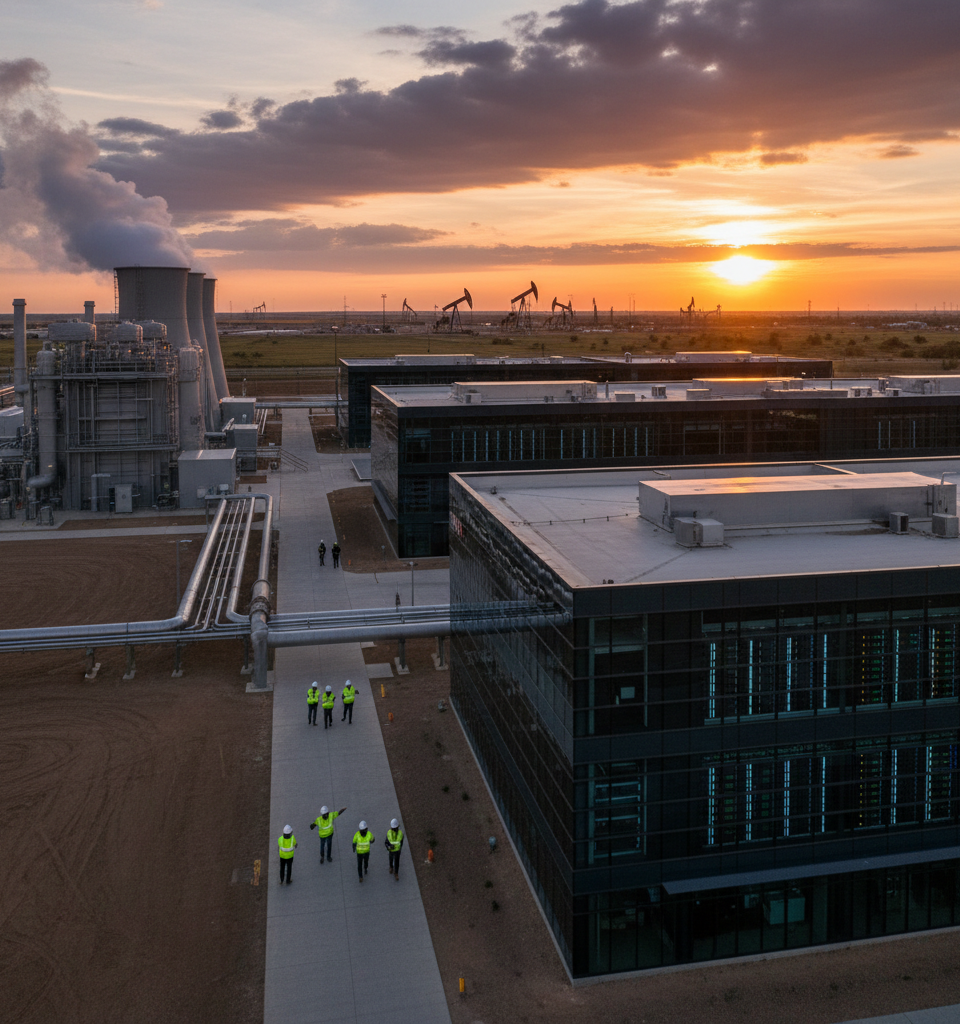
The Economic Imperative: Powering the Digital Age
The exponential growth of data — from artificial intelligence and cloud computing to IoT and streaming services — has placed unprecedented demands on power grids. Data centers are notoriously energy-intensive, with power costs often representing 50-70% of their operational expenditure. As traditional energy grids in established data center markets strain under demand, the appeal of regions with readily available and inexpensive natural gas becomes undeniable. This shift is not merely about finding cheaper electricity; it's about securing a reliable, scalable, and often more stable energy supply, which is paramount for mission-critical operations. The historical context reveals that data center development has always chased power, from hydroelectric power in the Pacific Northwest to the robust grids of the East Coast. Today, that chase leads directly to natural gas pipelines.
Key Drivers and Regional Magnetism
Major players in the data center industry are actively scouting and acquiring land in these gas-rich territories. For instance, reports indicate that several hyperscale cloud providers are exploring large-scale developments in West Texas, leveraging the prolific Permian Basin's natural gas reserves. Companies are increasingly opting for direct power purchase agreements (PPAs) with local energy producers, often bypassing the grid entirely to secure lower, more predictable energy costs. Analysts point to energy prices in these regions, which can be 30-50% lower than in established markets, as the primary draw. Furthermore, these regions often offer ample land, favorable regulatory environments, and a skilled workforce with experience in industrial operations, translating into lower capital expenditure for construction and easier operational scaling.
Industry-Wide Ripple Effects and Strategic Realignment
This geographical redistribution has profound implications across the data center industry and related sectors. It is creating new economic opportunities in regions historically dependent on fossil fuels, fostering diversification and resilience. Construction companies, specialized infrastructure providers, and a new wave of tech talent are all converging on these emerging hubs. The move also presents challenges for traditional data center markets, which must now innovate to retain their competitive edge, potentially through enhanced renewable energy integration or novel cooling technologies. Equipment manufacturers are also adapting, designing infrastructure optimized for direct natural gas power generation, such as on-site micro-turbines and fuel cells.
Expert Insights: A Sustainable and Strategic Move?
Industry experts view this trend as a strategic imperative driven by both economics and sustainability considerations. "Access to reliable, affordable power is the singular most important factor for data centers today," states Dr. Eleanor Vance, a leading energy economist. "Natural gas, while still a fossil fuel, offers a cleaner burning alternative to coal and provides the baseload stability that renewable intermittency cannot yet fully guarantee for critical infrastructure." She adds that the ability to site data centers closer to wellheads minimizes transmission losses and can potentially reduce overall carbon footprint compared to sourcing power from distant, less efficient grids. However, environmental groups caution that while natural gas is cleaner than coal, it is not carbon-neutral, and methane leakage from production and transmission remains a concern.
The Road Ahead: Hybrid Energy and Decentralized Grids
The future implications of this trend are multifaceted. We can anticipate accelerated investment in hybrid energy solutions, integrating natural gas with co-located solar or wind farms to create more resilient, cleaner energy profiles for these data centers. This could lead to more decentralized power grids, with data centers acting as significant energy prosumers. Furthermore, the development of smaller, edge data centers powered by localized natural gas could significantly reduce latency for regional businesses and consumers. As artificial intelligence and machine learning continue to demand immense computational power, the ability to rapidly scale energy-efficient infrastructure in these new hubs will be a critical competitive advantage, further solidifying the oil and gas regions' emergent role as the next frontier for digital innovation.