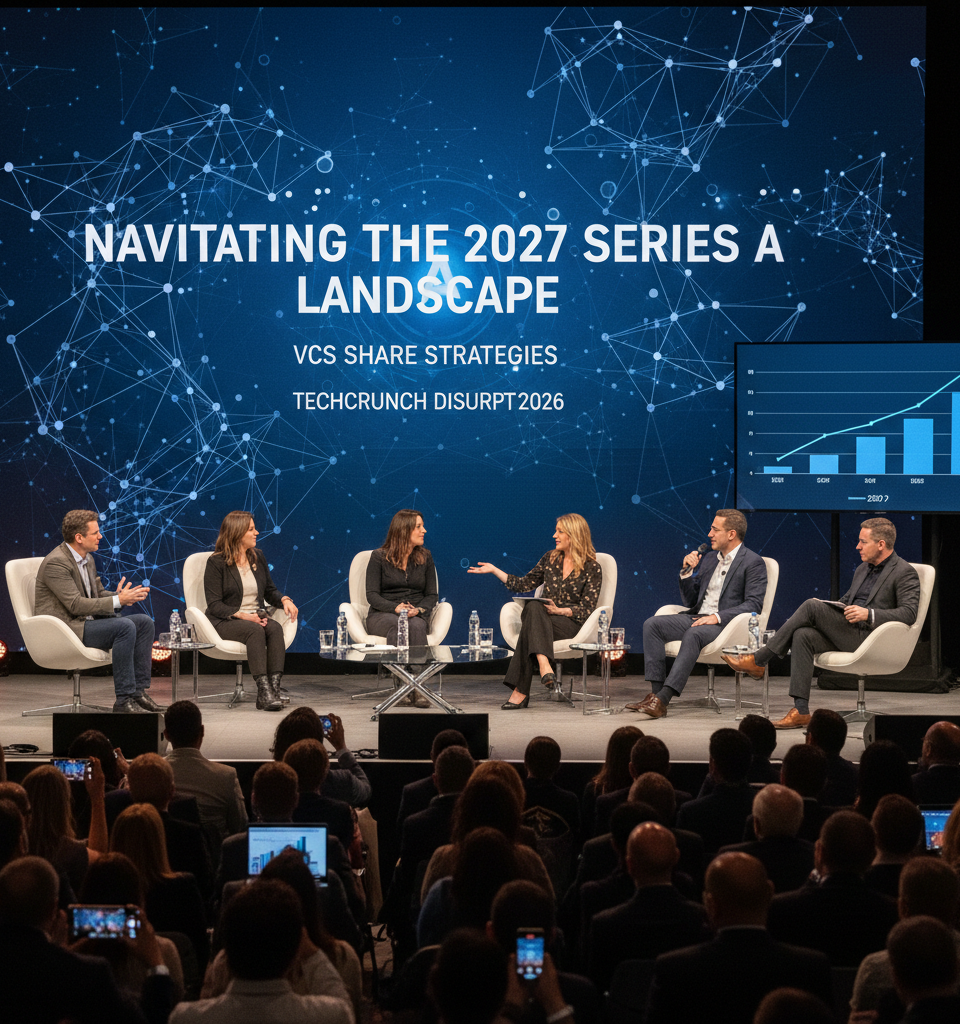
Founders are already falling behind in securing their Series A funding for 2027, according to industry veterans who will convene at TechCrunch Disrupt 2026. This urgent message will be delivered during a pivotal session on the Builders Stage, scheduled for October 13-15 at San Francisco’s Moscone West. The event promises to unveil the specific challenges and strategic imperatives for startups vying for crucial early-stage investment in an increasingly dynamic venture capital landscape. Attendees are urged to register promptly to gain direct access to these essential insights from top-tier VCs.
The Evolving Funding Frontier
Securing a Series A round is a monumental step for any startup, often marking the transition from an early-stage concept to a scalable business with a clear growth trajectory. However, the goalposts for this critical milestone are continuously shifting. In recent years, venture capital firms have raised record-breaking funds, leading to both increased competition for worthy ventures and a heightened bar for what constitutes investment-worthy traction. The economic uncertainties of the past few years, coupled with a more cautious investment climate, mean that founders must demonstrate not just potential, but tangible market validation, operational efficiency, and a robust path to profitability earlier than ever before. This session at Disrupt aims to demystify these new expectations and provide a roadmap for founders navigating this complex terrain.
Key Takeaways from Industry Leaders
Top VCs slated to speak at the event will likely delve into several core themes. Founders should prepare to hear about the importance of unit economics from day one, rather than solely focusing on user acquisition at any cost. We anticipate discussions on the strategic timing of fundraising, emphasizing that prematurely approaching VCs or delaying too long can both be detrimental.
Expect insights into building diverse and resilient teams, demonstrating early revenue or strong user engagement, and developing a compelling narrative that goes beyond aspirational projections. Specific examples of successful 2026 seed-to-Series A transitions will likely be highlighted, providing concrete case studies for aspiring entrepreneurs. The VCs are expected to emphasize the need for a deeper understanding of market fit and a more conservative approach to burn rate, reflecting a broader industry trend towards sustainable growth.
Impact on the Startup Ecosystem
This foresight into the 2027 Series A landscape will significantly impact the broader startup ecosystem. Early-stage accelerators and incubators will likely adapt their curricula to incorporate these new benchmarks. Angel investors and seed funds, who often pre-seed Series A rounds, will refine their assessment criteria, potentially favoring startups that demonstrate a clearer path to these higher Series A standards. The emphasis on operational efficiency and proven traction will likely lead to fewer, but more robust, Series A deals, potentially concentrating capital in companies with stronger fundamentals. This could, in turn, drive innovation towards more capital-efficient business models and a greater focus on generating revenue earlier in the company lifecycle.
Expert Analysis and Predictions
Industry analysts widely agree that the era of valuation inflation without commensurate revenue is drawing to a close. "The 'growth at all costs' mantra is being replaced by a 'sustainable growth' imperative," states a prominent VC analyst. "Founders need to demonstrate a clearer path to profitability and a more disciplined approach to capital expenditure. The VCs at Disrupt will undoubtedly underscore that the due diligence process for Series A deals is more rigorous than ever, focusing on product-market fit, customer retention, and compelling gross margins." This shift suggests a flight to quality, where only the most prepared and validated startups will successfully raise follow-on funding.
Preparing for the Road Ahead
Looking forward, the insights presented at TechCrunch Disrupt 2026 will equip founders with actionable strategies to cultivate a compelling Series A story. The discussion will likely serve as a crucial bellwether for the venture capital climate in 2027 and beyond. Founders should expect to walk away with a refined understanding of investor expectations regarding data-driven decision-making, scalable business models, and defensible market positions. The emphasis will move beyond simply having a good idea, to demonstrating a meticulously executed plan with early, verifiable results. Entrepreneurs who proactively integrate these advanced strategies into their 2026 roadmaps will be best positioned to attract the discerning capital available in the 2027 Series A market, setting a new standard for early-stage funding success.