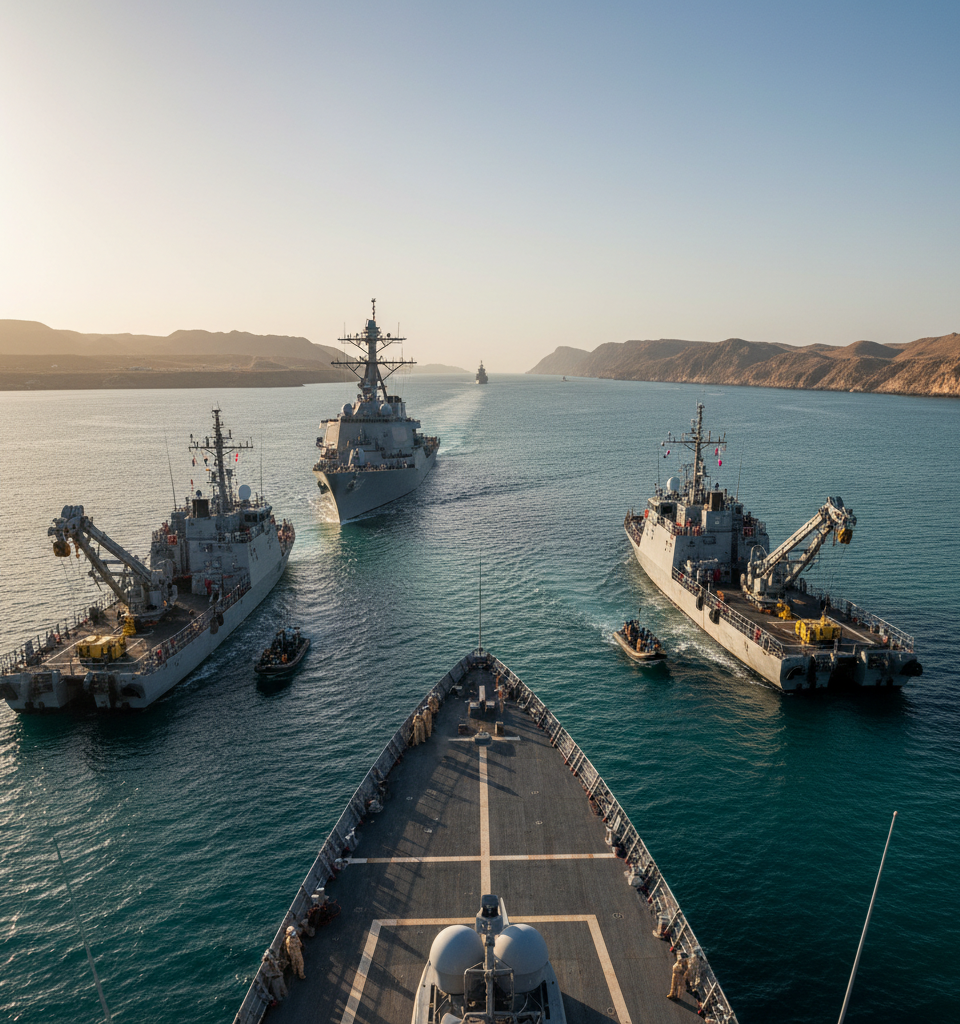
U.S. Navy destroyers have initiated mine clearance operations within the critical Strait of Hormuz, according to statements from American officials. This significant military maneuver is aimed at establishing a secure passage for commercial vessels through the vital waterway. The deployment and commencement of these actions unfold concurrently with intense diplomatic discussions focused on securing the terms for an expanded ceasefire, highlighting a complex interplay between military movements and ongoing peace negotiations.
Strategic Importance of the Strait of Hormuz
This strategic intervention underscores the enduring importance of the Strait of Hormuz as a global chokepoint for maritime trade, particularly oil shipments. Roughly one-fifth of the world's total oil supply, and a substantial portion of global liquefied natural gas (LNG) transits this narrow passage. Any disruption here has immediate and profound implications for international energy markets and global supply chains. The decision to deploy mine-clearing assets reflects a proactive effort to mitigate potential threats to this crucial artery, which has historically been a flashpoint for regional tensions.
U.S. Officials Confirm Operations, Iran Issues Denial
U.S. officials have confirmed that American destroyers are actively engaged in operations designed to ensure the safety of commercial shipping. These unnamed officials, speaking on condition of anonymity due to the sensitivity of the mission, emphasized the defensive nature of the deployment. In a contrasting development, Iranian authorities have vehemently denied that any warships have passed into its territorial waters or that any unusual military activity is occurring in the strait. This divergence in statements highlights the continued geopolitical friction surrounding the waterway and raises questions about the scope and precise location of the U.S. operations.
The deployment of these specialized naval assets signals a heightened level of concern within the U.S. military command regarding potential threats to navigation. Mine clearance is a hazardous and time-consuming operation, requiring significant resources and precise execution to ensure the safety of both military personnel and subsequently, commercial traffic. The immediate goal is to remove any potential explosive devices that could disrupt the flow of goods, thereby safeguarding global economic stability tied to the smooth transit of the strait.
Broader Implications Amidst Ceasefire Negotiations
The timing of these mine clearance operations, alongside ongoing negotiations for an extended ceasefire, suggests a dual-track approach by the U.S. and its allies. While diplomatic efforts strive toward de-escalation and long-term stability, the military presence aims to secure immediate commercial interests and deter potential acts of aggression. The nature of these ceasefire discussions, including the specific conditions and parties involved, remains confidential, adding another layer of complexity to the unfolding situation. It is unclear how the naval operations might influence the tenor or pace of these sensitive diplomatic talks.
Potential Market Response and Future Outlook
Industry analysts are closely monitoring the situation. A secure Strait of Hormuz is paramount for oil and gas futures, and any perceived threat or successful mitigation of risk can impact global commodity prices. Should the mine clearance operations prove successful and the strait remain unhindered, it could offer a measure of stability to nervous energy markets. Conversely, any complications or renewed threats could trigger significant price volatility and freight rate increases. The next few weeks will be critical in observing the interplay between these military actions and the progress of the ceasefire negotiations. The ultimate goal is to maintain unimpeded maritime traffic, a cornerstone of global commerce, through this critical waterway, while also working towards a lasting peace in the region.
Next Steps and Regional Stability
Moving forward, sustained vigilance and effective communication will be essential. The U.S. Navy will likely continue its operations until it is confident that the strait is entirely clear of any potential threats. Simultaneously, international diplomatic channels will remain active, seeking breakthroughs in the ceasefire negotiations. The long-term stability of the region hinges on a delicate balance between robust security measures and successful diplomatic resolutions, particularly concerning the future of maritime freedom in the Strait of Hormuz.