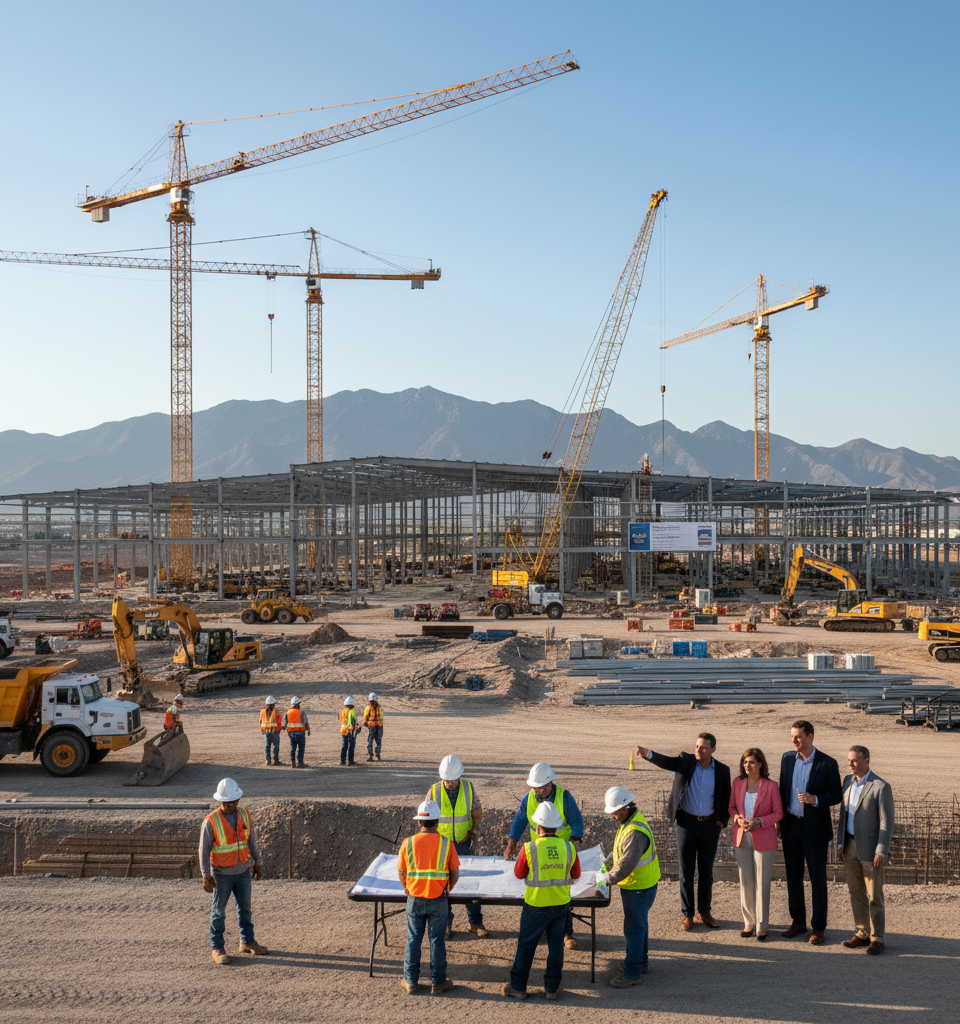
El Paso, Texas, is poised for a substantial economic and logistical expansion with the announcement of an 800,000-square-foot industrial build, directly attributed to the accelerating nearshoring trend within Mexico. This monumental project underscores the increasing attractiveness of the U.S.-Mexico border region as a crucial hub for manufacturing, logistics, and distribution. The development will inject significant industrial capacity into the El Paso market, reflecting a broader strategic shift by companies seeking to shorten supply chains and mitigate geopolitical risks previously associated with distant overseas production centers.
Context of Nearshoring's Rise
The strategic relocation of manufacturing and supply chain operations closer to primary consumer markets, known as nearshoring, has gained unprecedented momentum in recent years. This phenomenon is largely a response to the disruptions experienced during the pandemic, persistent geopolitical tensions, and the rising costs of traditional offshore manufacturing in Asia. Companies are increasingly prioritizing supply chain resilience and speed-to-market. Mexico, with its geographic proximity to the U.S., favorable trade agreements like the USMCA, and a skilled labor force, has emerged as a prime beneficiary. El Paso, situated directly across the border from Ciudad Juárez, one of Mexico's largest industrial centers, is uniquely positioned to capitalize on this movement, serving as a critical gateway for goods moving between the two nations.
Project Specifics and Regional Impact
While specific developers and tenants for the 800,000-square-foot facility were not immediately disclosed, its sheer scale signals a major investment in the region's industrial infrastructure. Such large-scale developments typically house distribution centers, light manufacturing, or cross-docking operations, catering to companies looking to optimize their cross-border logistics. This project is expected to create a substantial number of jobs, both during its construction phase and upon its operational launch, further bolstering El Paso's economy. The increased industrial space will also likely drive demand for ancillary services, from freight transportation to warehousing solutions, creating a ripple effect across the local business landscape.
Broader Industry and Market Implications
The El Paso project is indicative of a wider trend reshaping the North American industrial real estate market. Across the U.S.-Mexico border, particularly in key states like Texas and Arizona, industrial vacancy rates are at historic lows, and rents are steadily climbing due to insatiable demand. This demand is not merely from traditional logistics firms but increasingly from high-tech manufacturers, automotive suppliers, and consumer goods companies establishing new facilities to support their nearshored production. The development pipeline for industrial space in border regions remains robust, signaling sustained investment and growth in this sector.
Expert Perspectives on Nearshoring Dynamics
Industry analysts and supply chain experts consistently highlight nearshoring as a transformative force. "The El Paso market is a bellwether for the industrial growth driven by nearshoring," notes one logistics consultant. "Companies are no longer solely focused on the lowest unit cost; they're prioritizing agility, risk mitigation, and speed-to-market. Mexico offers a compelling value proposition, and border cities like El Paso are the crucial connectors in this new supply chain architecture." This sentiment reflects a strategic recalibration where geographical advantage and streamlined logistics are increasingly valued over distant, cheaper production, even if it entails slightly higher production costs.
The Road Ahead: Future Developments and Challenges
Looking forward, the momentum behind nearshoring is expected to continue, particularly as geopolitical uncertainties persist and companies seek greater control over their supply chains. This will likely lead to further industrial development across the U.S.-Mexico border. However, this rapid growth also presents challenges, including managing increased cross-border traffic, ensuring adequate infrastructure—roads, bridges, ports of entry—can handle the volume, and addressing labor availability and housing needs in rapidly expanding communities. The Port of Manzanillo in Mexico, for instance, recently added electric cranes, signaling an investment in modernizing port infrastructure to support higher trade volumes, while Burlington's new distribution center near Phoenix also points to the broader expansion of logistics networks.
El Paso's 800,000-square-foot industrial facility is more than just a construction project; it is a tangible manifestation of a profound shift in global commerce, solidifying the region's role as a linchpin in the evolving North American supply chain.