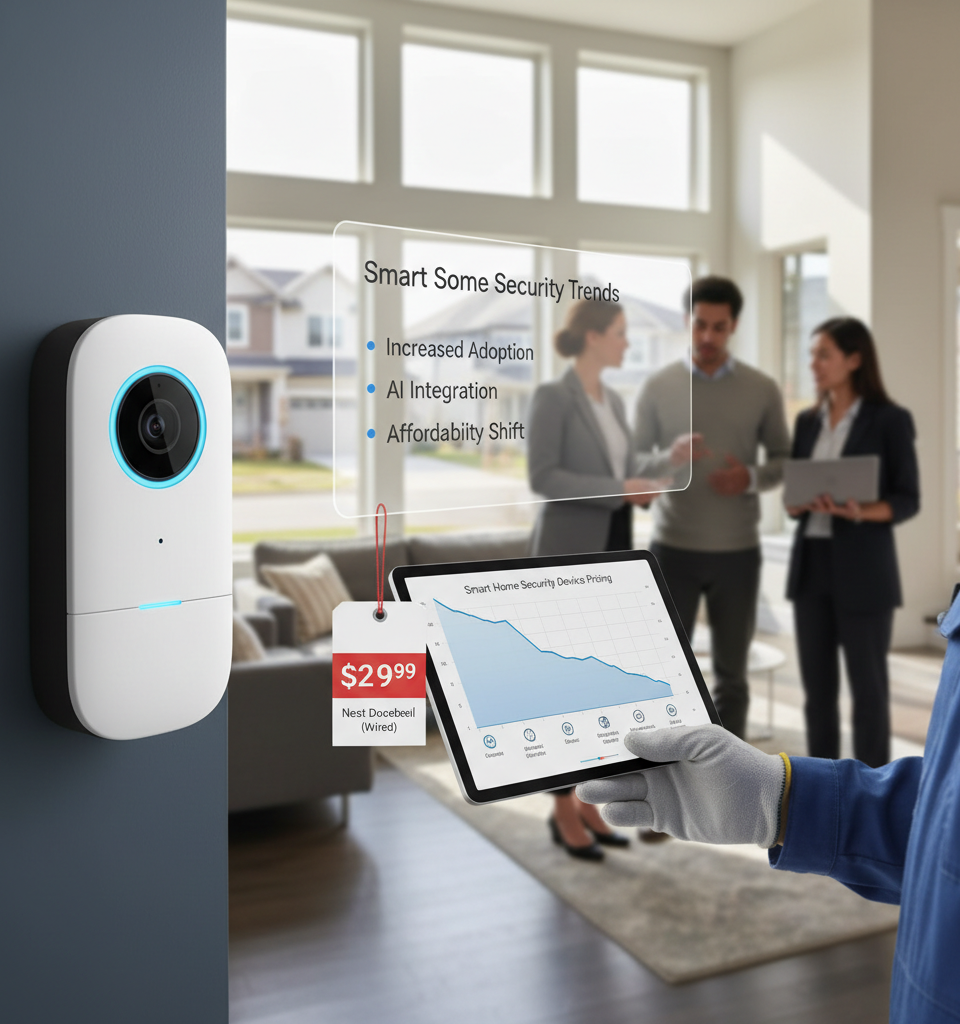
A significant consumer alert for smart home enthusiasts: the highly-acclaimed Nest Doorbell (Wired) is presently being offered with a substantial $40 price reduction. This limited-time offer, widely accessible across major retailers, makes Google's premier wired video doorbell more attainable for a broader audience. Available in its full spectrum of three color options, the promotion positions the Nest Doorbell as a more competitive option in an increasingly crowded market, just as consumer interest in integrated home security solutions continues its upward trajectory.
The Evolving Landscape of Smart Home Security
This price adjustment for a cornerstone smart home device is not an isolated event but rather a reflection of the dynamic and rapidly evolving smart home security sector. Over the past five years, video doorbells have transitioned from niche gadgets to mainstream household necessities, driven by increased awareness of package theft, a desire for enhanced visitor management, and the convenience of remote monitoring. Early entrants like Ring and Nest pioneered the category, setting benchmarks for features like two-way audio, motion detection, and cloud storage. Today's market is characterized by fierce competition, with manufacturers constantly innovating on features, design, and integration capabilities, making price a crucial differentiator for consumers.
Unpacking the Discount: Features and Value Proposition
The Nest Doorbell (Wired), often lauded for its robust performance and seamless integration within the Google Home ecosystem, typically retails for approximately $229. With the current $40 markdown, its price point becomes considerably more attractive at around $189. Key features that distinguish this model include 24/7 continuous recording (with a Nest Aware subscription), intelligent alerts for people, packages, and animals, HDR video for clear image quality even in varied lighting conditions, and a 160-degree field of view to capture a wide area. Its wired connection ensures reliable power and constant connectivity, eliminating concerns about battery life, which is a common pain point for some wireless alternatives. This discount notably applies to all available color finishes, providing aesthetic flexibility for homeowners.
Industry Impact and Market Dynamics
Google's decision to discount the Nest Doorbell (Wired) signals several potential shifts within the smart home industry. Firstly, it could be a strategic move to clear inventory ahead of potential new product launches or to stimulate demand during a traditionally slower sales period. Secondly, it intensifies pressure on competitors like Ring, Arlo, and Eufy, potentially triggering a ripple effect of price adjustments across the sector as brands vie for market share. Data from Statista indicates the global smart home market is projected to reach approximately $157 billion in 2023, with security devices like video doorbells representing a significant and growing component of this valuation. A $40 reduction on a premium device like the Nest Doorbell could subtly recalibrate consumer expectations on pricing for high-end smart security solutions.
Expert Insights: A Play for Market Dominance
Industry analysts view this price cut as a calculated maneuver by Google to solidify its position in the competitive smart home security arena. "This isn't just about selling more doorbells; it's about reinforcing the Google Home ecosystem," stated Sarah Jenkins, a leading smart home technology analyst at TechTrends Research. "By making a core Nest product more accessible, Google strengthens its hold on users who are then more likely to invest in other Google-compatible devices and services, like Nest Cams or Nest Aware subscriptions. It's a long-term play for customer loyalty and ecosystem lock-in, especially given the consistent growth in home security adoption, which is currently seeing annual growth rates upwards of 15% in certain segments."
The Road Ahead: Ecosystems and Integration
Looking forward, the smart home security market is poised for continued innovation, with a strong emphasis on interoperability and advanced AI capabilities. Future developments will likely focus on even more sophisticated AI-driven analytics, enhanced privacy features, and seamless integration with broader smart grids and home automation platforms. The ongoing consolidation of smart home standards, such as Matter, will play a crucial role in shaping the next generation of devices, potentially reducing friction for consumers in building comprehensive smart homes. For Google, and its Nest product line, maintaining competitive pricing while driving innovation and ecosystem integration will be paramount to securing sustained growth and leadership in this lucrative market. Consumers can anticipate further strategic pricing and feature enhancements as tech giants continue to battle for the digital heart of the home.