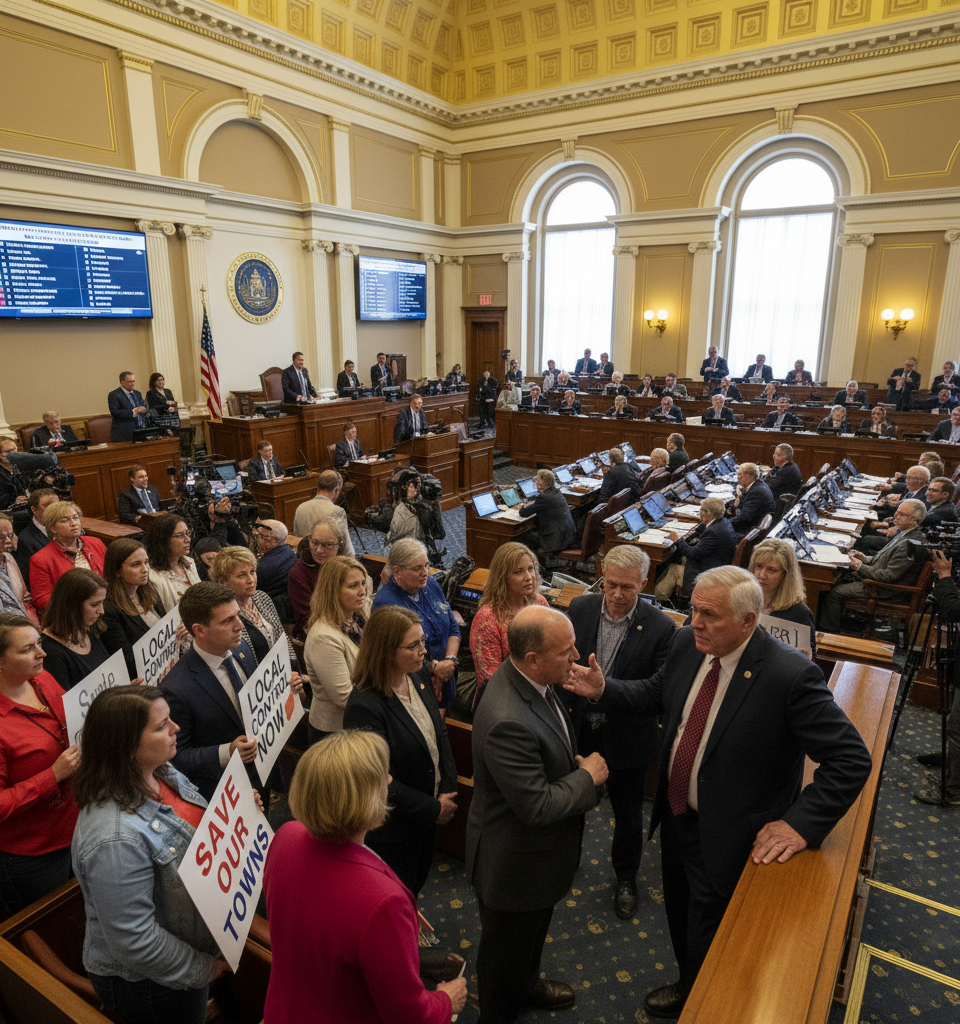
In a significant legislative pivot, New Hampshire is recalibrating its approach to housing development, seeking to address a critical statewide shortage while acknowledging robust local opposition to earlier mandates. Last year, the state legislature joined a national trend by enacting laws designed to boost housing supply and affordability, primarily by compelling local governments to permit multifamily housing in commercially zoned areas. This ambitious effort, initially celebrated by housing advocates, has since faced considerable pushback from municipalities wary of losing control over local planning and development. The current proposals mark a substantial course correction, reflecting a renewed emphasis on collaborative solutions over top-down directives.
Context and Background
The previous legislation, House Bill 1661 and Senate Bill 404, represented a bold foray into overturning traditional local zoning powers. For generations, New Hampshire's "Live Free or Die" ethos has fostered a strong tradition of local control, particularly concerning land use and development. The 2023 laws fundamentally challenged this paradigm, aiming to unlock development potential in areas already served by infrastructure. The rationale was clear: New Hampshire faces an acute housing crisis, with a chronic shortage estimated at over 20,000 units, driving up median home prices to nearly $500,000 and pushing rental costs sky-high. Proponents argued that state intervention was necessary to overcome local resistance to denser housing, which often contributes to exclusionary zoning practices and stifles economic growth by making it difficult for workers to live where they work.
Key Details of Legislative Revision
The proposed amendments, primarily led by Representatives from both parties, seek to soften the mandates of the 2023 laws. A key proposed change is the introduction of a "safe harbor" provision, allowing municipalities to opt out of the multifamily housing mandate if they demonstrate they have already met certain state-defined housing goals or have a comprehensive plan to do so. This would return a degree of local discretion, enabling towns to tailor their housing strategies rather than adhering to a one-size-fits-all approach.
Additionally, revisions are expected to clarify the definition of "commercial zones" and potentially introduce density limits that local governments can impose, directly addressing fears of uncontrolled development. Local officials and planning boards, who felt blindsided by the initial legislation, have voiced strong support for these modifications during recent public hearings, often citing concerns over infrastructure strain, school capacity, and maintaining community character.
Industry and Market Impact
For the real estate development industry, these legislative adjustments introduce a new layer of complexity but also potential stability. While the outright mandate of 2023 promised clear avenues for dense development, its widespread local opposition created uncertainty and potential legal challenges. The revised approach, if passed, could foster a more cooperative environment, potentially leading to smoother project approvals in exchange for greater local input.
Developers might find themselves negotiating more with local boards, but with a clearer understanding of local priorities and less risk of protracted legal battles. This could encourage more targeted, community-supported projects rather than a flood of developments that might face fierce public resistance. The long-term impact on housing supply will depend on the effectiveness of the new incentives and the willingness of municipalities to actively participate in housing creation under the revised framework.
Expert Perspective
Housing policy experts generally commend New Hampshire's willingness to re-evaluate its approach. Dr. Eleanor Vance, a professor of urban planning at a prominent regional university, noted, "While top-down mandates can jumpstart action, sustainable housing growth often requires buy-in from the local level. These revisions suggest the state is learning from implementation challenges, aiming for a more nuanced strategy that blends state goals with local autonomy." Others point out that the success of the safe harbor provision will hinge on the stringency of its requirements and whether it genuinely incentivizes housing production or simply allows towns to avoid responsibility. The balance between maintaining local control and achieving state-level housing density targets remains a critical and delicate policy tightrope.
What's Next
The proposed legislative revisions are currently undergoing committee review and are expected to be put to a vote in the coming weeks. If passed, the new framework could take effect as early as late this year, significantly altering the landscape for housing development across New Hampshire. Attention will then shift to how aggressively municipalities adopt the new safe harbor provisions and whether the state provides sufficient resources and incentives for local planning initiatives.
The outcome will be closely watched by other states grappling with similar housing crises, as New Hampshire's iterative approach could provide a valuable case study in balancing state-level housing goals with deep-seated local governance traditions. The ultimate goal remains creating more affordable housing options, but the path to achieving it is proving to be more collaborative and iterative than initially envisioned.