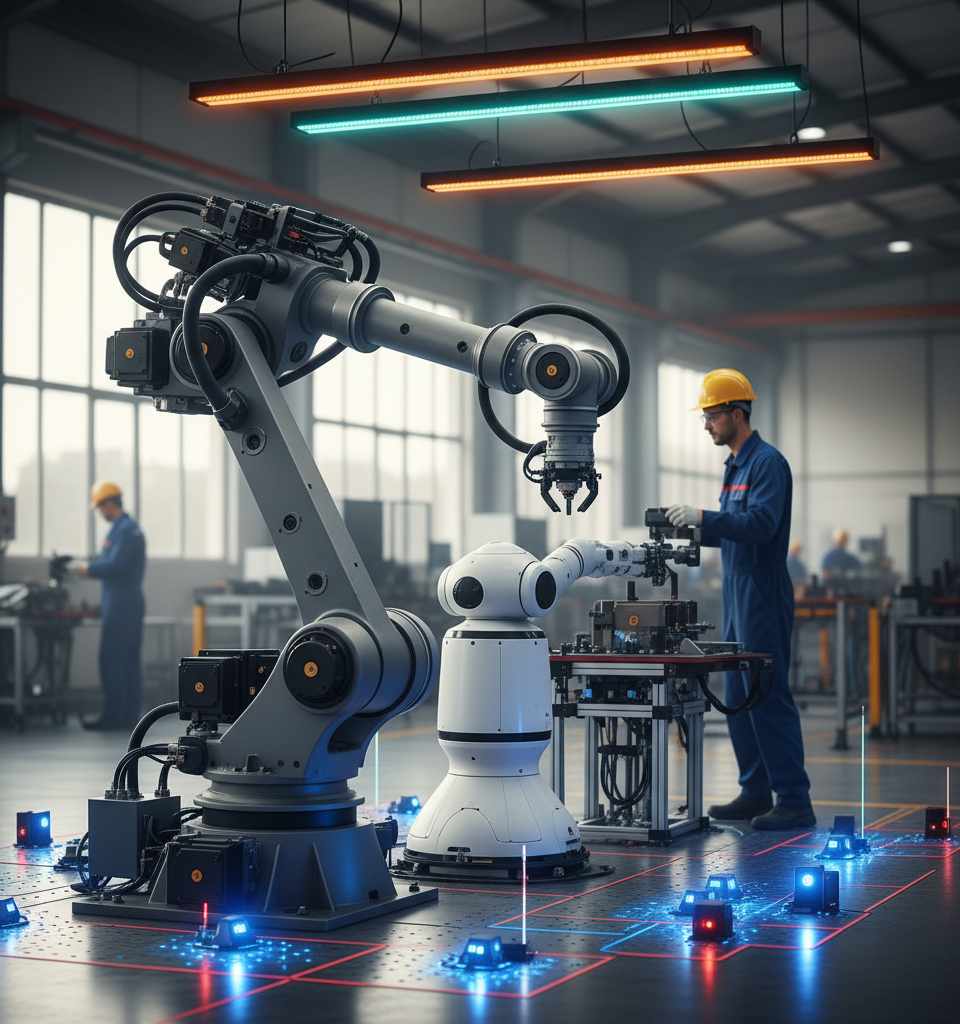
The evolving landscape of robotics safety standards presents a critical opportunity for global enterprises to reassess their manufacturing and logistics operations, potentially reducing the total cost of ownership for automation solutions and increasing supply chain flexibility. By allowing a broader range of robotic systems to operate safely alongside human workers, businesses can optimize cross-border production, scale more efficiently, and leverage advanced automation to maintain competitive pricing in international markets.
A fundamental shift in safety regulations is reshaping the robotics industry, driven by a renewed focus on the entire application rather than merely the robot itself. This evolution is enabling traditional industrial robots to operate safely alongside human workers, effectively making them as user-friendly and adaptable as their collaborative counterparts, or cobots. The move represents a significant departure from older paradigms that rigidly separated robot types based on inherent design.
Contextual Shift in Safety Paradigms
Historically, industrial robots were designed and implemented with the assumption of full physical segregation from human operators, often behind cages or safety barriers. Cobots, conversely, were engineered from the ground up with intrinsic safety features allowing direct human-robot interaction. The new regulatory approach recognizes that the overall safety of a robotic system is determined by its complete operational context, including its speed, payload, tooling, and environmental safeguards, rather than just its classification as 'industrial' or 'collaborative'. This allows for a more nuanced and flexible application of safety principles.
Broadening the Scope of Collaboration
This re-evaluation of safety protocols is dissolving the strict operational divide between high-payload, high-speed industrial robots and their lighter, more constrained collaborative brethren. Previously, the perceived danger of industrial robots limited their use in close-proximity human environments, regardless of whether a specific task or setup could be made safe. Now, with the emphasis on application-level safety, manufacturers can implement robust industrial robots in collaborative settings, provided the necessary risk assessments and safety measures are in place for that specific application.
Industry and Market Impact
The implications for the robotics market are substantial. Manufacturers of traditional industrial robots can now penetrate new segments that previously favored cobots, particularly in areas requiring higher throughput, larger payloads, or greater reach, but still demanding human interaction. This could lead to an expansion of automated tasks across various sectors, from manufacturing and assembly to logistics and healthcare. It also fosters greater innovation as robot developers are incentivized to create hybrid systems that combine the power of industrial robots with advanced safety features suitable for collaborative work.
Future Implications for Automation
Looking ahead, this regulatory evolution is expected to accelerate the adoption of advanced automation solutions across industries. Companies are likely to find it easier and more cost-effective to integrate powerful robotic systems into existing human-centric workflows without the extensive re-engineering often required by older safety standards. This flexibility could drive down integration costs and broaden the return on investment for automation, potentially leading to increased productivity and efficiency across various global supply chains.
The shift also challenges robotics engineers and integrators to develop more sophisticated, context-aware safety systems. The focus is no longer just on preventing contact, but on making contact safe when it occurs, or preventing it through intelligent path planning and sensor-based detection. This will likely spur further advancements in sensor technology, artificial intelligence for predictive safety, and intuitive human-robot interfaces, ensuring that the next generation of automated systems are not only productive but inherently safe and adaptable.