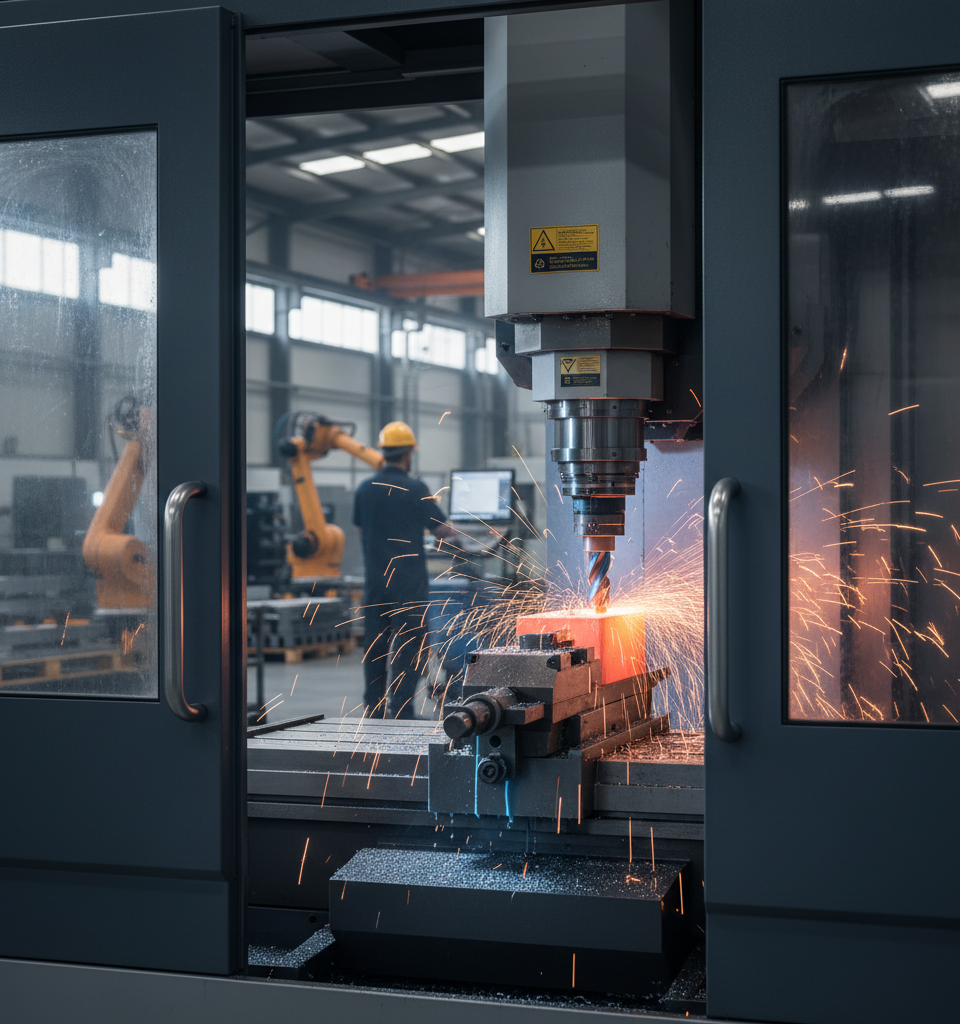
Global manufacturers looking to optimize precision component production may find new efficiencies and cost savings as advancements in hard milling technology emerge. These developments could streamline supply chains and enhance the competitiveness of high-precision parts in international markets.
Hard milling, a critical process for creating durable and precise metal components, is on the cusp of a significant transformation. Historically, its widespread adoption has been limited by stringent requirements for accuracy and machine rigidity, making it a costly and challenging manufacturing operation. However, current trends indicate that emerging technologies and refined operational strategies are now showing considerable potential to mitigate these long-standing obstacles, signaling a more viable and profitable future for the technique.
The Challenges of Hard Milling
Traditionally, hard milling involves machining materials with hardness ratings typically above 45 HRC (Rockwell Hardness C scale). This process is vital for industries requiring components with exceptional wear resistance and structural integrity, such as aerospace, automotive, and mold making. The inherent difficulty stems from the need to remove material from very hard workpieces accurately, which puts immense stress on tooling and machinery. Achieving the necessary precision without compromising tool life or machine stability has been a persistent engineering hurdle. This often led manufacturers to opt for alternative, less efficient processes or to limit the application of hard milling to highly specialized, expensive scenarios.
Emerging Technological Solutions
The shift towards greater viability in hard milling is driven by several technological advancements. While specific details of these technologies are not provided, the general consensus is that innovations are addressing both the material science of cutting tools and the mechanical stability of milling machines. Improvements in carbide grades, coatings, and tool geometries are allowing for more aggressive material removal rates with reduced wear. Concurrently, machine tool manufacturers are developing more robust and precise machines capable of withstanding the immense forces involved in hard milling, ensuring better accuracy and surface finishes. These combined advancements are making the process more predictable and less prone to costly errors or machine downtime.
Industry and Market Implications
The potential for hard milling to become a more accessible and profitable operation carries significant implications for various manufacturing sectors. Industries that rely heavily on high-strength, precision components could see reduced production costs and faster lead times. For example, mold makers could produce more durable and intricate molds more efficiently, directly impacting the quality and cost of plastic parts. Similarly, aerospace and automotive suppliers could benefit from more streamlined production of critical engine components and structural parts. This evolution could also foster greater innovation in product design, as designers gain more freedom to specify harder materials and complex geometries, knowing they can be machined cost-effectively.
What Lies Ahead
As these technologies mature and become more widely adopted, hard milling is anticipated to shed its reputation as an exclusively high-cost, high-difficulty process. The ongoing refinement of both the tools and the strategies used in hard milling suggests a future where this technique is a standard and competitive option for a broader range of manufacturing needs. Companies that invest in these new capabilities may find themselves with a significant competitive advantage, capable of producing superior products with enhanced efficiency and reduced overall manufacturing expenses. The coming years will likely see increased integration of these advanced hard milling solutions into mainstream production lines.