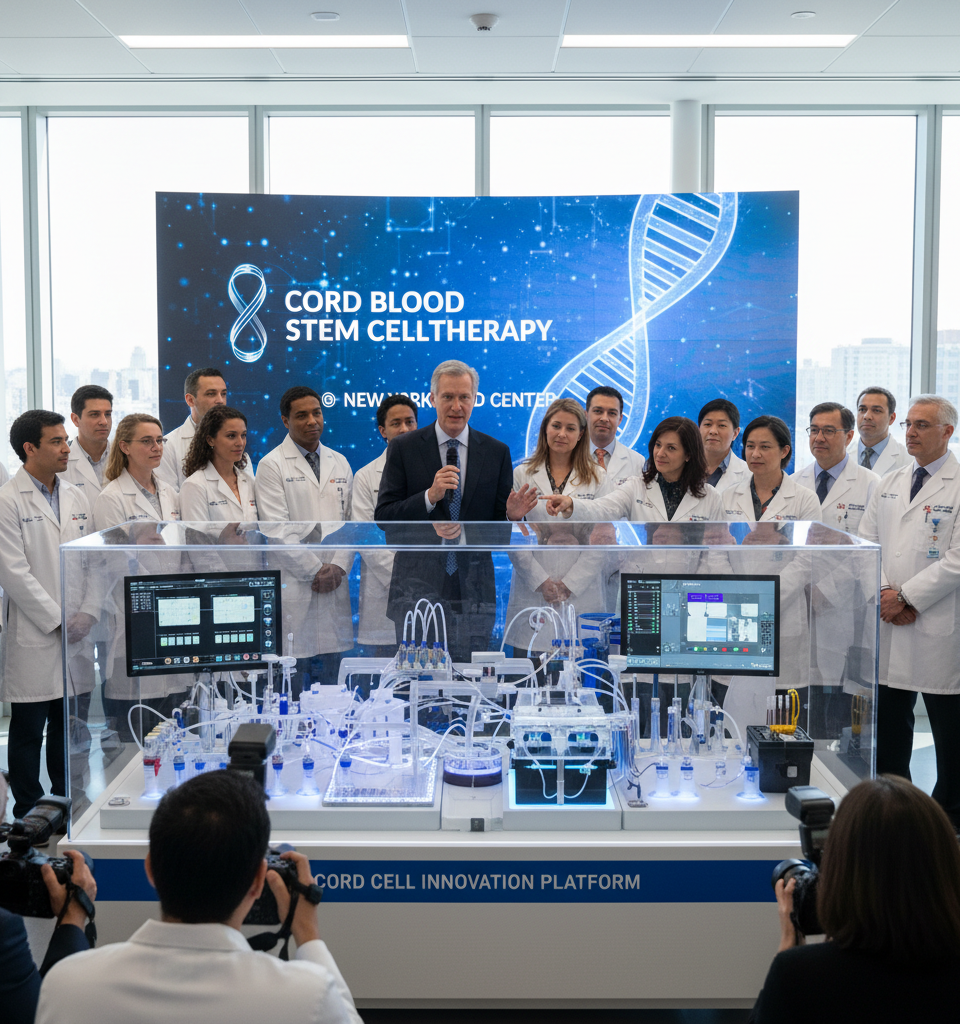
The New York Blood Center (NYBC) has announced the development of a pioneering stem cell platform, a significant leap forward in harnessing the therapeutic power of umbilical cord blood. This initiative directly addresses the substantial overlooked potential of cord blood, which is predominantly discarded as medical waste after childbirth. NYBC's new platform aims to systematically collect, process, and make accessible the immunologically naive, genetically diverse stem cells found in cord blood, which possess the remarkable ability to differentiate into various cell types throughout the human body.
The Unacknowledged Resource: Cord Blood's Untapped Potential
For decades, the vast majority of umbilical cord blood—a rich source of hematopoietic stem cells and other regenerative cell types—has been routinely disposed of post-delivery. Despite its proven efficacy in treating over 80 diseases, including leukemia, lymphoma, and certain genetic disorders, public awareness and systematic collection infrastructure have lagged. The New York Blood Center, which established the first public cord blood bank, the National Cord Blood Program (NCBP), in 1992, has been at the forefront of advocating for the therapeutic use of this biological goldmine. Their new platform represents a concerted effort to build the comprehensive infrastructure needed to overcome existing bottlenecks in collection, processing, and application, thereby transforming a discarded byproduct into a cornerstone of future medical treatments.
Strategic Expansion and Technological Advancement
This new platform is not merely an expansion of existing banking services but a holistic ecosystem designed to maximize the utility of cord blood. Key components include advanced collection protocols, sophisticated processing techniques that preserve cell viability and potency, and a robust research arm dedicated to exploring new therapeutic applications. NYBC aims to leverage its three decades of experience in cord blood banking, which has facilitated over 6,500 transplants globally, to establish a standardized, high-quality resource accessible to a broader range of patients and researchers. The initiative will also focus on expanding the genetic diversity of banked units, ensuring equitable access for all ethnic groups, a critical factor in transplant success rates.
Reshaping the Regenerative Medicine Landscape
The launch of this platform is set to significantly impact the regenerative medicine sector. By establishing a centralized, high-quality resource of diverse stem cells, NYBC is poised to accelerate research into novel cell therapies for a wide array of conditions, from neurological disorders to autoimmune diseases. This move could also democratize access to advanced treatments, potentially reducing the cost and complexity associated with personalized cell therapies. Industry analysts suggest that a standardized, robust cord blood platform could attract significant investment from biotechnology and pharmaceutical companies looking to develop and commercialize new regenerative therapies, potentially creating a multi-billion dollar market.
Expert Insights on the Future of Stem Cell Therapy
Dr. Joanne Kurtzberg, Director of the Carolinas Cord Blood Bank and an internationally recognized expert in cord blood transplantation, has consistently highlighted the untapped potential of cord blood. "The ability to expand and differentiate these 'naive' stem cells into specific cell types opens up an entirely new frontier in medicine," she states. "A centralized, well-curated platform like the one NYBC is developing is precisely what the field needs to move from niche applications to mainstream therapeutic solutions." Other experts emphasize the value of cord blood's immunological immaturity, which reduces the risk of graft-versus-host disease, making it a safer option for many transplant recipients than adult stem cells.
Looking Ahead: Clinical Trials and Broad Applications
Looking forward, the New York Blood Center plans to foster collaborative research and embark on multiple clinical trials leveraging its new platform. Immediate priorities include exploring cord blood applications in neurodevelopmental disorders such as cerebral palsy and autism, as well as advancing its use in infectious disease treatment and tissue regeneration. The ultimate vision is to create a comprehensive repository and research hub that not only serves as a lifeline for transplant patients but also becomes a pivotal accelerator for breakthroughs in cellular and genetic medicine, fundamentally changing how debilitating diseases are treated globally within the next decade.
Economic and Societal Benefits
The economic implications of NYBC’s initiative are substantial. Beyond generating new revenue streams through research partnerships and therapeutic development, the platform could significantly reduce healthcare costs associated with chronic diseases by providing more effective, potentially curative, treatments. Societally, it represents a profound moral imperative, transforming discarded biological material into a source of healing and hope. This transformation underscores a shift towards valuing every available biological resource, moving away from waste and towards a future where every birth could potentially contribute to saving lives and advancing medical science.