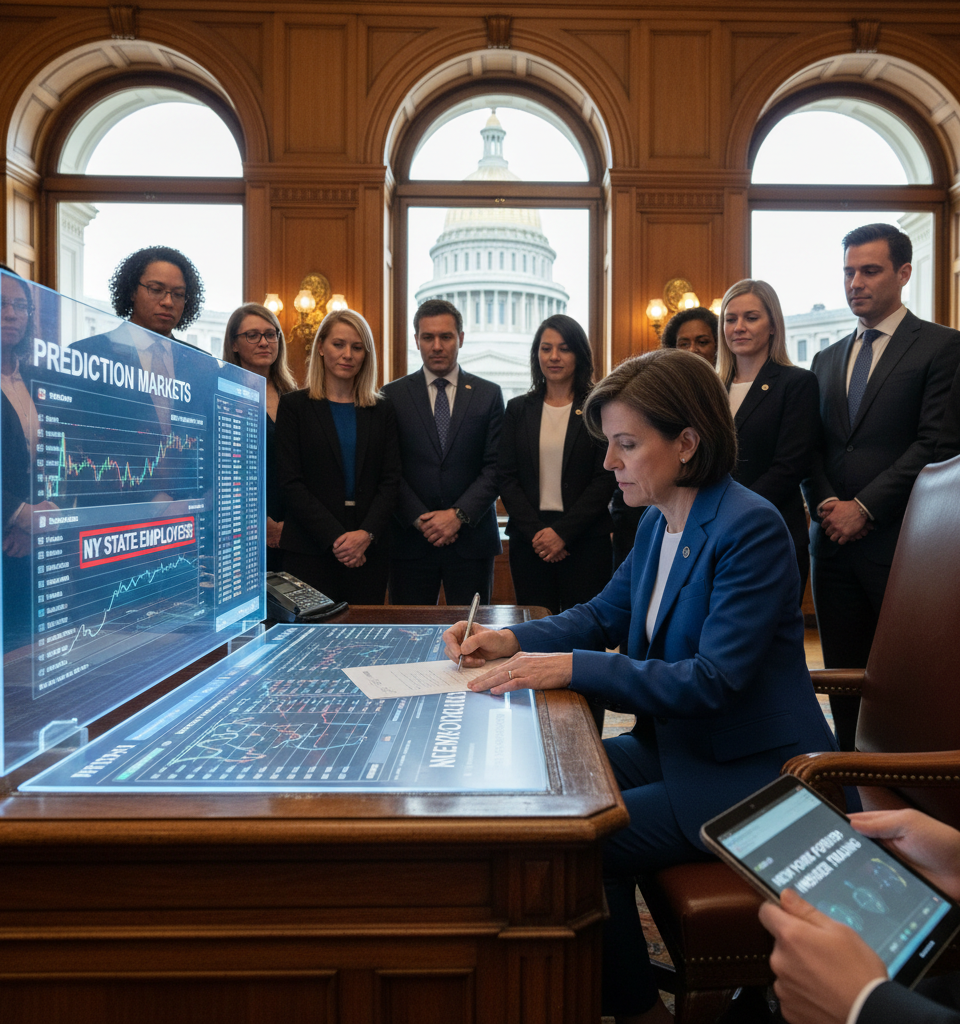
The Rise of Prediction Markets and Ethical Dilemmas
The prohibition comes amidst growing scrutiny of prediction markets, which allow users to bet on the outcomes of future events, ranging from political elections and legislative approvals to corporate earnings and product launches. While proponents argue prediction markets offer a valuable tool for aggregating information and forecasting, critics have long raised concerns about their potential for misuse, particularly by individuals with privileged access to information. Historically, laws and regulations regarding insider trading have primarily focused on traditional securities markets, leaving prediction markets in a regulatory gray area. New York's executive order now squarely addresses this lacuna, recognizing the potential for reputational damage and erosion of public trust if state employees were perceived to be monetizing their access to confidential governmental insights.
Key Provisions and Enforcement Mechanisms
The executive order outlines clear definitions of what constitutes non-public information and specifies the types of prediction markets covered, encompassing both regulated platforms and less formal, decentralized exchanges. While specific penalties for violations were not immediately detailed in the publicly available information, sources close to the Governor's office indicate that transgressions would likely fall under existing state ethics laws, potentially leading to disciplinary action, including termination of employment, fines, and even criminal prosecution depending on the severity and nature of the insider trading activity. The order also places an emphasis on education and training for state employees regarding these new prohibitions, ensuring a clear understanding of the updated ethical guidelines.
Broader Implications for the Prediction Market Industry
This executive order from a major state like New York is expected to send ripples through the burgeoning prediction market industry. While platforms often tout their ability to generate accurate forecasts, the specter of insider trading has always been a significant regulatory hurdle. This move could pressure prediction market operators to implement more robust identity verification and insider trading detection mechanisms. It might also encourage other states and even federal regulators to consider similar prohibitions, potentially leading to a more standardized regulatory framework for these markets across the United States. The long-term impact could be a drive towards greater transparency and legitimacy, or conversely, a flight of certain activities to even less regulated, offshore platforms.
Expert Analysis: A Necessary Precedent Legal and ethics experts largely commend New
York's proactive approach. Dr. Eleanor Vance, a professor of public ethics at Syracuse University, states, "This executive order sets a crucial precedent. In an increasingly data-driven world, where information is currency, preventing public servants from leveraging their unique access for personal financial gain is paramount to maintaining public confidence. It closes a loophole that was only bound to grow as prediction markets become more sophisticated and accessible." She adds, "While enforcement will be key, the message is clear: public service demands an uncompromising commitment to impartiality and integrity, extending to all forms of financial speculation." Other analysts note that the order reflects a broader trend of governments attempting to catch up with rapid technological advancements in finance.
The Path Forward: Expanding Scope and Federal Considerations The New
York executive order is undoubtedly a foundational step, but questions remain about its broader implementation and potential expansion. Future discussions are likely to revolve around whether the scope of the order will be broadened to include family members of state employees or contractors with access to non-public information. Furthermore, this state-level action could ignite debates at the federal level regarding a national policy on insider trading in prediction markets. As the lines between traditional finance and novel financial instruments continue to blur, New York's bold move may well serve as a blueprint for other jurisdictions grappling with similar ethical and regulatory challenges in the digital age.