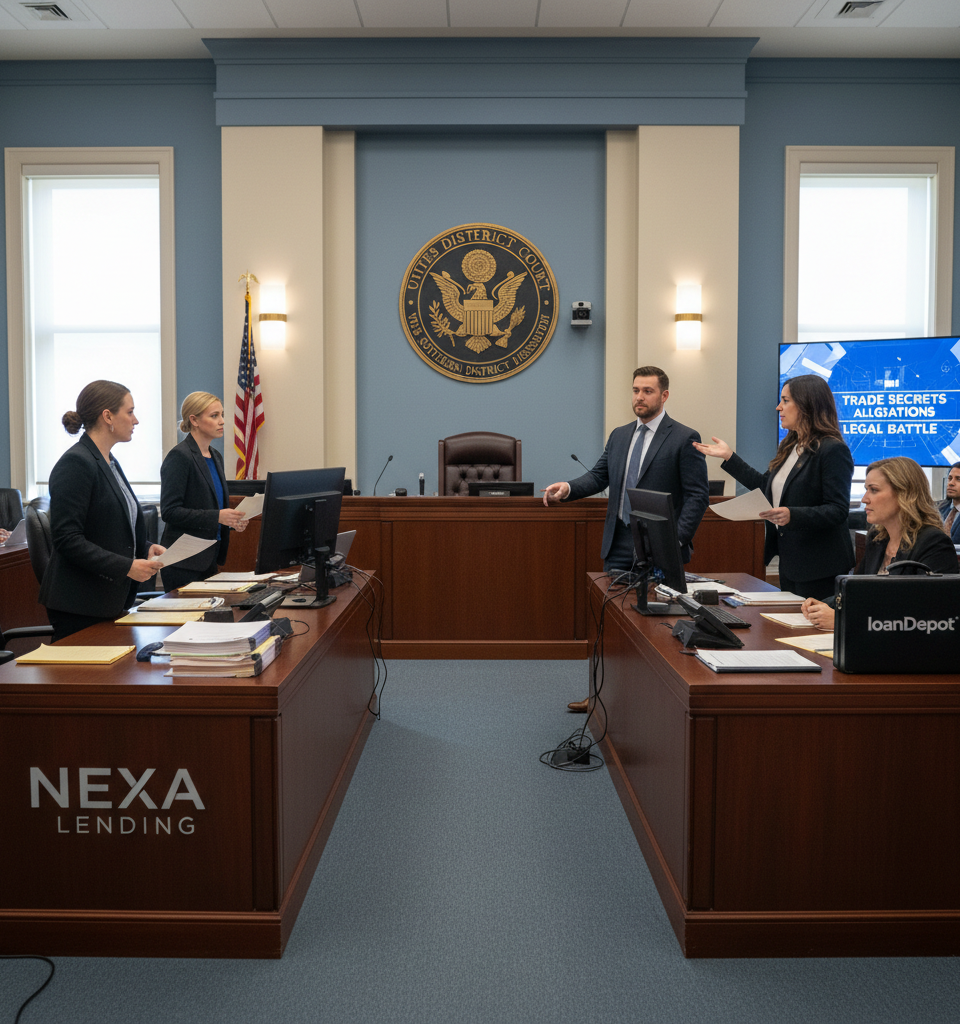
NEXA Lending has officially refuted all allegations brought forth by loanDepot in a high-stakes lawsuit filed in the Mississippi Southern District federal court. At the core of loanDepot's complaint are accusations of theft of trade secrets, breach of contract, and violations under the Computer Fraud and Abuse Act (CFAA), coupled with demands for injunctive relief and monetary compensation. This legal maneuver highlights an intensifying battle for talent and proprietary information within the highly competitive and often volatile mortgage lending sector, with the dispute centering on the alleged misappropriation of confidential business intelligence and client data by former loanDepot employees now working for NEXA.
Context of the Dispute
The lawsuit emerges against a backdrop of significant labor movement within the mortgage industry, particularly following periods of high volume and subsequent market corrections. loanDepot's legal filing specifically targets former employees and their new employer, NEXA Lending, alleging that these individuals illicitly transferred sensitive business information, including client lists, pricing strategies, and marketing plans, to their new roles. Such disputes are not uncommon in industries where competitive advantage is heavily reliant on client relationships and proprietary data. The core of loanDepot's argument rests on the premise that the defendants leveraged illegally obtained information to unfairly compete, thereby causing substantial financial harm and undermining loanDepot's market position. The seeking of an injunction suggests loanDepot aims to immediately cease what it perceives as ongoing detrimental activities.
Key Allegations and Denials According to court documents, loanDepot's complaint details several instances where former employees, prior to their departure, allegedly accessed and downloaded a substantial volume of confidential data.
The company claims these actions were a deliberate attempt to benefit NEXA Lending and gain an unfair competitive edge. loanDepot is seeking to recover not only damages for alleged losses but also to prevent further use or dissemination of its confidential information through permanent injunctions. In its formal response, NEXA Lending has categorically denied any wrongdoing, stating that it has not, directly or indirectly, engaged in the theft of trade secrets or violated the CFAA. NEXA's defense is expected to challenge the veracity of loanDepot's claims of intellectual property theft and may argue that the information in question does not meet the legal definition of a trade secret, or that any former employees acted independently and without NEXA's knowledge or consent.
Industry Implications and Market Impact
This legal skirmish casts a shadow over the mortgage industry, serving as a stark reminder of the vigilant measures companies must take to protect their intellectual property and client bases. For loanDepot, a publicly traded company, the outcome could influence investor confidence and its operational flexibility, particularly if an injunction is granted or significant damages are awarded. For NEXA Lending, a relatively newer entrant or expanding player in the market, prevailing in this lawsuit would affirm its legitimate growth strategies, while a loss could result in reputational damage, substantial financial penalties, and operational restrictions. Beyond the immediate parties, the lawsuit's progression could set precedents for how employee mobility and data protection are managed across the entire sector, influencing future non-compete clauses and data security protocols.
Expert Perspectives Legal experts specializing in intellectual property and employment law suggest that such cases often hinge on the defensibility of what constitutes a trade secret and the evidence of intent to misappropriate.
"The challenge for loanDepot will be to conclusively prove that the information taken was indeed a trade secret under the law, and that NEXA directly benefited from its theft," notes Sarah Chen, a partner at a prominent corporate law firm. "Conversely, NEXA will likely focus on demonstrating that its business practices are independent and that any employee departures followed standard professional conduct." Analysts also point out that the financial services industry, with its heavy reliance on client data and competitive intelligence, is particularly vulnerable to these types of disputes, making robust non-disclosure and non-compete agreements crucial.
What Lies Ahead
The immediate future will likely involve extensive discovery phases, where both parties will exchange evidence and testimonies. This could include reviewing electronic communications, interviewing witnesses, and scrutinizing NEXA's business development activities since the employees' transitions. A potential settlement out of court remains a possibility, especially if either side perceives a prolonged legal battle as too costly or risky. However, given the strong denials from NEXA and the assertive stance from loanDepot, a full-blown trial seems more probable, which could span several months or even years. The resolution of this lawsuit will undoubtedly have significant financial and operational implications for both NEXA Lending and loanDepot, potentially redefining competitive boundaries within the mortgage lending landscape for years to come.