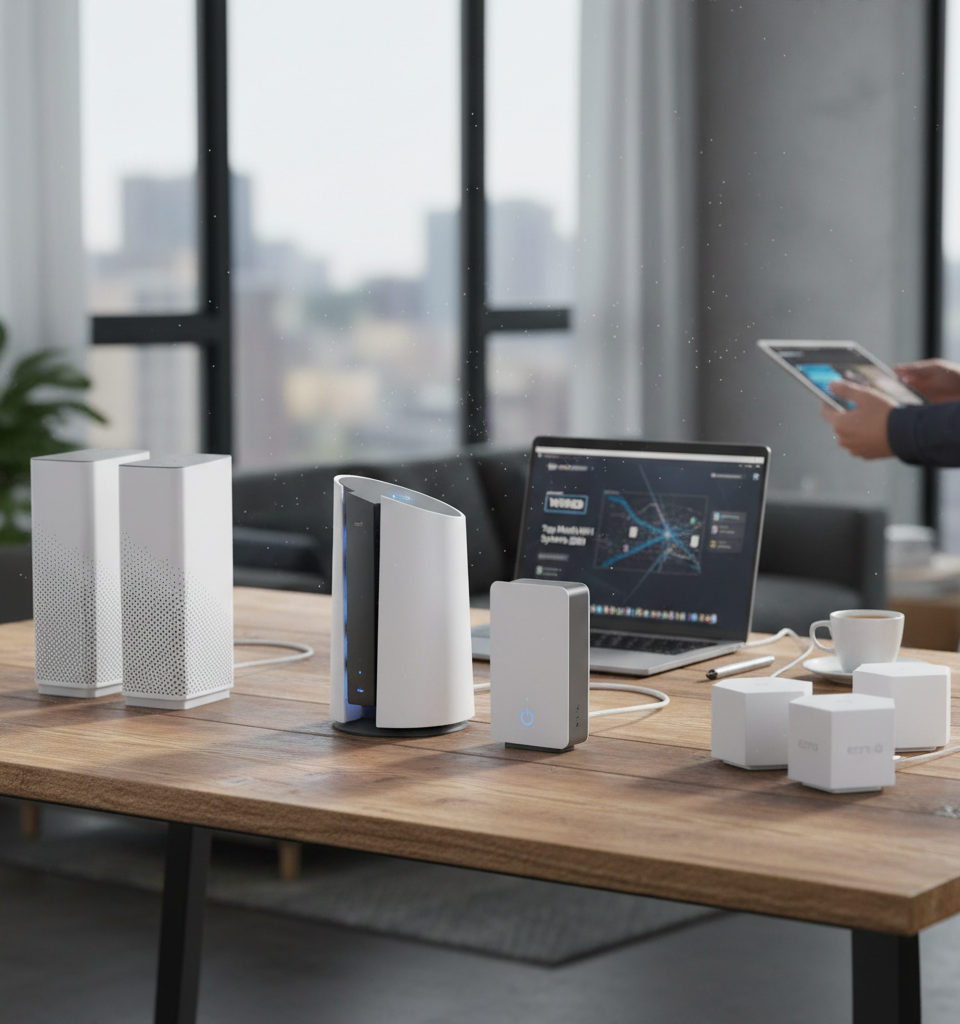
NEW YORK, NY – [Date] – A comprehensive new analysis released by technology publication WIRED for 2026 definitively positions advanced mesh Wi-Fi systems as the quintessential solution for pervasive home internet connectivity, effectively eradicating traditional dead spots and unreliable signal. The report, which evaluates leading systems from Netgear, Asus, Amazon, and other key players, underscores a pivotal shift in consumer expectations for seamless digital environments, particularly as reliance on multiple connected devices escalates.
This renewed focus on robust, whole-home Wi-Fi comes amid a dramatic increase in broadband consumption and the proliferation of smart home devices. Traditional single-router setups, often adequate for smaller dwellings or fewer devices, have proven increasingly insufficient in accommodating the demands of larger homes, remote work, 4K streaming, and online gaming simultaneously. The technological leap offered by mesh networks—where multiple access points collaborate to form a unified, expansive Wi-Fi field—addresses this growing bottleneck, promising consistent high-speed access from basement to attic.
WIRED's exhaustive testing methodology for 2026 involved rigorous evaluation across various home layouts, material compositions, and interference scenarios. Key findings highlight Netgear's Orbi series for its unparalleled raw throughput, with the Orbi 8 (AXE6000) consistently delivering average speeds exceeding 800 Mbps in 5,000 sq ft homes, even through multiple walls. Asus's ZenWiFi systems, particularly the ZenWiFi ET8 (AXE6600), were lauded for their robust feature sets, including advanced parental controls and robust security protocols, making them a strong contender for tech-savvy households. Amazon's Eero Pro 6E, while offering slightly less raw speed, stood out for its exceptional ease of setup and intelligent network optimization, appealing to a broader consumer base seeking simplicity and reliability. Pricing for these premium systems typically ranges from $300 for entry-level two-pack sets to over $1,000 for high-performance, multi-node configurations designed for expansive properties.
The widespread adoption and enhancement of mesh Wi-Fi technology are poised to significantly impact the broader telecommunications and consumer electronics markets. Internet Service Providers (ISPs), facing increasing subscriber churn due to connectivity issues, are now more frequently bundling or recommending mesh systems, viewing them as essential infrastructure for delivering on promised bandwidth. The market for mesh systems is projected to grow from an estimated $3.5 billion in 2023 to over $8 billion by 2028, reflecting a compound annual growth rate (CAGR) of approximately 18%, according to recent market research firm analyses. This growth is further fueled by the integration of Wi-Fi 6E and Wi-Fi 7 standards, which leverage new frequency bands (6GHz) to minimize interference and maximize speed.
Industry analysts concur on the transformative impact of these advanced systems. "The evolution of mesh Wi-Fi is not just about better signal; it's about enabling a truly interconnected digital lifestyle," commented Clara Johansson, a senior analyst at TechConnect Insights. "As homes become smarter and our digital lives more intertwined with our physical spaces, reliable, omnipresent connectivity isn't a luxury; it's a fundamental utility. The 2026 offerings from leaders like Netgear and Asus are setting new benchmarks for performance and user experience, effectively future-proofing homes against growing bandwidth demands." She also noted the increasing emphasis on cybersecurity features embedded directly within these systems.
Looking ahead, the next generation of mesh Wi-Fi systems—expected to fully embrace Wi-Fi 7 (802.11be) by late 2026 and early 2027—promises even greater leaps in speed, efficiency, and capacity. Innovations such as Multi-Link Operation (MLO) and enhanced spectral efficiency are anticipated to deliver multi-gigabit speeds with unprecedented reliability, even in dense network environments. Further integration with smart home ecosystems, leveraging AI for proactive network management and security, is also on the horizon, cementing mesh Wi-Fi's role as the central nervous system of the modern, connected home. Manufacturers are also exploring more sustainable product designs and energy-efficient operations to align with evolving environmental consciousness among consumers.