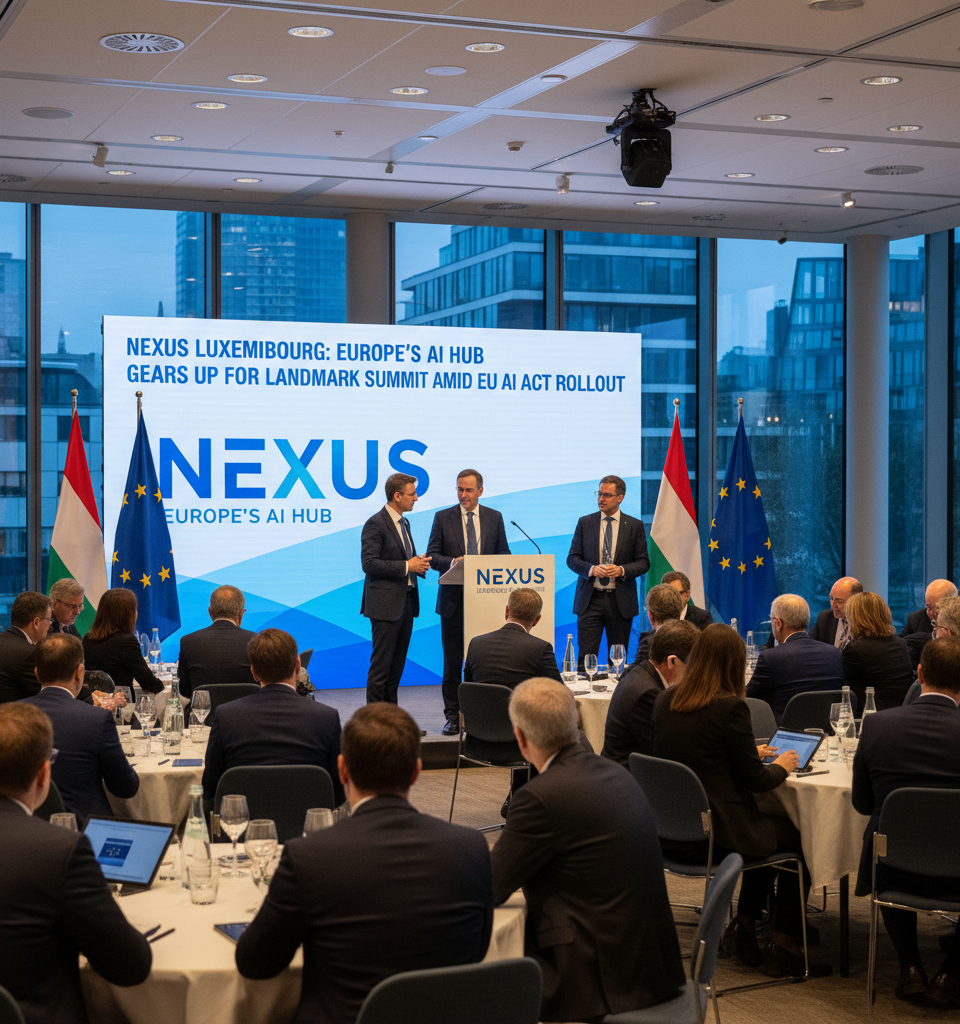
From June 10th to 11th, the Grand Duchy of Luxembourg will convene a gathering of leading minds, policymakers, and industry innovators for Nexus, its premier technology summit. This year's iteration is poised to be particularly significant, given its timing just weeks ahead of the implementation of the most impactful provisions of the European Union's Artificial Intelligence Act. The event underscores Luxembourg's strategic ambition to cement its role as a key player in Europe's evolving AI landscape, demonstrating how a nation with a population smaller than many major European cities can wield substantial influence on a continent-wide technological agenda.
Contextual Significance and Historical Trajectory
Luxembourg's emergence as a crucial hub for AI discussion is no accident. The nation has meticulously cultivated an ecosystem conducive to digital innovation, leveraging its robust financial sector, advanced digital infrastructure, and a proactive government committed to fostering technological growth. Historically, Luxembourg has often punched above its weight in European policy-making, a trait now visibly extending into the digital domain. The EU AI Act, lauded as the world's first comprehensive legal framework for artificial intelligence, represents a monumental shift in how AI will be developed, deployed, and governed. Its impending enforcement elevates Nexus from a standard tech conference to a critical forum for dialogue on compliance, ethical deployment, and competitive advantage in the new regulatory landscape.
Key Event Details and Agenda Highlights
While specific speaker lineups and panel topics were due to be finalized, Nexus is expected to feature high-level discussions on AI governance, data privacy, cybersecurity, and the economic implications of AI adoption across various sectors. Attendees will likely include EU commissioners, national government officials, CEOs of major tech firms, and leading academic researchers. Insights into practical strategies for navigating the EU AI Act's requirements, potential investment opportunities in compliant AI solutions, and the ethical considerations of frontier AI technologies are anticipated to be central themes. The event's intimate scale, relative to larger global tech conferences, often facilitates more direct and impactful conversations among key stakeholders.
Industry and Market Impact
The ripple effects of the EU AI Act's enforcement will be profound, reshaping the competitive landscape for businesses operating within or targeting the European market. Companies ranging from burgeoning startups to multinational corporations are currently grappling with the intricacies of compliance, necessitating significant investments in auditing, risk management, and ethical AI development. Nexus offers a unique platform for these entities to gain clarity, share best practices, and potentially forge partnerships that can accelerate their adaptation. The discussions at Nexus are expected to provide insights into how European businesses can not only comply but also innovate within the new regulatory boundaries, potentially setting global standards for responsible AI.
Expert Perspectives
Industry analysts and legal experts widely acknowledge the EU AI Act as a landmark regulation, albeit one that presents both opportunities and challenges. Dr. Anja Hoffmann, a Brussels-based AI policy expert, recently commented, "The timing of Nexus couldn't be better. It allows for a critical pre-implementation assessment, providing stakeholders a final chance to influence interpretations and prepare for the operational realities of the Act." Others have highlighted Luxembourg's neutral and highly connected position within Europe as ideal for fostering such high-stakes discussions, promoting a balanced perspective between innovation and regulation.
The Road Ahead: Future Implications
The successful execution of Nexus this year will likely reinforce Luxembourg’s standing as a formidable player in the European AI narrative. Beyond the immediate discussions, the insights and collaborations fostered at the summit are expected to contribute significantly to the ongoing evolution of AI policy and technological development across the EU. Looking ahead, the Grand Duchy is keen to continue attracting AI-focused businesses and research initiatives, further integrating itself into the fabric of European digital transformation.
The outcomes of Nexus will undoubtedly inform upcoming legislative amendments, industry standards, and investment trends as Europe endeavors to lead the world in ethical and human-centric AI innovation. The emphasis will shift from understanding the Act to demonstrating compliance and showcasing tangible benefits of ethical AI, both domestically and internationally.