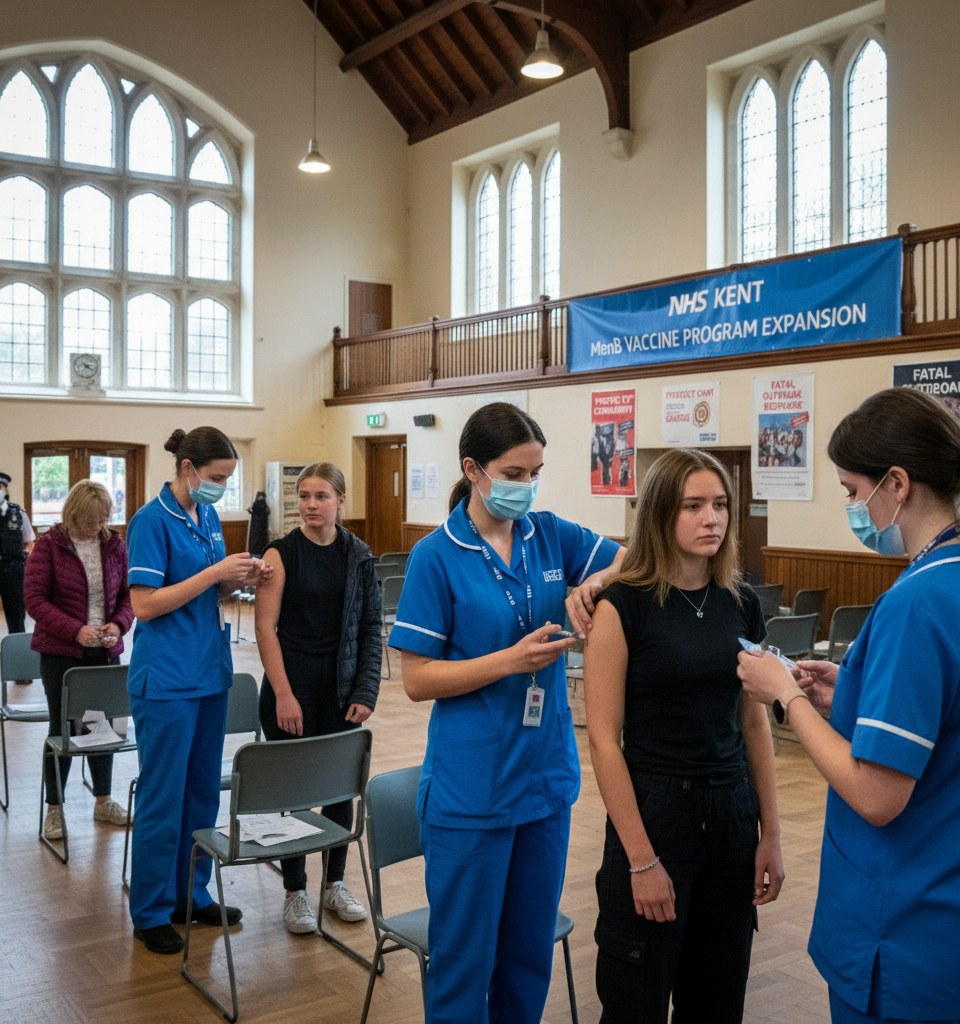
The National Health Service (NHS) is set to intensify its vaccination efforts in coastal Kent, offering a crucial second dose of the Meningococcal B (MenB) vaccine to thousands of individuals who may have been exposed during a recent fatal outbreak. This proactive measure targets university students and school pupils in the affected area, aiming to bolster immunity and prevent further tragedies after the deadly incident that prompted widespread public health concerns.
Unprecedented Localized Outbreak Prompts Urgent Response
The decision to administer a second vaccine dose underscores the severity of the localized meningococcal disease outbreak that has gripped parts of Kent. Meningococcal disease, caused by the bacterium Neisseria meningitidis, can lead to life-threatening conditions such as meningitis and septicaemia (blood poisoning). While rare, its rapid progression and high mortality rate make swift public health intervention paramount. The initial vaccination push saw thousands of doses administered, but the persistent threat has necessitated this advanced strategy.
Vaccine Eligibility and Delivery Details
Under the new guidelines, individuals who received their first MenB vaccine dose during the initial outreach efforts following the outbreak are now eligible for a second jab. This primarily includes young adults attending universities and local secondary schools in the targeted Kent areas. The NHS is working closely with educational institutions to facilitate access to the vaccine, ensuring a smooth and efficient delivery process. Public health officials emphasize that two doses are crucial for achieving optimal, long-lasting protection against the MenB strain.
Broader Public Health Implications
This incident highlights the ongoing challenges posed by infectious diseases, even in countries with advanced healthcare systems. The urgency of the response in Kent demonstrates the NHS's commitment to mitigating health crises and protecting vulnerable populations. Furthermore, it serves as a stark reminder of the importance of robust vaccination programs and rapid epidemiological response mechanisms to contain outbreaks before they escalate into broader public health emergencies.
Expert Perspectives on Enhanced Vaccination Strategy
Public health experts have largely lauded the NHS's decision to offer a second MenB dose. Dr. Eleanor Reed, a leading epidemiologist specializing in bacterial infections, commented, "While a single dose can provide some level of protection, a second dose significantly boosts immunity, offering more comprehensive and enduring defense against MenB. This targeted approach is critical in controlling an outbreak and preventing future cases in a community with identified transmission." She added that this strategy aligns with best practices for outbreak management globally.
Financial and Logistical Considerations
Implementing such a large-scale, targeted vaccination campaign carries significant logistical and financial implications. The procurement of thousands of additional vaccine doses, the deployment of healthcare personnel, and the establishment of temporary vaccination clinics represent a considerable investment. While specific expenditure figures related to this second phase have not been released, it is understood that public health budgets are being appropriately reallocated to address this urgent need, underscoring the high cost of disease outbreaks.
Future of Meningococcal Disease Control
The events in Kent will undoubtedly influence future public health strategies for meningococcal disease control across the UK. It could lead to a re-evaluation of routine vaccination schedules, particularly for at-risk groups, and potentially inform enhanced surveillance methods to detect outbreaks earlier. The long-term implications may include increased investment in vaccine research and development, as well as improved public awareness campaigns regarding the symptoms and prevention of meningococcal disease. The NHS continues to monitor the situation closely, with public health officials urging continued vigilance among the population and prompt medical attention for anyone exhibiting symptoms.
Ongoing Surveillance and Community Engagement
Beyond vaccination, continuous surveillance remains a cornerstone of the public health response in Kent. Health authorities are actively monitoring reported cases and conducting contact tracing to identify any potential new infections. Community engagement initiatives are also underway to educate residents about the signs and symptoms of meningococcal disease, reinforcing the message that early diagnosis and treatment are critical for positive outcomes. The collaborative effort between healthcare providers, local government, and educational institutions is vital in safeguarding public health during this challenging period.