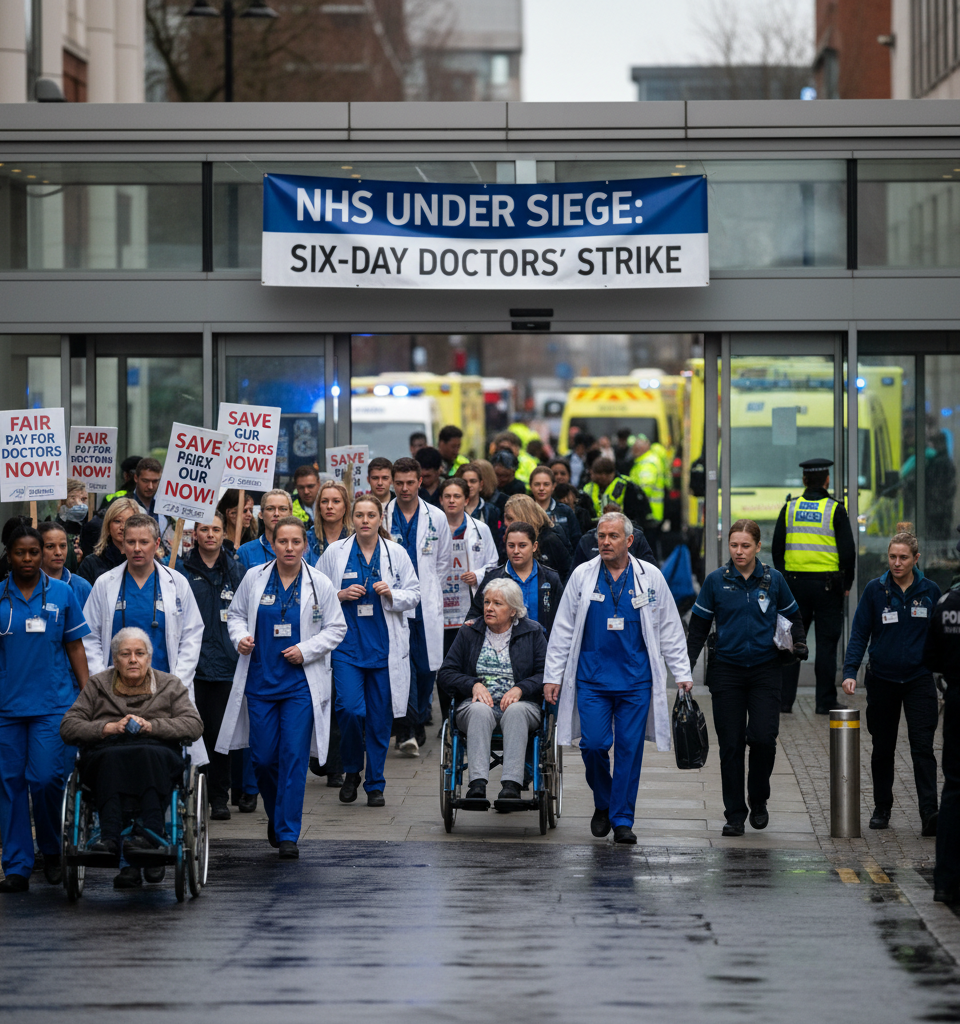
London, England – The National Health Service (NHS) in England is bracing for critical disruption as junior doctors launched their longest continuous strike in the service's 75-year history today. The industrial action, slated to run for six consecutive days, is anticipated to cause widespread cancellations of elective procedures and outpatient appointments, with healthcare officials advising the public to reserve emergency services strictly for life-threatening conditions. The strike, which began at 7:00 AM GMT, marks a significant escalation in the ongoing dispute over pay and working conditions between junior doctors and the government.
This latest walkout by members of the British Medical Association (BMA) follows nearly two years of intermittent industrial action by various healthcare professionals, including nurses, paramedics, and senior doctors. The cumulative effect of these strikes has already led to over 1.2 million routine appointments and operations being postponed since December 2022. Junior doctors, who constitute up to 50% of the medical workforce in hospitals, are demanding a 35% pay rise to compensate for what they claim is 15 years of real-terms pay erosion. The government, however, maintains that such a demand is unaffordable and inflationary.
Key details of the strike underscore its potential impact. While emergency departments and critical care units will maintain staffing levels through a 'Christmas Day' rota, requiring senior doctors and consultants to cover junior colleagues' shifts, nearly all non-urgent services are expected to be severely curtailed. NHS England has confirmed that accident and emergency (A&E) departments will remain open, but patients are being redirected to alternative services like NHS 111 online or pharmacies where appropriate. The BMA contends that junior doctors' pay has fallen by 26.1% in real terms since 2008, rendering their current average salary for a doctor in foundation year 1 (FY1) around £32,398, insufficient to retain talent within the NHS.
The broader impact of this prolonged industrial action extends beyond immediate patient care. The backlog of appointments, already a formidable challenge post-pandemic, is set to swell further, exacerbating waiting lists which currently stand at over 7.7 million people. This continuous disruption erodes public confidence in the NHS, placing additional pressure on an already strained system struggling with staff shortages, an aging population, and increasing demand. Economically, each day of strikes costs the NHS millions in cancelled operations and the logistical nightmare of rescheduling, not to mention the wider economic impact of delayed treatments on patient productivity.
Healthcare experts and analysts have voiced significant concerns. Dr. Sarah Jones, a health policy researcher at the King’s Fund, stated, "This six-day strike represents a critical juncture for the NHS. While the immediate focus is on patient safety, the long-term implications for workforce morale, retention, and the financial sustainability of the health service are profound. A resolution requires more than just a pay offer; it needs a comprehensive strategy for valuing and retaining our medical professionals." Others point to the increasingly complex negotiations, highlighting the widening chasm between government fiscal policy and doctors' demands for fair compensation.
Looking ahead, the immediate future remains uncertain. Neither the BMA nor the government has indicated a breakthrough in negotiations. The BMA has called for further substantive talks, while the government has urged doctors to return to the negotiating table without preconditions. Should the strike conclude without progress, further industrial action is highly probable, potentially encompassing other healthcare worker groups. The coming weeks will be crucial in determining whether a pathway to resolution can be found, or if the NHS will endure continued turbulence heading into the colder months and potential winter pressures.
For patients with confirmed appointments, the NHS advises attending unless directly contacted for cancellation. However, they are also encouraged to check NHS websites for the latest updates and to understand the appropriate channels for seeking medical help during this period of significant upheaval. The scale of this strike underscores the urgent need for a sustainable long-term solution to the persistent disputes plaguing England's cherished national health service.