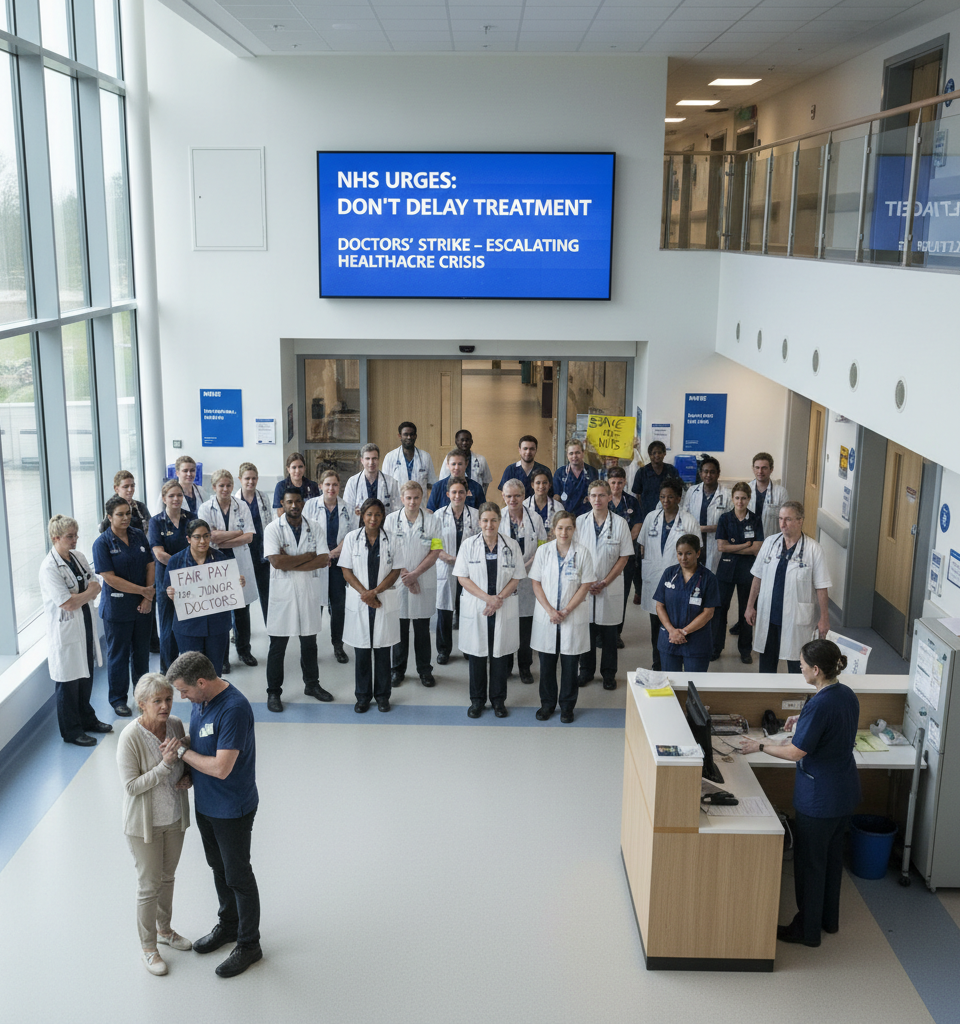
London, UK – The National Health Service (NHS) has made an urgent appeal to the British public to continue seeking necessary medical treatment, despite a looming junior doctors' strike that began today, Tuesday, June 14th. Coming hot on the heels of a prolonged bank holiday weekend, NHS managers are bracing for a period of "challenging" demand and significant disruption, raising widespread concerns about patient safety and access to critical services. This latest industrial action marks a critical juncture in the ongoing dispute between the British Medical Association (BMA) and the government over pay and working conditions.
A Deepening Crisis: Context and Historical Precedent
This current strike is the latest in a series of escalating industrial actions that have plagued the NHS over a sustained period, reflecting deep-seated frustration among healthcare professionals. Junior doctors, who form the backbone of the NHS medical workforce, are demanding a 35% pay rise to compensate for what they argue is a 26% real-terms pay cut since 2008. The government, however, has maintained that such a raise is unaffordable and inflationary. Previous strikes by nurses, ambulance staff, and other healthcare workers have already led to the cancellation of hundreds of thousands of appointments and operations, placing immense pressure on waiting lists that currently stand at a record 7.4 million people.
Key Details: Anticipated Disruptions and Contingency Measures
The strike, scheduled to run for 72 hours, is expected to cause widespread cancellations across hospitals and GP practices nationwide. NHS England has activated its highest level of contingency planning, with senior clinicians drafting in consultants and other non-striking staff to cover urgent and emergency care. Patients are being advised to use NHS 111 online or call 111 for non-life-threatening concerns, and to only attend Accident & Emergency departments for genuine emergencies. While maternity, critical care, and cancer services are typically prioritised for protection during strikes, a certain level of disruption is inevitable even in these vital areas. Last year's junior doctor strikes alone led to the cancellation of over 100,000 appointments, with similar figures anticipated for this round of action.
Broader Implications: Impact on the UK Healthcare Landscape
Beyond immediate cancellations, the recurring strikes are having a profound impact on the broader UK healthcare landscape. They exacerbate staff morale, contributing to burnout and an accelerating exodus of healthcare professionals from the NHS. The financial cost of these strikes is also substantial, with millions of pounds spent on covering services and re-scheduling appointments. Furthermore, the public's trust in the NHS and government's ability to navigate these disputes is being eroded, potentially leading to increased reliance on private healthcare for those who can afford it, thereby deepening healthcare inequalities. The economic fallout, particularly through lost productivity due to illness and delayed return to work, also cannot be understated.
Expert Perspectives: A Looming Public Health Concern
Healthcare economists and public health experts have voiced grave concerns about the long-term ramifications. Dr. Maya Patel, a health policy analyst at the King's Fund, commented, "While the immediate focus is on managing demand, the cumulative effect of these strikes is a public health crisis waiting to explode. Delayed diagnoses, missed treatments, and the ongoing strain on the remaining workforce will have profound consequences for years to come. We are seeing a significant decline in elective care productivity due to these disruptions, which directly impacts patient outcomes and the overall health of the nation." Professor Stephen Smith, a leading consultant, added, "The constant cycle of strikes and temporary fixes is unsustainable. It's not just about pay; it's about a lack of investment, poor working conditions, and a workforce that feels undervalued. Until these fundamental issues are addressed, these disputes will continue."
What Lies Ahead: Further Negotiations and Potential Escalation
As the strike unfolds, attention will turn to potential avenues for resolution. Negotiations between the BMA and the Department of Health and Social Care have largely stalled, with neither side appearing willing to significantly compromise. The government's recent offer of a 5% pay increase was overwhelmingly rejected by junior doctors as insufficient. Future industrial action remains a significant possibility, with the BMA indicating readiness for further strikes if a satisfactory resolution is not reached. The long-term stability of the NHS, its ability to tackle record waiting lists, and the well-being of both patients and staff hinge on breaking this impasse. Without a comprehensive strategy to address the root causes of the widespread discontent, the future of the UK's beloved healthcare system remains precariously balanced.