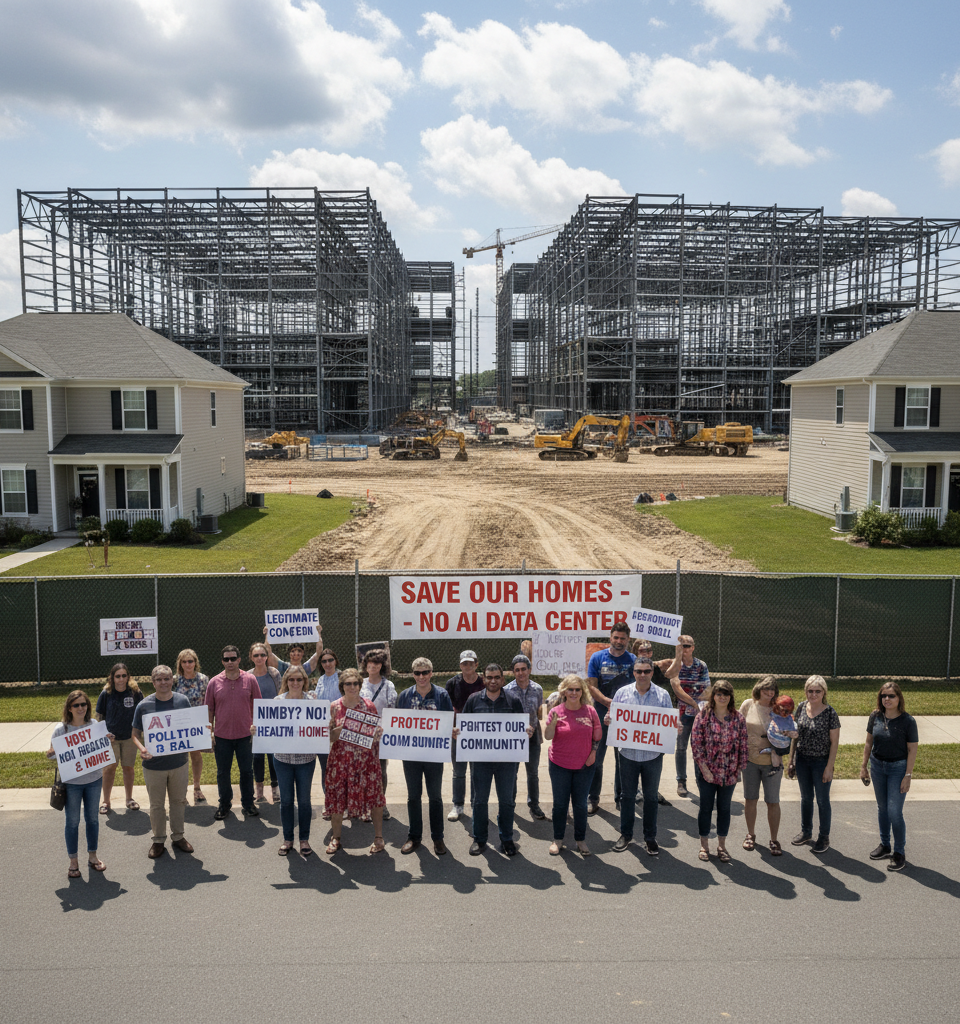
Across the United States, communities are increasingly vocalizing strong opposition to the construction of new artificial intelligence (AI) data centers, citing a myriad of concerns that range from environmental degradation to quality of life issues. This pushback, often characterized by the 'Not In My Backyard' (NIMBY) sentiment, is challenging the rapid expansion plans of tech giants eager to fuel the burgeoning AI industry and is forcing a re-evaluation of how these crucial facilities are integrated into the national landscape. The societal debate centers on balancing technological progress with local community well-being, presenting a significant hurdle for an industry projected for exponential growth.
The Unseen Costs of the AI Boom
The surge in AI development has created an unprecedented demand for data center infrastructure, which are essentially massive warehouses filled with servers, cooling systems, and power units. These facilities are the engine rooms of the digital economy, processing everything from streaming video to complex AI algorithms. Historically, data centers have often been located in industrial or rural areas with access to cheap land and abundant electricity. However, the sheer scale and energy requirements of new AI-focused centers are dramatically different. A single hyperscale data center can consume as much electricity as a small city, demanding significant upgrades to local power grids and placing immense strain on water resources for cooling. This rapid, energy-intensive development comes at a time when climate change and resource scarcity are top-of-mind for many citizens, fueling the opposition.
Community Concerns Take Center Stage
Recent reports indicate that community resistance is mounting nationwide. In Loudoun County, Virginia, a recognized data center hub, residents have fiercely opposed new developments, citing incessant noise from cooling fans, increased truck traffic, groundwater depletion, and the visual blight of vast industrial buildings. Similar scenes are playing out in states like Arizona, Texas, and Georgia, where proposed projects face headwinds from local planning commissions and activist groups. A study commissioned by one advocacy group found that residents living within a half-mile of a data center reported a 30% increase in ambient noise levels and a 15% drop in property values due to perceived industrialization of residential areas. These anecdotal and early statistical findings underscore the direct impacts felt by those living in proximity to these facilities.
Impact on the Data Center Industry and Tech Giants
The growing resistance presents a significant challenge for tech giants like Google, Amazon, Microsoft, and Meta, all of which are investing billions into new data center construction globally. Delays due to community protests can add months or even years to development timelines, escalating costs and potentially hindering the deployment of new AI services. The industry is now grappling with the need to find more palatable locations, invest in better soundproofing and energy-efficient cooling technologies, and engage in more proactive community outreach. The cost of acquiring land suitable for these large-scale operations, especially with robust power and fiber optic access, is also rising due to increased competition and heightened scrutiny over environmental impact assessments.
Expert Perspectives on Sustainable Growth
Industry analysts and environmental experts emphasize the need for a more sustainable and community-conscious approach to data center siting. Dr. Emily Chen, a professor of urban planning specializing in infrastructure, notes, "The era of silently building massive data centers in obscure locations is over. Corporations must now factor in extensive community engagement, transparent environmental impact reports, and tangible benefits for local residents, beyond just job creation, if they want to avoid prolonged battles." She suggests that innovative solutions, such as co-locating data centers with renewable energy projects or developing smaller, more distributed edge computing facilities, could mitigate some of the current issues. The pressure is on for companies to demonstrate a commitment to net-zero operations and responsible resource management.
The Road Ahead: Innovation and Compromise
Looking forward, the debate over AI data centers will likely intensify before it finds a resolution. The industry is exploring several avenues, including advanced liquid cooling systems that reduce water dependency and noise, as well as more efficient power management techniques. There’s also a growing focus on green data centers that utilize 100% renewable energy sources. Furthermore, stricter zoning laws and increased regulatory oversight are anticipated as local governments respond to constituent demands. Tech companies may also be compelled to offer more substantial community benefits, such as funding local infrastructure upgrades or contributing to community development funds, to gain social license for their projects. The future of AI's physical footprint will depend heavily on the industry's ability to innovate and compromise, transforming these critical facilities into better neighbors.
Ultimately, the current pushback signals a maturing understanding of the true environmental and social costs associated with the digital age. While the desire for advanced AI capabilities is strong, communities are making it clear that this progress cannot come at an unchecked expense to their local quality of life and environment. The dialogue between technological advancement and community well-being is now center stage, demanding thoughtful solutions for a sustainable digital future.