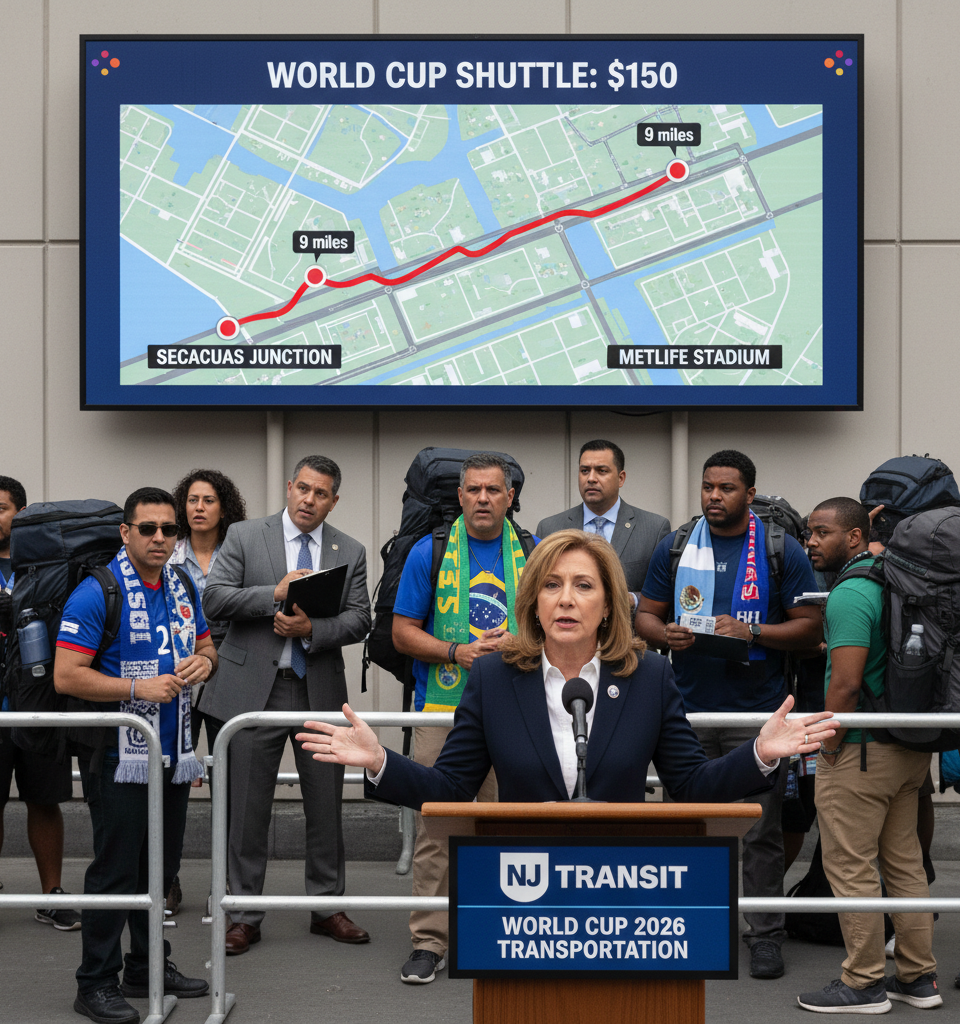
NJ Transit is embroiled in a heated controversy over its planned $150 round-trip fare for World Cup 2026 rail service to the Meadowlands, with agency leadership vehemently denying charges of price gouging. The contentious ticket price, covering a mere nine-mile journey, has sparked public outcry and drawn sharp criticism from stakeholders ahead of the global sporting event. CEO Kris Kolluri publicly defended the fare structure, stating, "We're literally trying to recoup our costs," highlighting the substantial financial burden associated with preparing for the massive influx of visitors.
The Cost of Hosting: A Financial Deep Dive
The financial underpinnings of this controversial fare reveal a significant operational deficit. NJ Transit projects a total expenditure of $62 million to facilitate the specialized World Cup transportation services. This substantial cost is only partially mitigated by an estimated $14 million in outside grants, leaving a gaping hole of $48 million that the agency contends must be recouped through passenger fares. The investment includes critical infrastructure upgrades, increased staffing, enhanced security measures, and the deployment of additional rolling stock to handle the unprecedented volume of attendees expected for the tournament. The agency emphasizes that these are not routine operating costs but are directly attributable to the extraordinary demands of hosting such a large-scale international event.
The proposal outlines a dedicated, express service designed to shuttle spectators between Secaucus Junction and the Meadowlands Sports Complex. This enhanced service aims to ensure efficient and timely transport, a crucial factor in managing large crowds on match days. Kolluri's assertion is that without these dedicated revenues, the burden would fall disproportionately on New Jersey taxpayers or existing farepayers, impacting the agency's core services. The $150 fare is presented as a user-pays model for a premium, event-specific service, rather than an arbitrary price hike on standard commuter routes.
Broader Implications for Public Transit and Major Events
This pricing dispute extends beyond NJ Transit, shedding light on the broader challenges faced by public transportation agencies when hosting mega-events. The precedent set here could influence how future major sporting events, concerts, and international gatherings are funded and serviced by transit systems globally. The balancing act between providing accessible, affordable public transport and covering the significant investments required for specialized services is a perennial struggle. Critics argue that such high fares risk alienating potential attendees, particularly those from lower-income brackets, undermining the inclusivity often championed by major sporting events. Conversely, transit agencies argue that without cost recovery mechanisms, the financial strain could jeopardize their long-term viability and ability to serve their regular commuter base. The incident highlights the complex relationship between event organizers, host cities, and public infrastructure provision.
Industry analysts are closely watching this situation, recognizing its potential to influence future event transportation models. "Transit agencies are often caught between a rock and a hard place: expected to provide seamless service for major events but rarely given the full funding required," stated Dr. Eleanor Vance, a transportation policy expert. "The challenge for NJ Transit is to clearly articulate the value proposition of this premium service and demonstrate that the cost is directly tied to the highly specialized operational demands of the World Cup, rather than a general revenue grab." She noted that transparency in cost breakdown is paramount to public acceptance.
Moving Forward: Public Discourse and Potential Adjustments
In the immediate term, NJ Transit is likely to face continued public and political pressure to either justify the fare more thoroughly or consider alternative funding strategies. The agency has indicated it is open to discussions but remains firm on the necessity of cost recovery. Stakeholders, including local businesses and tourism boards, are also weighing in, concerned about the potential economic impact of prohibitive transportation costs on visitor spending. The upcoming months will undoubtedly see ongoing debates and potentially revised proposals as World Cup 2026 draws closer. The agency's ability to communicate the intricacies of its financial model and the unique requirements of the event will be critical in shaping public perception and ensuring the success of World Cup 2026 transportation plans. Further federal or state assistance may be sought, or a multi-tiered pricing structure could be explored to offer more affordable options. While the agency asserts its position, the public discourse around fairness and accessibility remains robust.
The discussions surrounding the $150 fare underscore a crucial point: the often-underestimated financial burden of upgrading and operating public transit for large-scale international events. This isn't merely about moving people; it involves a complex ecosystem of logistics, security, and infrastructure adaptations that come with a substantial price tag. As the World Cup countdown continues, all eyes will be on NJ Transit to see if it can successfully navigate these troubled waters, ensuring both financial solvency and public satisfaction.