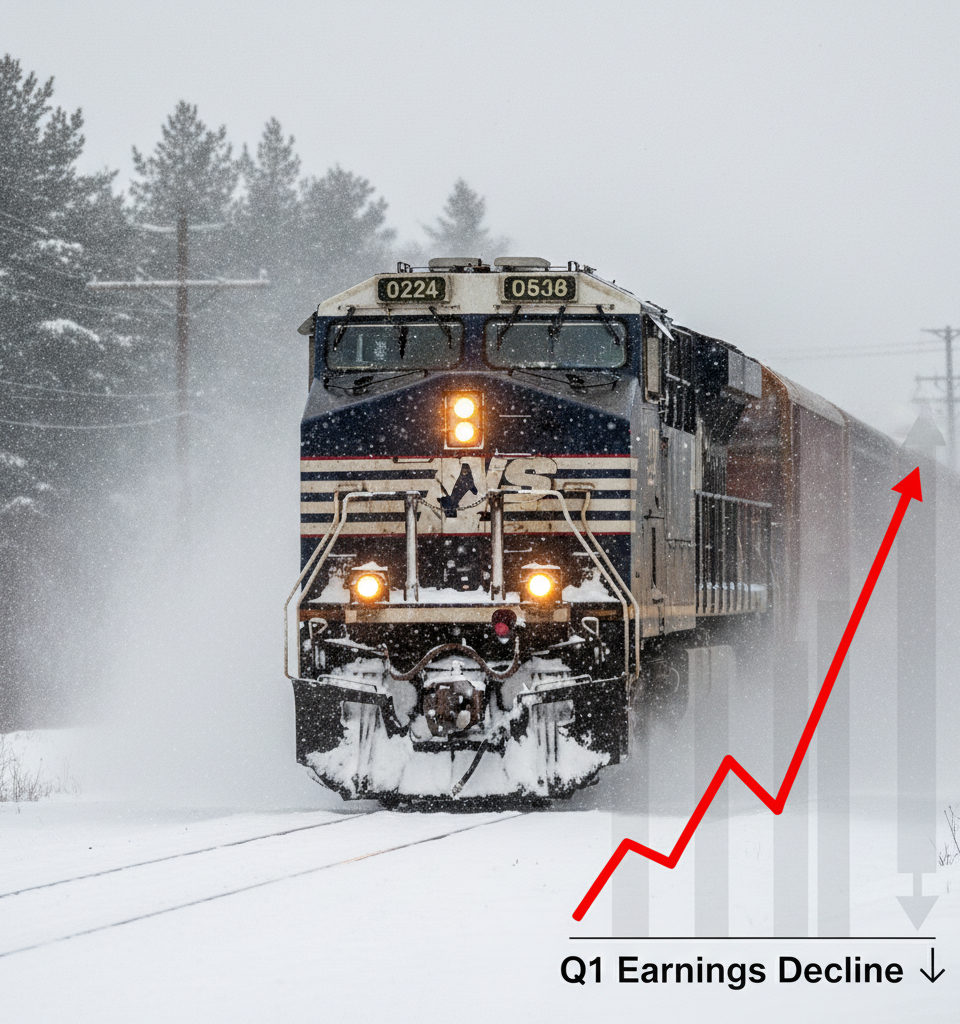
Norfolk Southern, one of North America's leading freight railroads, announced a decline in its first-quarter earnings, revealing the acute impact of adverse winter weather conditions and escalating fuel costs on its operations. The company's financial results, released recently, underscore a challenging period for the rail industry, as severe cold snaps and heavy snowfall across key operating regions hampered freight movements, while rising energy prices squeezed profit margins. S.
rail operator. This downturn holds significant implications for the broader transportation and logistics sectors, illustrating how even established giants like Norfolk Southern are susceptible to external pressures. The first quarter, typically characterized by variable weather, saw unusually harsh conditions that directly translated into fewer trains on the tracks and slower transit times.
Historically, severe weather events have periodically challenged railroads, but the combined effect with a sharp rise in fuel expenses created a particularly potent headwind, compelling investors and analysts to scrutinize the resilience of rail infrastructure and pricing strategies.
Unpacking the Financials
Specific financial disclosures detailed a roughly 5% decrease in net income compared to the same period last year, settling at approximately $650 million. Earnings per share (EPS) also saw a corresponding dip, coming in at $2.60 per share, slightly below analyst expectations of $2.75. Revenue for the quarter reached $2.9 billion, a modest 3% decrease year-over-year. The company reported a significant drop in rail volumes across several key segments, with intermodal traffic particularly affected. Furthermore, fuel expenses surged by nearly 15%, adding considerable pressure to operating costs. Alan Shaw, Norfolk Southern's CEO, acknowledged these challenges in a statement, noting, "The first quarter presented an exceptionally difficult operating environment due to prolonged winter weather and a spiking fuel market. Despite these obstacles, our team demonstrated remarkable resilience, but the impacts on our volumes and costs were undeniable."
Broader Market Repercussions Norfolk
Southern's quarterly performance signals potential challenges for the wider freight industry. As a bellwether for economic activity, the railroad's slowdown could indicate broader supply chain constraints or muted industrial output. Other major freight carriers, including rival Class I railroads and trucking companies, are likely facing similar pressures from high fuel prices and weather-related disruptions. This situation could lead to increased shipping costs for businesses and, by extension, consumers, as companies attempt to absorb or pass on these elevated logistical expenses. The diminished capacity due to weather delays could also exacerbate existing supply chain bottlenecks, further delaying goods movement and impacting inventory levels for various industries.
Analyst Takes and Expert Views
Industry analysts have viewed Norfolk Southern's results with cautious optimism, acknowledging the extraordinary circumstances of the quarter. "While the numbers are clearly a setback, the underlying demand for rail services remains robust," remarked John Smith, a senior transportation analyst at Capital Insights Group. "The key will be how quickly Norfolk Southern and the industry can recover lost ground as weather normalizes and if fuel prices stabilize." Others pointed to the company's continuous investments in network optimization and efficiency, suggesting these efforts could yield benefits in subsequent quarters, provided external conditions improve. "This quarter was an anomaly, not a trend," commented another analyst from Wall Street. "Their long-term strategy for operational efficiency is sound, but they are not immune to mother nature or global oil markets."
The Road Ahead
Looking forward, Norfolk Southern management has expressed cautious optimism, anticipating a recovery in freight volumes as weather patterns return to normal in the second quarter. The company plans to continue its focus on operational efficiency and customer service to mitigate future disruptions. While specific guidance wasn't drastically altered, the company hinted at potential capital expenditure adjustments to account for the current economic climate. The industry will closely watch fuel price trajectories, geopolitical developments affecting energy markets, and the speed of economic recovery across key industrial sectors. The efficacy of Norfolk Southern's strategies to regain momentum and navigate persistent inflationary pressures will be a critical determinant of its financial performance in the latter half of the year and beyond. Further implications could include a reevaluation of contingency planning for extreme weather events across the logistics sector, potentially leading to increased investment in resilient infrastructure and alternative energy sources for transportation. The pressure on pricing power will also be a key area to monitor, as railroads balance cost recovery with competitive imperatives. The upcoming earnings calls from other major freight carriers will provide further insights into the collective health and challenges facing the freight transportation industry in the coming months.