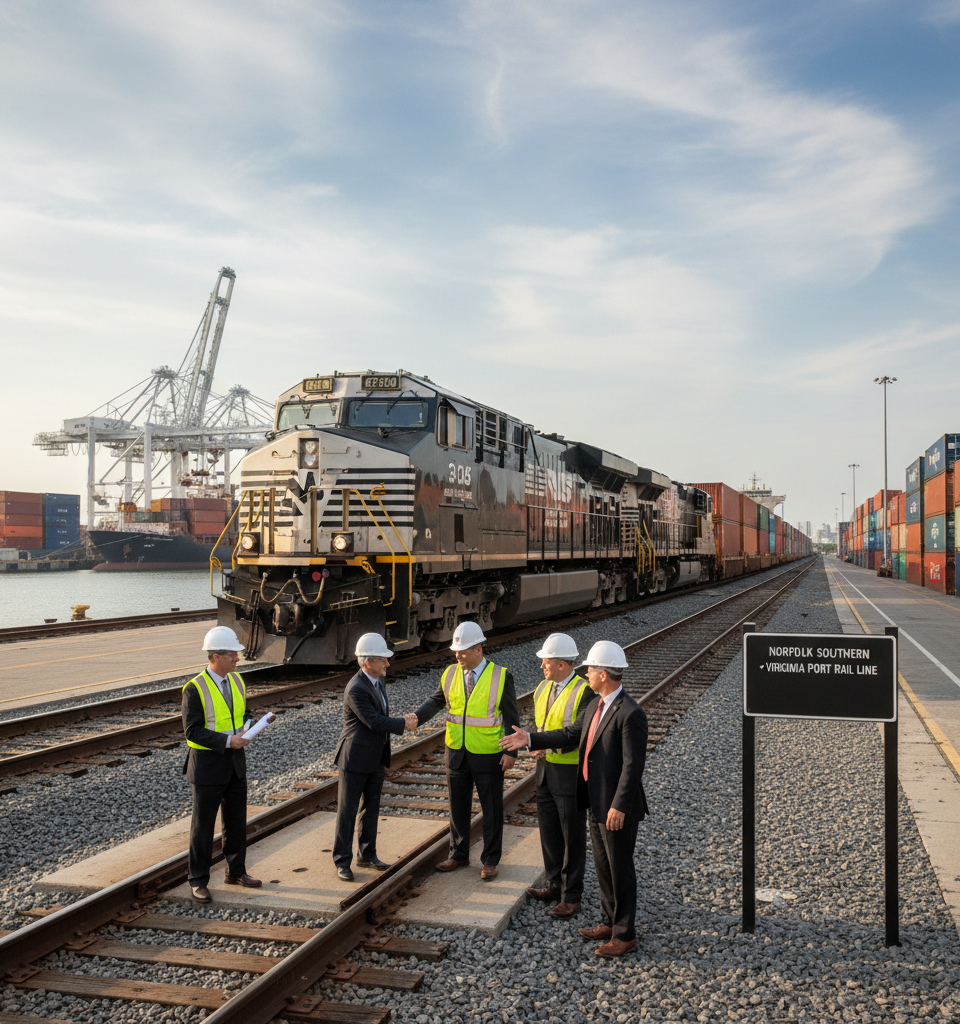
WASHINGTON D.C. — In a pivotal decision poised to reshape East Coast freight logistics, federal regulators today formally granted Norfolk Southern control over a disputed rail line serving a strategic Virginia port. This ruling, the culmination of a protracted regulatory battle, solidifies Norfolk Southern's operational footprint and market dominance in the Mid-Atlantic region, enhancing its connectivity to international shipping lanes.
The controverted rail corridor, essential for efficiently moving goods to and from a key Virginia port, has been at the heart of an intense inter-railroad tussle for years. The Port of Virginia, a critical gateway for global trade, relies heavily on efficient rail access to distribute cargo Inland. The integration of this line under Norfolk Southern's direct purview is expected to streamline operations, potentially reducing transit times and improving overall supply chain reliability for importers and exporters utilizing the port.
Key details of the regulatory decision, issued by the Surface Transportation Board (STB), highlighted arguments centered on operational efficiency, competition, and public interest. While specific financial terms of the assumed control were not immediately disclosed, the ruling provides Norfolk Southern full operational and maintenance authority over the contested tracks. Sources close to the proceedings indicated that the STB weighed the long-term benefits of consolidated operation against potential anti-competitive concerns raised by rival carriers, ultimately siding with Norfolk Southern's proposal for improved service and infrastructure investment.
The implications for the broader freight industry and regional market are substantial. This consolidation strengthens Norfolk Southern's competitive edge against BNSF and CSX in the lucrative East Coast intermodal and merchandise freight markets. Analysts predict potential shifts in freight routing as shippers may see enhanced incentives to route cargo via Norfolk Southern's network, which now boasts more direct and integrated access to a major port. This could lead to increased volume for Norfolk Southern, while potentially challenging the market share of other carriers in the region.
Industry experts view this decision as a strategic win for Norfolk Southern and a potential harbinger of further infrastructure consolidation within the U.S. rail sector. "This move not only cements Norfolk Southern's position but also underscores the STB's focus on operational efficacy in critical national infrastructure," commented Dr. Eleanor Vance, a freight logistics analyst at Transport Insights Group. "While competition concerns are valid, the board likely prioritized the capacity for single-carrier service to improve the flow of goods through a congested port environment, which ultimately benefits the national economy."
Looking ahead, Norfolk Southern is expected to initiate investments in the newly acquired line, potentially upgrading signaling systems, track infrastructure, and expanding yard capacity to accommodate increased traffic. The company's immediate focus will likely be on integrating the line seamlessly into its existing network and realizing the operational synergies that underpinned its bid for control. This development may also prompt rival railroads to explore options for enhancing their own port access or strengthening alternative routes to maintain competitive balance.
Future developments will include monitoring the impact of this change on freight rates, transit times, and service levels at the Port of Virginia. Stakeholders, including shipping lines, beneficial cargo owners, and port authorities, will be keenly observing how Norfolk Southern leverages this expanded control to optimize logistics for the region. The decision sets a precedent for future disputes over shared rail infrastructure, emphasizing the regulatory priority on efficiency and national economic benefit.
In the coming months, Norfolk Southern is anticipated to release detailed plans for the optimization and expansion of the rail line, aiming to maximize its throughput capacity and enhance its role in the global supply chain. The long-term success of this acquisition will ultimately be measured by its ability to deliver tangible service improvements and economic benefits to the East Coast's vital trade arteries.