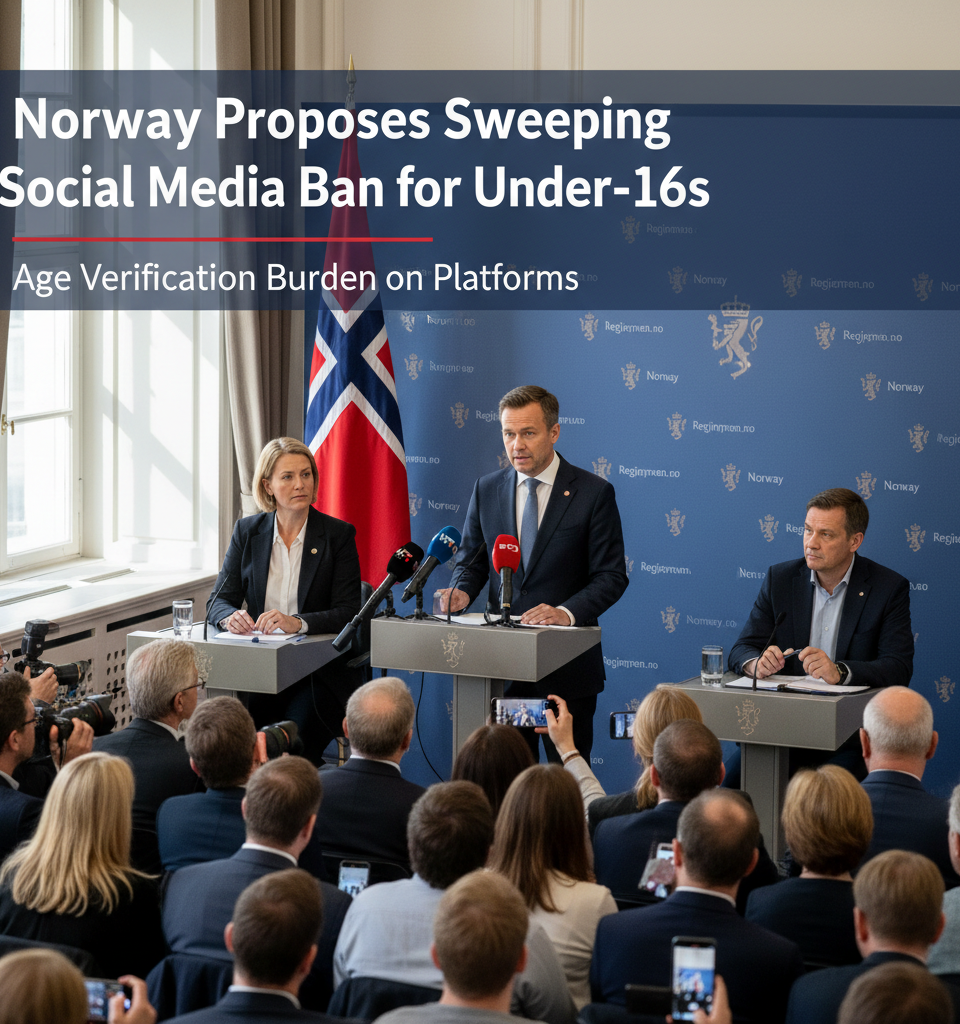
Oslo, Norway — In a landmark legislative move, Norway's minority Labour government announced on Friday its intention to ban children under 16 from accessing social media platforms. The proposed law, championed by Prime Minister Jonas Gahr Støre's administration, not only raises the age threshold from an initially suggested 15 years but crucially shifts the legal responsibility for robust age verification directly onto technology companies, rather than individuals or parents. This initiative positions Norway alongside Australia as a global leader in stringent online child protection measures.
Context and Rationale Behind the Ban
This aggressive stance on social media regulation stems from growing concerns over the potential negative impacts of platforms on youth mental health, privacy, and development. The digital well-being of minors has become a central policy debate across Europe and beyond, fueled by reports linking excessive screen time and exposure to harmful content with increased anxiety, depression, and cyberbullying among young people. Norway's government emphasizes a preventative approach, aiming to create a safer digital environment for children during their formative years. The raising of the age limit to 16 aligns with similar parliamentary discussions and reflects an evolving understanding of adolescent vulnerabilities.
Key Details and Legislative Specifics
The legislation, which is expected to be formally introduced and debated, will mandate social media platforms to implement robust age verification systems. Unlike previous models that often relied on self-declaration or parental oversight, this new framework will require platforms to proactively ensure that users are at least 16 years old to access their services. The specific methods for age verification—which could range from AI-powered facial recognition to verified government IDs—are likely to be a point of significant discussion during the legislative process. Furthermore, the bill is expected to include substantial penalties for non-compliance, pushing tech companies to invest heavily in developing and deploying effective verification technologies. While specifics on fines are yet to be fully detailed, they are anticipated to be significant enough to act as a strong deterrent.
Industry and Market Impact
This proposed ban sends a clear message to the global technology industry: the era of self-regulation regarding child safety on social media is drawing to a close. For major social media companies like Meta (Facebook, Instagram, WhatsApp), TikTok, Snapchat, and X (formerly Twitter), Norway's legislation represents a formidable challenge. It necessitates a fundamental re-evaluation of user onboarding processes and a significant investment in age-gating technologies, which have historically been a weak point for many platforms. The implementation costs could be substantial, potentially leading to increased operational expenses and a reconfiguration of advertising strategies targeted at younger demographics. Should this legislation pass, it could set a precedent, influencing similar regulatory efforts in other European nations and beyond, creating a fragmented global regulatory landscape for tech giants.
Expert Perspectives and Analysis
Digital policy experts and child advocacy groups have largely welcomed Norway's bold move, though some express cautious optimism about its practical implementation. Dr. Ingrid Jansen, a professor of digital ethics at Oslo Metropolitan University, commented, “This isn't just about blocking access; it's about forcing platforms to take responsibility. The shift in liability is crucial. However, the technical challenge of flawless age verification without infringing on privacy remains a complex hurdle that will demand innovative solutions.” Conversely, some tech industry lobbyists argue that overly strict age verification could inadvertently lead children to unmoderated platforms or a "digital black market," potentially exposing them to greater risks. There are also concerns about the privacy implications of collecting more personal data for age verification purposes.
International Precedents and Future Implications
Norway's initiative follows closely on the heels of Australia's world-first ban that came into force in December 2023, which also targeted age verification and platform liability. Ireland is also reportedly considering similar legislation, indicating a growing international consensus on the need for stronger online protections for minors. Should Norway successfully implement this law, it could serve as a powerful model for other European Union member states and countries worldwide grappling with similar issues. The broader implications include a potential push for standardized international age verification protocols, a significant shift in how social media platforms design their services for different age groups, and an accelerated development of privacy-preserving age verification technologies. The move signifies a growing global trend towards placing greater accountability on tech companies for the societal impact of their products.
What's Next for the Legislation
The proposed legislation will now proceed through Norway's parliamentary process, involving debates, committee reviews, and potential amendments. While the minority government's proposal signals strong intent, securing full parliamentary approval will be the next critical step. Discussions are anticipated to focus on the technical feasibility of age verification, the specifics of compliance, potential enforcement mechanisms, and the delicate balance between child protection and data privacy. Stakeholder consultations with tech companies, child welfare organizations, and privacy advocates are expected to be robust as the bill makes its way through the Riksting. If passed, the law could come into effect within the next 12 to 18 months, ushering in a new era of digital responsibility for Norway's youth.