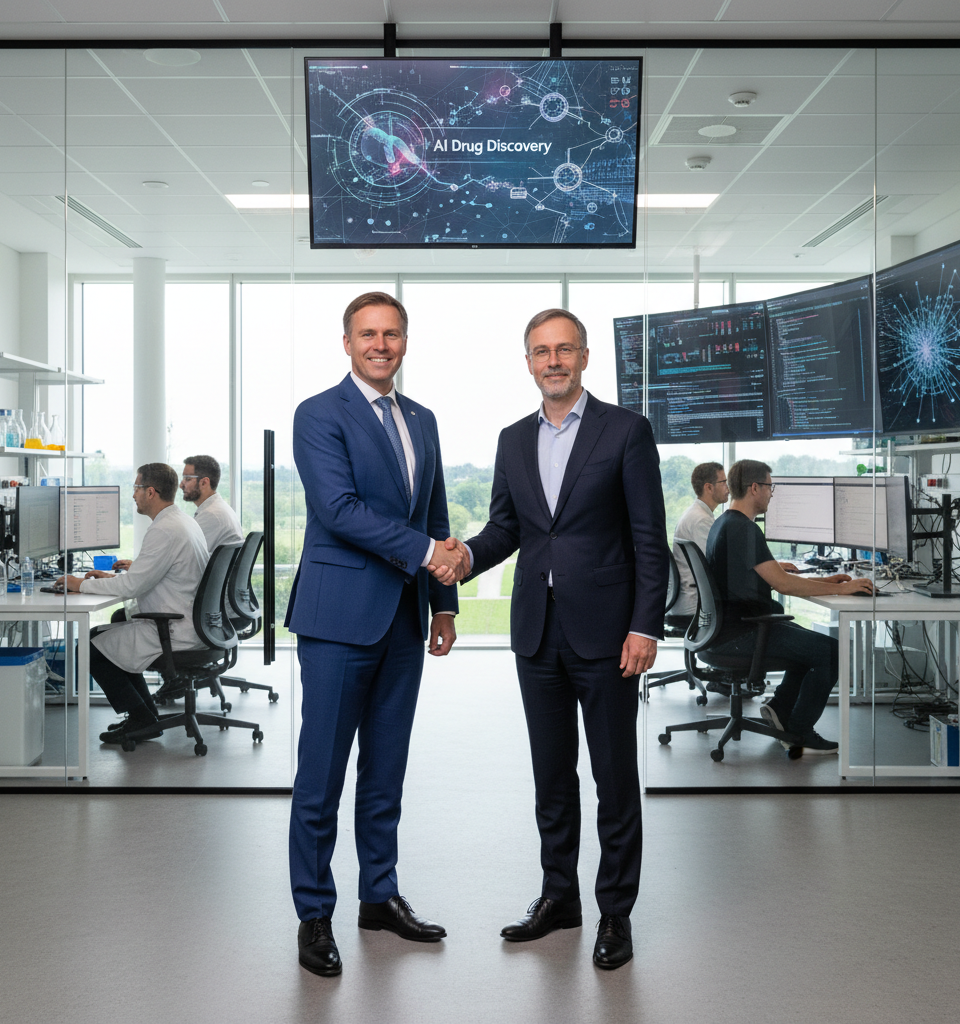
Copenhagen, Denmark – Novo Nordisk, the global pharmaceutical leader renowned for its diabetes and obesity medications, has officially unveiled a groundbreaking partnership with artificial intelligence pioneer OpenAI. The monumental collaboration, announced today, seeks to leverage OpenAI's cutting-edge AI capabilities to analyze vast and intricate biomedical datasets, ultimately accelerating the identification and development of promising new drug candidates. This strategic alliance positions Novo Nordisk at the forefront of AI-driven pharmaceutical innovation, signaling a pivotal moment in the industry's digital transformation.
The Strategic Imperative: AI Reshapes Drug R&D
This partnership arrives at a crucial juncture for the pharmaceutical industry, grappling with escalating R&D costs, prolonged development timelines, and a declining success rate for new drugs. The average cost to bring a new drug to market now exceeds $2.6 billion, with a clinical trial success rate often below 10%. Artificial intelligence offers a compelling solution, promising to streamline early-stage discovery, optimize target identification, predict molecular interactions, and even personalize treatment strategies. Novo Nordisk's move reflects a broader industry trend where companies are increasingly betting on AI to unlock efficiencies and unearth breakthroughs that traditional methods struggle to achieve.
Unpacking the Collaboration: Data, Models, and Discovery
While specific financial terms of the multi-year agreement were not disclosed, sources close to the companies indicate a significant investment from Novo Nordisk in dedicated AI resources and data infrastructure. The core of the partnership involves deploying OpenAI's advanced large language models (LLMs) and other generative AI tools to process proprietary biological, chemical, and clinical data accumulated by Novo Nordisk over decades. This will enable the rapid analysis of millions of data points, far exceeding human analytical capacity. The goal is to identify novel molecular structures, predict their efficacy and toxicity, and pinpoint previously unseen correlations that could lead to first-in-class therapies, particularly in metabolic and rare diseases, key focus areas for Novo Nordisk.
Industry Fallout: A New Competitive Frontier
The ripple effects of this partnership are expected to reverberate across the pharmaceutical and biotechnology sectors. It elevates the competitive stakes, compelling other major players like Pfizer, Roche, and Johnson & Johnson to accelerate their own AI integration strategies. We’ve already seen significant investments, such as Sanofi's $180 million deal with Exscientia in 2022, but the pairing of a pharma giant like Novo Nordisk with OpenAI — arguably the most recognized name in AI development — sets a powerful precedent. This could trigger a "land grab" for top-tier AI talent and further M&A activity involving AI biotechs, as pharmaceutical companies vie for technological supremacy in drug discovery.
Expert Perspectives on Pharma's AI Future
Industry analysts are largely optimistic about the potential. Dr. Anya Sharma, a leading biopharma consultant, commented, "This collaboration isn't just about faster drug discovery; it's about fundamentally rethinking how drug discovery is done. OpenAI's generative capabilities could allow Novo Nordisk to design entirely new molecular entities, moving beyond iterative modifications of existing compounds." However, she cautions, "The challenge will be in validating these AI-generated insights in the wet lab and navigating the complex regulatory landscape for AI-derived intellectual property." Another expert, Dr. Benjamin Lee, a computational biologist, noted, "The sheer volume of data Novo Nordisk possesses, combined with OpenAI's analytical prowess, creates a powerful synergy. Expect to see initial results, possibly in target identification or lead optimization, within 18-24 months."
The Road Ahead: Potential and Pitfalls
Looking forward, the partnership aims to move beyond purely analytical tasks, potentially exploring the use of generative AI for de novo drug design and optimizing clinical trial protocols. Future initiatives could involve creating synthetic patient cohorts for in silico testing, further reducing reliance on costly and time-consuming physical trials. However, the path is not without obstacles. Data privacy concerns, the need for robust explainable AI (XAI) to justify AI-driven decisions to regulators, and the integration of highly specialized scientific domains with general-purpose AI tools will be crucial challenges. Nevertheless, this collaboration represents a bold leap for Novo Nordisk and a clear indicator that AI is no longer a peripheral tool but a central pillar in the future of pharmaceutical innovation.
Initial Milestones and Long-Term Vision
While the immediate focus will be on accelerating early-stage research, Novo Nordisk’s long-term vision includes creating a fully AI-augmented drug discovery pipeline. Early milestones are expected to include the identification of several novel therapeutic targets or lead compounds within the next 2-3 years. This success could significantly impact Novo Nordisk's ability to maintain its growth trajectory and expand its already dominant position in key therapeutic areas, reinforcing the notion that strategic AI adoption is becoming non-negotiable for leadership in the global pharmaceutical market.