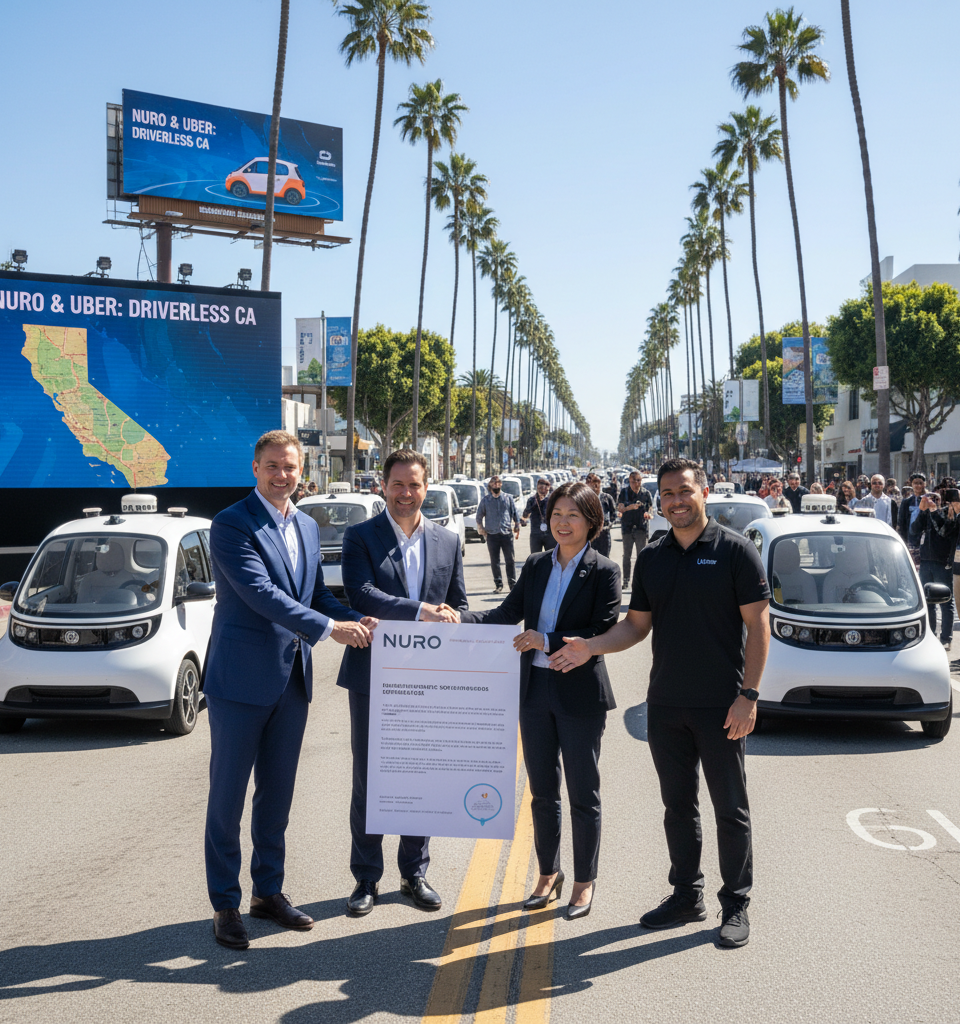
Nuro has secured a pivotal permit from the California Department of Motor Vehicles (DMV), officially greenlighting the company to begin fully driverless testing of its autonomous delivery and ride-hailing vehicles on public roads across the Golden State. This regulatory nod paves the way for Nuro's previously announced partnership with Uber, under which the two companies aim to launch pilot robotaxi services, initially without human safety drivers, by the close of the current year. The approval underscores California's continued importance as a proving ground for advanced autonomous vehicle technologies and signals a maturing regulatory landscape for the nascent industry.
Context and Background
California has long been at the forefront of autonomous vehicle development, hosting numerous companies testing and deploying self-driving technologies. The DMV's permitting process is notoriously rigorous, requiring companies to demonstrate a high level of safety and operational capability before allowing fully driverless operations. Nuro, primarily known for its compact, low-speed autonomous delivery pods, has been testing its vehicles with safety drivers in California for several years, gradually accumulating the data and experience necessary to meet these stringent requirements.
This latest permit upgrade is not Nuro's first such achievement; the company already operates fully driverless delivery services in parts of Texas, highlighting its established capabilities in other jurisdictions. The collaboration with Uber expands Nuro's ambitions beyond package delivery into the more complex, higher-stakes realm of passenger transport, leveraging Uber's vast ride-hailing network.
Key Details of the Approval
Under the terms of the new permit, Nuro is authorized to operate its autonomous vehicles, including its second-generation R2 delivery bots and potentially modified passenger vehicles, on public roads in certain areas of California without a human safety driver present. This allows for both the testing of its autonomous delivery services and, crucially, the planned robotaxi operations with Uber. While specific operational zones for the Uber partnership have not yet been disclosed, they are expected to be in areas with well-mapped and relatively predictable driving conditions, similar to initial rollouts by other AV companies.
The R2 vehicles, designed for short-distance, low-speed urban environments, typically travel at speeds up to 45 mph. This permit differs from drivered testing permits, as it removes the human oversight requirement, a critical step towards scalable commercial deployment.
Industry and Market Impact
This approval holds significant implications for the broader autonomous vehicle industry and the future of urban mobility. For Nuro, it legitimizes its technology beyond delivery logistics, positioning it as a credible player in the passenger transport sector. For Uber, the partnership with Nuro offers a strategic avenue to re-enter the autonomous vehicle space after divesting its own self-driving unit, ATG, in 2020.
This allows Uber to potentially reduce long-term operational costs by eliminating human driver expenses, addressing a persistent challenge in its ride-hailing business model. The move also intensifies competition among AV developers, particularly in California, where Waymo and Cruise are already operating, albeit with varying degrees of autonomy and geographic coverage. The entry of Nuro and Uber into the fully autonomous testing arena could accelerate the public's adoption and acceptance of robotaxi services.
Expert Perspective
Industry analysts view Nuro's permit as a positive indicator for the maturation of autonomous technology. "California's DMV is seen as a bellwether for AV regulation," notes Dr. Sarah Chen, a leading expert in autonomous systems. "Nuro's approval demonstrates their commitment to safety and the robust performance of their software stack. The partnership with Uber is particularly strategic, allowing Nuro to tap into a massive existing customer base and solve the 'last mile' challenge for ride-sharing at scale." Others point out that while the technical hurdles are immense, public perception and regulatory frameworks remain critical challenges. "Scaling fully driverless operations is not just about technology; it's also about public trust and navigating a patchwork of regulations across different states and municipalities," commented transportation consultant Mark Davies.
What's Next for Nuro and Uber
The immediate next step for Nuro and Uber will be the meticulous planning and execution of their pilot ghost taxi program later this year. This will involve defining operational geofences, optimizing routing algorithms for passenger pickups and drop-offs, and ensuring seamless integration with Uber's ride-hailing app. Initial services are expected to be limited in scope, likely covering specific districts or predefined routes, as both companies gather data, refine their systems, and assess customer experience.
Future expansion will hinge on the success of these early pilots, regulatory developments, and broader public acceptance. Nuro has also indicated plans to further expand its delivery services in California, utilizing the same driverless technology, potentially leading to a dual-pronged commercial strategy in the state combining both goods and passenger transport. The long-term vision includes scaling these operations nationwide, contingent on continued regulatory approvals and technological advancements.
The Road Ahead
The journey toward widespread autonomous vehicle adoption is complex and fraught with both opportunities and challenges. While Nuro's recent permit marks an important technical and regulatory victory, the path to commercial viability and profitability for both its delivery and ride-hailing segments will require overcoming significant financial investments, ongoing safety scrutiny, and the ever-present need to build consumer confidence in this transformative technology. The collaboration with Uber provides a powerful platform, but the ultimate success will be measured by millions of safe, reliable, and cost-effective driverless journeys.